Activities in 2025
As violence escalated in eastern DRC in 2025, MSF increased activities to respond to people’s growing medical and humanitarian needs.
Our teams rapidly scaled up assistance to people caught up in violent clashes between government forces, the M23 armed group, and their respective allies in North Kivu and South Kivu. During the year, M23 expanded its control over larger parts of both provinces, including their respective capitals, Goma and Bukavu. Our teams also launched emergency responses in Ituri province, which continues to be ravaged by intercommunal violence, and in Maniema province, where another armed conflict is ongoing. In addition to these emergency responses, we maintained our regular projects and supported Congolese health authorities in tackling various epidemics across the country.
Escalating conflict in the east
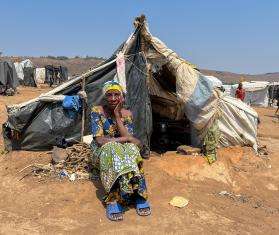
The armed conflict that has been raging in the east of the country for over 30 years escalated in 2025, causing further waves of mass displacement and a dramatic increase in basic needs, including food, security, health care, and protection for the most vulnerable, such as women, children, and elderly people. Hospitals in North Kivu, South Kivu, Ituri, and Maniema received large influxes of wounded people, with victims reporting extreme levels of violence, including massacres, abductions, and sexual assaults.
In North Kivu and South Kivu, the health systems have largely collapsed. Health facilities have been destroyed, and the fighting has interrupted deliveries of medicines and other medical supplies. Patients seeking care at the facilities still functioning often arrived late, sometimes after days of walking, and in critical condition. In some cases, civilians were deliberately targeted, as in Binza, North Kivu, in the middle of the year; in others, they were caught in the crossfire, falling victim to stray bullets.
Health staff worked under extremely difficult conditions, vulnerable to attacks and overstretched due to personnel shortages. Three of our colleagues were killed in 2025, while medical facilities we support in Masisi, Walikale, Goma, Rutshuru, and Uvira came under fire and were raided by armed men.
Amid this volatile situation, MSF remained one of the few organizations delivering direct care to people affected by the conflict. In health facilities we supported in Mweso, Masisi, Walikale, Goma, Rutshuru, Minova, Uvira, Fizi, and Bunyakiri, we treated people with gunshot and shrapnel wounds and other violence-related trauma, providing not only emergency surgery but also essential psychological support. Our teams also offered medical and psychological care to thousands of victims and survivors of sexual violence, which continued to be rife in 2025.
In Ituri, the humanitarian crisis remains largely ignored by national authorities and international media, despite people’s immense needs. For decades, this province has been rocked by conflicts between local armed groups, militias, and rebel movements, linked to community rivalries or broader regional dynamics. In 2025, the situation deteriorated further, with a series of attacks targeting civilians, displaced communities, and even places considered safe havens, such as camps for internally displaced people and medical facilities. As the number of patients with serious violence-related injuries nearly doubled in a few months, we expanded our support to Salama Clinic in Bunia, installing additional beds. Many of the patients we treated had open fractures, gunshot wounds, or shrapnel injuries.
MSF continued to work in general hospitals in Angumu and Drodro, as well as numerous health centers and community health care sites. We supported general and specialist health care, including treatment for malaria and respiratory infections, in addition to maternal and pediatric services. We also provided general health care and support for disease outbreaks in Adii and Zapay in response to a massive influx of refugees from South Sudan and Central African Republic.
In Maniema province, we increased our response to meet the urgent health needs of people affected by the conflict. Meanwhile, we completed the transfer of our Salamabila project to the local health authorities after meeting our objectives, including reducing maternal death rates, over seven years of providing care in the area. This project focused on treating patients with violence-related injuries, managing malaria and acute malnutrition, delivering maternal care, and providing holistic care for victims and survivors of sexual violence, including medical treatment, psychological support, and socioeconomic assistance.
Response to epidemics
In 2025, MSF launched several emergency responses to tackle epidemics across DRC, in a context marked by growing insecurity, limited government commitment, and the withdrawal of several organizations due to humanitarian funding cuts. Our teams provided treatment and vaccinations to curb measles epidemics in Haut-Katanga, Haut-Lomami, Tanganyika, North Ubangi, South Ubangi, Bas-Uélé, North Kivu, South Kivu, and Maniema provinces.
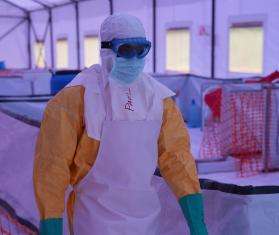
DRC was also hit by a devastating cholera epidemic, one of the worst in the last decade. In response to the rapid spread of the disease, MSF sent emergency teams to Mai-Ndombe, Kinshasa, Haut-Katanga, Équateur, Tshopo, Maniema, North Kivu, and South Kivu to support health authorities with medical care and vaccinations. Other disease responses in 2025 included treating patients with mpox in South Kivu, Kinshasa, and South Ubangi; tackling a resurgence in malaria cases in Fizi; and supporting health authorities in controlling outbreaks of Ebola in Kasaï and typhoid fever in Sankuru.