

Saving women's lives with holistic care
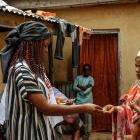
Nigeria accounts for roughly 1 in 5 maternal deaths worldwide. MSF delivers free, specialized emergency obstetric and neonatal services, obstetric fistula repair surgery, as well as comprehensive services for victims and survivors of sexual violence, comprising both medical care and psychological support.
Comprehensive care for noma patients
MSF continues to provide inpatient care, reconstructive surgery, and nutritional and mental health support at the noma children's hospital in Sokoto. We also organize community outreach activities to increase early detection. Noma — a neglected, disfiguring, and often fatal infection linked to malnutrition — primarily affects children under 6 years old.
MSF activities in Nigeria in 2025
In response to surging needs driven by increasing insecurity and diminishing international aid, we scaled up our activities in 23 of Nigeria’s 36 states in 2025.
Malnutrition
Our teams treated tens of thousands of severely malnourished children in inpatient and outpatient therapeutic feeding centers across seven northern states in 2025 alone. In addition to medical stabilization, we provided physiotherapy in Kano and Katsina states using structured play therapy and motor stimulation to address muscle wasting, developmental delays, and restricted movement in recovering children. We also distributed nutritional supplements to children in Katsina as an emergency prevention measure.
In Katsina, we partnered with an organization in August to offer cash-for-food assistance to caregivers of children with malnutrition. These funds help families purchase nutritious food and cover travel expenses for essential medical follow-up, significantly reducing the risk of relapse.
Disease outbreaks
In Kebbi and Sokoto states, MSF teams treated patients and carried out health promotion activities in response to a meningitis outbreak between February and April. We also launched a successful vaccination campaign to curb a rise in cases in Kebbi.
In Borno, Sokoto, Zamfara, Adamawa, and Bauchi states, we implemented activities to combat diseases, including vaccination campaigns, large-scale measles drives, indoor residual spraying and seasonal chemoprevention for malaria, and operating cholera treatment centers. In Borno, Kano, and Bauchi, we set up dedicated isolation and treatment centers for diphtheria and Lassa fever, where we provided patient care and trained local health care workers. In April 2025, we successfully handed over Lassa fever care to the local health authorities in Ebonyi state.
In Bauchi, we converted our seasonal Lassa fever response into a regular project, establishing a full-time presence at Abubakar Tafawa Balewa University Teaching Hospital. In addition to treating patients, we train staff, support research, and improve infection prevention and control measures.
Emergency response
MSF’s emergency activities in Nigeria included responding to floods in Mokwa, Niger state. We distributed mosquito nets, medications, detergents, and other hygiene essentials to affected people, and set up handwashing stations to prevent the spread of diseases.
In August, MSF launched an emergency care project at Gwoza General Hospital in Borno, a state affected by years of violent conflict. We rehabilitated the emergency department to include a resuscitation room, a wound dressing area, and separate observation rooms for men and women.
In December, we initiated a pilot program to improve health care access in underserved and hard-to-reach communities in Kaduna state. An MSF team trains and equips community health workers to diagnose and treat the leading causes of mortality in children under 5, including malaria, pneumonia, and diarrhea. The project also offers malnutrition screening and vaccination referrals, effectively decentralizing health care to reduce childhood deaths in an area where health facilities are hardly available.
Concluding activities
MSF closed two projects in Nigeria in 2025. In September, with a final donation of supplies, we handed over our activities in Cross River to the Ministry of Health. Since May 2022, we had been delivering comprehensive health care to thousands of people living in the Akampa local government area near the Nigeria-Cameroon border. Our teams operated two general health care centers in Akor and Old Ndibeji, serving communities with limited access to medical services.
In December, after 11 years of activities, we concluded our support for Gwange Pediatric Hospital in Maiduguri, Borno, with a donation of supplies. The hospital now provides free emergency care for children under 15, focusing on malaria and malnutrition, and has an intensive care unit and an inpatient feeding center.