Home Site Map Contact Us Donate E-mail Newsletter xml  
November 25, 2006
SOMALIA: Floods Increase Humanitarian Needs
Thousands of villages in Somalia's Juba Valley have been inundated with water. Photo © Karel Prinsloo, Associated Press
Thousands of villages in Somalia's Juba Valley have been inundated with water.
Photo © Karel Prinsloo, Associated Press

Bruno Jochum, photo © MSFHeavy rains in the last few weeks have caused flooding of the Juba and Shebelle rivers in southern Somalia, bringing devastation to much of the riverside areas, and highly increasing the needs in one of the most densely populated regions in the country. Thousands of families have seen their homes destroyed and are now displaced. Bruno Jochum, Doctors Without Borders/Médecins Sans Frontières (MSF) Director of Operations, describes the situation.

With the floods, what is the situation in the areas where MSF is working today?

In Beletweyne, located in Hiran region, flooding of the Shabelle river on November 9 lead to approximately 18,000 people to move from the east to the west side of the city. Families from surrounding areas keep arriving in Beletweyne, having lost all their belongings and livelihood. An MSF team, composed of four international staff, arrived in Beletweyne on November 18. The main priority today is water and sanitation. The team has begun to build 300 latrines for the newly displaced, to try to reduce to a minimum the risk of waterborne diseases such as cholera. MSF is providing medicines and medical material to existing health structures and has distributed non-food items such as jerrycans, blankets, and soap for 200 families, to complete what had already been distributed by local nongovernmental organizations (NGOs). An international organization (ICRC) is now in charge of bringing clean water to the inhabitants.

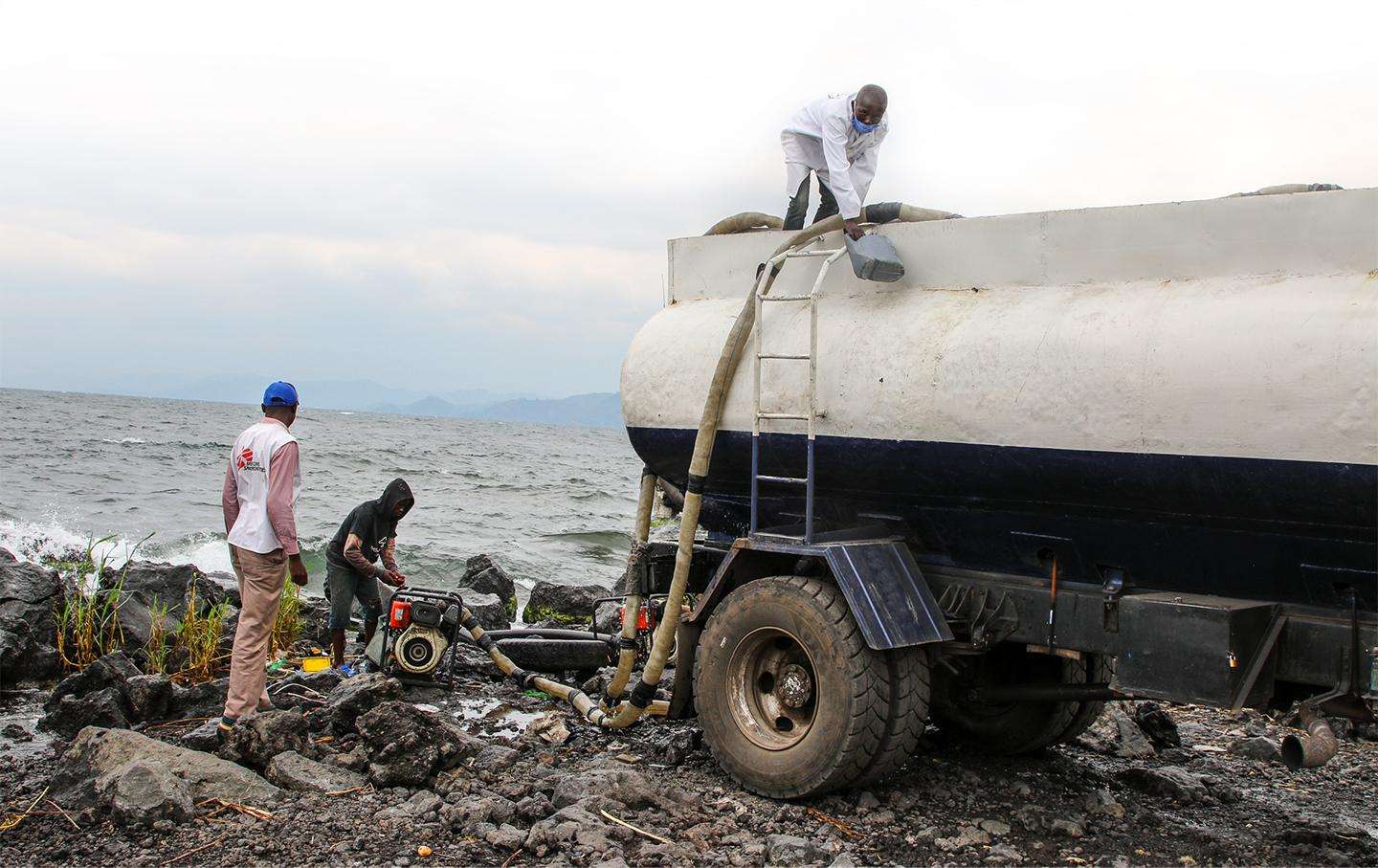
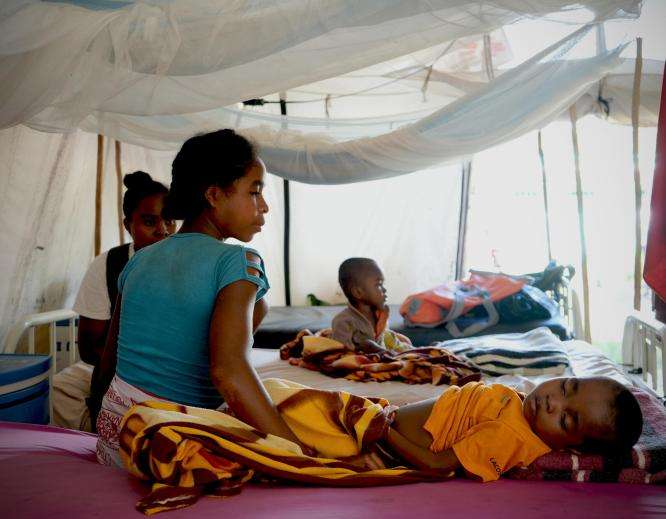
MSF teams are assisting victims of the floods. Photo ©  Karel Prinsloo, Associated Press

MSF teams are assisting victims of the floods.
Photo © Karel Prinsloo, Associated Press
In Marere, a small village along the Juba river, approximately 80 kilometers (50 miles) north of Kismayo, MSF teams who have been working in the hospital and therapeutic feeding center, were able to respond quickly to the emergency but today more help is needed. The greatest need to address is the lack of drinking water. It is estimated that 70 percent of water sources are contaminated due to flooding. This brings a greater risk of water-borne infections. MSF has two patients with confirmed cases of cholera already under treatment in Jilib, and numerous suspected cases have been admitted. There is also an acute need for food supplies. Crops were destroyed in an area with chronic food shortages. Of critical concern to MSF is the challenge of bringing food to 750 severely malnourished children currently enrolled in our specialized feeding program and providing medical care to patients with severe diarrhea, who are now living in isolated pockets. Additionally there is a big need for shelter materials. Many families who have lost their homes are now living in the open, exposed to torrential rain, increasing the risk of respiratory infections and particularly of malaria. Most villages are only accessible by boat, and access to the population remains our main worry.

What is your main concern for this population?

Though the health situation of the population is satisfactory at this point, there are significant risks for diarrhea, linked to hygiene and access to clean water, and malaria as mosquitoes are proliferating in the flooded areas.

Unlike flood-affected populations in Ethiopia and Kenya, there is little media coverage of the situation of affected populations in Somalia, and few humanitarian organizations. While humanitarian aid is already scarce in Somalia, the continued flight ban imposed by Kenya on the country further impedes the arrival of assistance. Increased difficulties in accessing populations, from the flight ban to logistical aspects, must not prevent other humanitarian agencies from providing assistance now.


  All News Stories
Read more on Somalia
Press Release
11/07/07
Somalia: No Safety in Mogadishu Press Release
08/20/07
Access To Medical Care Dangerously Scarce In and Around Mogadishu, Somalia News Update
07/25/07
Mogadishu, Somalia: New wave of violence keeps people from seeking medical care Press Release
07/23/07
Situation Worsens For Newly Displaced Families in Somalia News Update
07/11/07
MSF staff member killed in Somalia Voice From the Field
06/29/07
Somalia: Covering basic health needs in Afgooye and Hawa Abdi News Update
06/09/07
One Civilian and Two MSF Staff Members Victims of Shooting Incident in Mogadishu, Somalia Voice From the Field
06/06/07
Voices from Somalia: Stories from those who fled Mogadishu Voice From the Field
05/08/07
Somalia: "What I saw when I was in Afgooye was a desperate humanitarian situation." Press Release
04/24/07
Somalia – Tens of Thousands Fleeing Violence in Mogadishu Face Critical Humanitarian Needs Press Release
04/11/07
Cholera Epidemic and Several Weeks of Intense Fighting in Mogadishu, Somalia Open Letter
01/17/07
Somalia: The Need for Independent Humanitarian Aid 2006 Activity Report
12/31/06
Somalia Press Release
12/28/06
After a Week of Intense Fighting in Somalia, MSF Extremely Concerned About the Security of Medical Staff and Safety of Patients News Update
11/25/06
SOMALIA: Floods Increase Humanitarian Needs Press Release
11/22/06
Flooding Increases Humanitarian Needs in Somalia News Update
09/15/06
Responding to Violence in Somalia

contact us | donate | other MSF world offices | link to us | copyright statement | privacy policy
This site is maintained by the U.S. section of Doctors Without Borders/Médecins Sans Frontières (MSF)
©2006 MSF All rights reserved.