Home Site Map Contact Us Donate E-mail Newsletter xml  
Condition Critical

Sexual Violence

You are viewing all content tagged Sexual Violence.  You can also read an overview of MSF's work with Sexual Violence.

August 10, 2009 | Voice from the Field

South Africa: "If they keep it inside, it destroys them"

The Simelela center was set up to offer medical care, the collection of forensic evidence, counseling and follow-up care for victims of sexual violence in the rape-ravaged township of Khayelitsha.

“We did a lot of work to raise awareness. We went door-to-door, held marches, and put on puppet shows for children at schools and crèches. We told them, ‘Speak up and break the silence about rape’. Married women or girlfriends who had been imprisoned in their own bedrooms told us what happened to them."

August 10, 2009 | Voice from the Field

Liberia: "Sexual violence is a stain on our society"

Theresa Saday, 40, is confronting the problem of sexual violence in Liberia, where she works with MSF to counsel sexual violence victims and their parents.

“We meet parents on a daily basis who are unhappy that their children, who have been raped or abused, will go to the police. These parents are anxious, they are afraid for their children’s safety. So they turn to us with their concerns and for support.”

August 7, 2009

DRC: In Kivu Region, MSF Responds to High Levels of Violence

Intense conflict and violence continues to affect hundreds of thousands of civilians in the provinces of North and South Kivu in eastern Democratic Republic of Congo (DRC). The toll of sexual violence remains extremely high. During clashes and brutal attacks on villages, people are killed, raped, wounded, or forced to flee to the bush or to camps.

July 27, 2009 | Voice from the Field

Democratic Republic of Congo: “Nobody could take her dignity from her”

Sandra was raped by thieves who came to steal her family's savings in Bunia, DRC. They beat her father, and threatened to burn down their home if she reported them.

Sandra had camped in the church for two nights, alone with no water or food, hiding from her attackers while she waited for us. The villagers had asked if she needed anything. She had told them, “No. I just want to be alone.” We treated her, diminishing her risk of catching HIV.

July 20, 2009

Guatemala: Treating Sexual Violence, Breaking the Cycle of Fear

Maria will never forget this day in November for the rest of her life. She was sitting in a bus, five blocks away from her home, when a black car blocked the road. Two masked men entered the bus and put a gun at Maria’s head.

July 20, 2009 | Voice from the Field

Patient’s Story: “They told me I am brave because I spoke while many didn’t”

Esther, 17, was raped at 8 o'clock in the morning at a public bus stop in Guatemala City. Two months later she is struggling to find a way back to normalcy.

"The first night was very difficult. I had dreams about what happened to me. I cried a lot. I couldn’t sleep for a few nights. I was scared to have dreams about it, and it might come back. I see in my dreams the moment when he pushed me against the wall and lifted my skirt. . . I had the image of his face in my mind. I will never forget that. He was fat, dark with long hair, with a moustache."

July 13, 2009 | Voice from the Field

Patient’s Story: “That man had raped me and now I was pregnant”

An MSF patient from Quibdo, Colombia, was 13 when she was raped by her neighbor two years ago. The difficult consequences have had a major impact on her life.

"The man lived next to us. We all shared a bathroom. I was home alone, and it was morning before I had to leave for school. I was washing and he saw me and came into the house. My little sister had damaged our TV plug so he told me to come in and watch his TV. So I came in with a chair, and as I was sitting down he came close to me, grabbed my arms and tried to make me sit on the bed."

June 18, 2009

Burundi: After Six Years Treating Rape Victims, MSF Hands Over Bujumbura Project

On June 19, 2009, MSF will hand over operation of the Seruka Center in the Burundian capital of Bujumbura, to a local association.

June 10, 2009

MSF Assists Populations in Violence-Stricken Areas of DRC and Southern Sudan

In the northeast of the Democratic Republic of the Congo (DRC) and in the south of neighboring Sudan, Ugandan rebels from the Lord’s Resistance Army (LRA) have been perpetrating acts of extreme violence on civilians in response to operations conducted against them by national armies of the DRC, Uganda, and southern Sudan.

June 2, 2009 | Press Release

Zimbabwean Nightmare Of Neglect Continues In South Africa

Johannesburg/Brussels/New York, June 2, 2009 – Violence, sexual abuse, harassment, appalling living conditions, and a serious lack of access to essential healthcare define the desperate lives of thousands of Zimbabweans in South Africa today, warned the international medical humanitarian aid organization, Doctors Without Borders/Médecins Sans Frontières (MSF).

June 2, 2009 | Special Report

No Refuge, Access Denied: Medical and Humanitarian Needs of Zimbabweans in South Africa

Despite the fact that many Zimbabweans risk their lives to flee Zimbabwe, the South African government has historically characterised them as ‘voluntary economic migrants’ and aggressively deported them. Zimbabweans say they had little choice but to leave and thousands continue to cross the border every day, legally and illegally, as a matter of survival.

March 5, 2009 | Press Release

Doctors Without Borders Releases Sexual Violence Report

Johannesburg/Brussels/New York, March 5, 2009 – Ahead of International Women’s Day, Doctors Without Borders/Médecins Sans Frontières (MSF) today released a report summarizing the organization’s experience in assisting victims of sexual violence.

March 5, 2009 | Special Report

Shattered Lives

Through this report, MSF shares its experience in providing medical care, counseling and other forms of support to thousands of victims of sexual violence in many countries around the world. The report is partly born out of outrage about the inexcusable acts that these people have been subjected to and the damage inflicted upon their lives. It demonstrates why it is imperative to make immediate care available, and truly accessible, for those who have been sexually assaulted. MSF hopes that this report will inform and inspire health officials, aid workers, and others who should be involved in providing such support.

March 4, 2009

'My face hurts badly because he scratched it with his nails'

Paul had received some money. He was supposed to share it with us. When my aunt, my brother and I went to see him, he said he had only received 20,000 francs and he would give us 1,000 francs each. We said that was not enough. He said he couldn’t give us any more than that and told us to come with him to the place where the money was.

March 4, 2009

'The sixth time, I could not take it anymore'

I went to the shop to buy toilet paper for my uncle and I noticed a guy staring at me. Then he came over and asked my name. I didn’t want to tell him my real name, so I said it was ‘Junior’. He asked where I lived and invited me to come to his house.

March 4, 2009

'I want to help people who, like me, have been failed by the law'

I live in Khayelitsha, a large township on the outskirts of Cape Town. I grew up in Eastern Cape with my parents and four older brothers.

March 4, 2009

'I don't know where my father is now and I don't want to see him again'

I came back from school, I had lunch and was getting ready to go out again. My father offered me 150 francs to come to the bedroom with him. I said I didn’t want to go. But then he took me over to the bed by force and did bad things to me.

March 4, 2009

'If the baby has HIV, what am I going to do?'

I was walking down the street and as I passed this one house, a man took me by force, dragged me inside and raped me. I didn’t know him, I had never seen him before.

March 4, 2009 | Special Report

Shattered Lives: South Africa

The levels of sexual violence in South Africa are alarming: it is estimated that a woman is raped every 26 seconds. Khayelitsha, a poor township on the outskirts of Cape Town, has one of the highest incidences of rape in the country. In Khayelitsha, survivors of sexual violence receive care at Simelela, a center offering comprehensive services that go far beyond basic medical needs in a unique partnership between MSF and numerous local partners.

March 4, 2009 | Special Report

Shattered Lives: Liberia

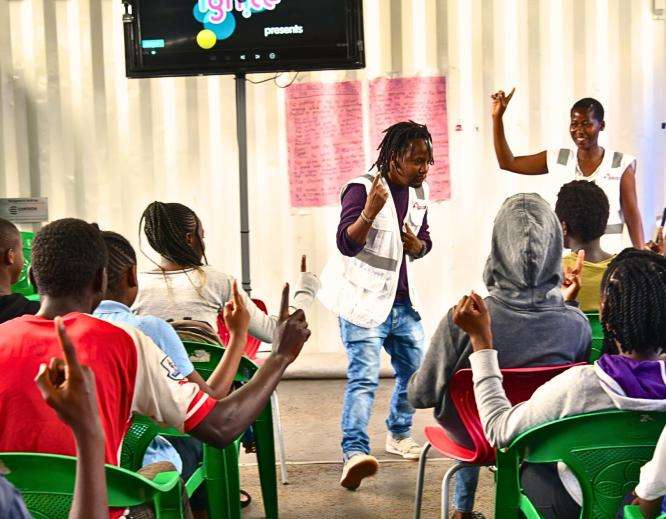
MSF is providing care for victims of sexual violence in two hospitals and two clinics in Liberia’s capital, Monrovia. A drama group helps raise awareness of rape, social workers provide psychosocial support to patients and medical-legal certificates are issued for everyone. Coordinated lobbying efforts resulted in the adoption of a new medical-legal certificate, which is now being implemented at a national level.

March 4, 2009 | Special Report

Shattered Lives: Colombia

In Colombia, few victims of sexual violence seek medical care immediately after being raped. Fear of stigmatization and safety concerns are some of the reasons that prevent them from doing so. MSF provides comprehensive health care for victims of rape and tries to reduce the barriers they face in accessing services.

March 4, 2009 | Special Report

Shattered Lives: Eastern DRC

In the midst of the conflict in Kivu, MSF strives to provide medical care to victims of sexual violence. Rape is widespread, but access to patients is a challenge. With the help of a network of women working in villages, the word is spreading and more victims are seeking care. Yet, fighting, geographic isolation and the fear of disclosing the rape prevent many women from seeking care in Masisi, a district in North Kivu.

March 4, 2009 | Special Report

Shattered Lives: Burundi

February 23, 2009

Guatemala: For Women, the Most Dangerous Place is at Home

More than 10,000 cases of sexual violence were reported to the authorities in 2008, with 4,600 of these cases occurring in the districts of Guatemala City, where MSF runs a program to assist such victims.

November 20, 2008

MSF Activities In North Kivu, Democratic Republic Of Congo

MSF provides health care (medical consultations, hospitalizations, and surgery) in North Kivu province’s Rutshuru, Masisi, and Lubero districts. MSF works in Rutshuru hospital and supports Mweso, Masisi and Kitchanga hospitals as well as health centres in these districts, and also runs a network of mobile clinics.

July 1, 2008

Darfur: Operational Update

MSF projects in Darfur.

June 18, 2008

DRC: Constantly Fleeing and Increasingly Ill in North Kivu

Epidemics, rape, and constant movement to escape violence in North Kivu province, Democratic Republic of Congo, have taken their toll on the population. "These people are exhausted, increasingly weak, and consequently, increasingly ill," says an MSF coordinator in Masisi.

December 13, 2007

Ten women tell of their Angolan ordeal

Since October 2007, MSF teams present in Western Kasaï—a Congolese province bordering Angola—have collected 100 testimonies among expelled Congolese women. These women report abuse, detention, rapes and beatings by the Angolan military before being expelled to the other side of the border.

October 30, 2007 | Voice from the Field

Treating sexual violence in Haiti

An interview with Olivia Gayraud, a French emergency nurse, who helped open the Doctors Without Borders/Médecins Sans Frontières (MSF) 56-bed emergency medical and surgical program at St. Joseph's Hospital in Port-au-Prince in October 2004. In March 2007, she became head of mission at the project, which now inlcudes a program to treat victims of sexual violence with medical and mental health care.

October 24, 2007 | Press Release

Ituri, DRC: Ongoing Sexual Violence and Brutality

Kinshasa/Bunia/Geneva, October 24, 2007 — Despite an overall decrease in the intensity and recurrence of conflicts in the district of Ituri in eastern Democratic Republic of Congo (DRC), civilian populations there are still subjected to high levels of violence. Based upon four years of medical work in the region, Doctors Without Borders/Médecins Sans Frontières (MSF) has issued a report titled, "Ituri: Civilians Still the First Victims," emphasizing the persistence of sexual violence as well as the direct humanitarian consequences of military operations in 2007 during a "pacification process" in the region.

October 24, 2007 | Special Report

Ituri: Civilians Still the First Victims

In the wake of a violent civil war, the district of Ituri in the northeast of the Democratic Republic of Congo (DRC), which has a population of 4.6 million, has and continues to be the scene of immense human suffering.

August 8, 2006

Struggling to Survive in North Kivu, DRC

A rutted track winds through mountainous terrain of the far east of the vast Democratic Republic of Congo (DRC), snaking more than 750 miles and linking the towns of Goma and Kisangani. Today, even more than three years after the conclusion of the war, much of the road is impassable due to insecurity.

July 19, 2006

Democratic Republic of Congo: Rape as a Weapon in North Kivu

In the Democratic Republic of Congo (DRC), rape forms part of the daily reality for women living in the North Kivu province, where violence has reigned for several years. In 2005, Doctors Without Borders/Médecins Sans Frontières (MSF) teams admitted 1,292 women who were victims of sexual violence and as many again in the first six months of 2006. These figures are extremely disturbing; however they only reflect a very small part of reality in this eastern region. Malika Saim, MSF desk manager for the DRC, outlines the response our teams are providing to the situation. response.

January 24, 2006 | Speech

The Humanitarian Situation in the Democratic Republic of Congo (DRC)

A Statement Delivered by Helen O'Neill, Deputy Director of Operations, Médecins Sans Frontières (MSF) at the United Nations Security Council "Arria Formula" meeting

September 20, 2005 | Voice from the Field

Rebecca Singer, RN, ND
Treating Sexual Violence in Liberia

Rebecca Singer is a nurse from Denver, Colorado, who has spent five months working with MSF to provide treatment and support for victims of rape and other forms of sexual violence at Benson Hospital's Gender-Based Violence Clinic. Rebecca writes of her experiences thus far in Monrovia.

March 8, 2005 | Special Report

The Crushing Burden of Rape

Since early 2003, the people of Darfur have endured a vicious campaign of violence, which has forced almost 2 million people to flee from their destroyed villages in search of safety. Rape against women, children, and men has sadly been a constant factor in this violence throughout this campaign of terror. More tragically, it continues to this day even long after people have fled from their villages. The stories of rape survivors give a horrific illustration of the daily reality of people in Darfur and especially of women and young girls, the primary victims of this form of violence. It has to stop.

March 7, 2005 | Press Release

MSF: Rape and Sexual Violence Ongoing in Darfur

Amsterdam, 7 March 2005 - Women and girls in war-ravaged Darfur are continuing to suffer a high incidence of rape and sexual violence, according to a report issued today by Doctors Without Borders/Médecins Sans Frontières (MSF). Stories of rape survivors told to MSF are a horrific illustration of the daily reality of the ongoing violence that has displaced almost two million people in Darfur.

March 1, 2005 | Voice from the Field

Mary Ann Hopkins, MD
War Surgery in Ituri, the Democratic Republic of Congo

Mary Ann Hopkins, MD, a surgeon at New York University Medical Center and Bellevue Hospital, recently returned from Bunia. At the 150-bed Bon Marché Hospital, Dr. Hopkins operated on people, including children, with gunshot, machete, and burn wounds as well as victims of sexual violence, who have been directly targeted by warring factions in Ituri.

January 1, 2005 | Voice from the Field

Nurse Rakel Ludviksen
Mountains of Darfur: Everyone we met had lost someone

MSF nurse Rakel Ludviksen and her colleague Jean Pierre Amigo spent November in the Jebel Si mountains, an extremely remote region of North Darfur, Sudan.

November 1, 2004

Persecution, Intimidation and Failure of Assistance in Darfur

There is a war in the West of Sudan, with two rebel movements (the Sudanese Liberation Army (SLA) and Justice and Equality Movement (JEM)) having launched an insurgency against the rule of Khartoum.

September 27, 2004

Q&A: Responding to Sexual Violence in Darfur

While working in their clinics and feeding centers in Sudan's western Darfur region, Doctors Without Borders/Médecins Sans Frontières (MSF) volunteers regularly come across women and girls who have been raped or sexually assaulted.

August 20, 2004

Not Enough Time

Twice a week, Doctors Without Borders/Médecins Sans Frontières (MSF) volunteers travel to Deleig, a small village in the western part of the Darfur region of Sudan. As of late-July some 20,000 internally displaced people (IDPs) live there.

April 6, 2004 | Press Release

I Have No Joy, No Peace of Mind - Consequences of Rape in the DRC

Kinshasa/Nairobi/New York, April 6, 2004 - The international humanitarian organization Doctors Without Borders/Médecins Sans Frontières (MSF) today expressed its serious concern about continued sexual violence against women and girls in the Democratic Republic of Congo (DRC), a phenomenon that is being perpetuated by ongoing insecurity. One year after a peace agreement was signed to put an end to the war in DRC, MSF continues to see victims of rape in its clinics.

March 8, 2004 | Ideas & Opinions

Enough is Enough, Sexual Violence as a Weapon of War

MSF Briefing paper for March 8, 2004, International Women's Day

October 1, 1999 | Special Report

Congo-Brazzaville: Chronicle of a Forgotten War

For the past 11 months, fighting between the government army or militias and rebel militias have resumed in Brazzaville, the capital of the Congo Republic. This fighting has generated massive and blind atrocities against civilian populations. The resulting widespread violence perpetrated by the parties at war affects the entire civilian population. Arbitrary executions, mutilations, rapes, and disappearances illustrate the arbitrary character of the violence perpetrated against the civilians.