![]()
|
Focusing on Reconstructive SurgerySeptember 30, 2006Doctors Without Borders/Médecins Sans Frontières (MSF) opened its project in Jordan on August 5. Head of mission Dr. Mego Terzian explains the goals of the project in Amman and describes the main difficulties encountered by the team and our partners in Iraq. Can you explain to us the reasons for MSF's presence in Amman?
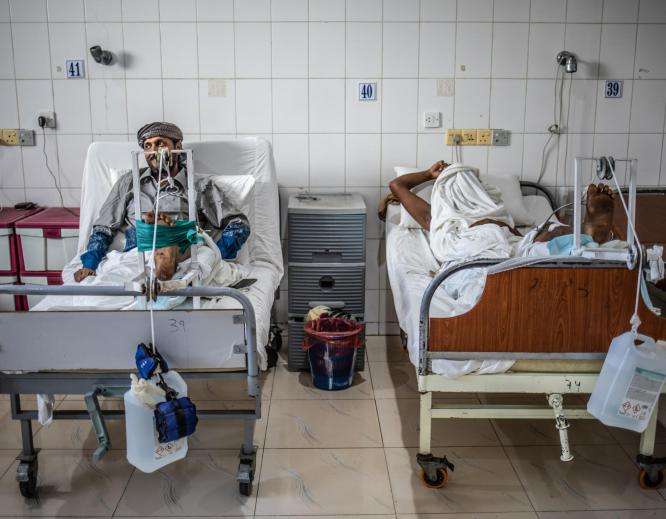
© Olivier Falhun / MSF The MSF program provides specialized reconstructive surgery to injured Iraqi citizens. Hospitals in Iraq are overwhelmed and can no longer provide this type of care. For several months, MSF contemplated what resources could be deployed to try to help injured civilians in Iraq. We put together an initial contact network that opened the way for a potential intervention. It was the advice of our Iraqi counterparts that led us to set up a mission in Amman, Jordan, 400 kilometers from the Iraqi border. They began by expressing their concerns over the atmosphere of chaos that currently prevails in Iraq, discouraging us from interceding there directly. Instead, they suggested another possibility developed around reconstructive surgery, since the hospitals in Iraq are so overwhelmed that they can no longer provide this type of care. For example, one of the patients who we intend to transfer here has been waiting for a reconstructive surgery operation for more than two years. This overflow is coupled with a lack of specialized surgeons: according to the United Nations, more than 400 specialized doctors have left Iraq since hostilities began in 2003. Furthermore, hundreds of other doctors have been killed. This is why, for example, the General Surgical Hospital of Baghdad currently has only one orthopedic surgeon. The threats against doctors also affect their patients as well, since this type of surgery requires an average hospital stay of three weeks—three weeks during which the patients are at the mercy of revenge operations by the various armed militias. What steps have we taken to address this situation?In cooperation with the Red Crescent of Jordan, and with the support of a number of our Iraqi colleagues, we decided to set up a mission in Amman, Jordan, and to refer those Iraqi patients who need this particular type of specialized operation to this facility. The Jordanian Red Crescent hospital provided us with a surgery room, which we renovated, some 20 hospital beds for the patients we have begun to transfer, and a team of nurses who support our team of medical staff. To address the threat to Western expatriates in Iraq, we have put together an initial network of contacts with local doctors, who try to identify patients we can refer to Amman. These same doctors also try to determine the most serious deficiencies in the hospital system in Baghdad, visiting health care facilities of every creed in order to respect our principle of impartiality. Based on the conclusions of these visits, our colleagues have chosen several hospitals which we will attempt to supply regularly with equipment and medications. However, this objective requires several guarantees, particularly in terms of reliable intermediaries, both for ordering medical supplies and for receiving supplies sent to Baghdad. This is especially important given the major financial expense that this portion of the project represents. What are the main difficulties inherent to this project, and how can we resolve them?Beyond the administrative constraints we must overcome in order to bring the patients to us, there are many other obstacles, mainly due to the high level of insecurity currently affecting Iraq. The dangers facing our colleagues in Baghdad now include violence by armed groups, and the difficulties and risks of travel within the country, particularly along the road patients and those who accompany them take to reach Baghdad airport. Sometimes, from certain places near Baghdad, it would be less risky for those who live there to drive to Jordan for health care than to make the journey to the airport, or to stay in a hospital bed in Baghdad. In fact, that's what one of our recent patients decided to do. At the same time, we also have to be careful not to further expose our colleagues in Iraq, and that's not easy! One of them, for example, was directly threatened recently upon leaving the Ministry of Health to collect information on patients to be transferred. Our first step, therefore, is to cultivate and improve our network of Iraqi doctors in order to be within closer reach of those who need to undergo reconstructive surgery, and gradually to increase the number of patients who can be referred to us and cared for in Jordan. |
||
|
|
||