Home Site Map Contact Us Donate E-mail Newsletter xml  
Condition Critical
  • Donate
  • Print
  • E-mail
  • Share

Field News

Clinical Trials in Africa: Ethical Research Needed on Diseases

Interview with Dr. Jean-Hervé Bradol, President of the French Section of Médecins Sans Frontières

June 7, 2007

With the Nigerian government filing a lawsuit against the U.S. drug company, Pfizer, for clinical trials it conducted during the 1996 meningitis epidemic in Nigeria, Dr. Jean-Hervé Bradol, president of the French section of Médecins Sans Frontières, reviews MSF’s work in Nigeria that year. He emphasizes the need for more clinical research that addresses the lack of treatment options for people in Africa.


How did MSF respond to the 1996 meningitis, measles and cholera epidemics in Nigeria?


A meningitis epidemic broke out in Nigeria’s northern states in early 1996. It was a very extensive epidemic that affected densely-populated areas. In response, beginning in mid-February, our teams set up preventive (vaccination) and treatment (medical care in hospital facilities) programs in three of the seven states that were hardest hit -- Kano, Bauchi and Katsina. Subsequently, MSF carried out a large-scale operation covering nearly 3 million people.

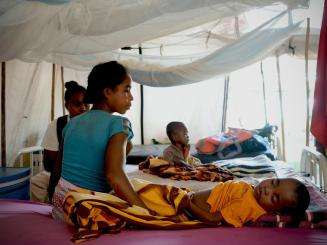
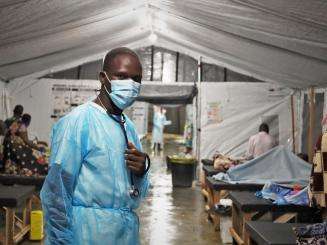
At the same time, measles was identified in Kano and Katsina states and a cholera epidemic broke out in the town of Kano, with an average of 90 patients admitted daily in March 1996. Our teams also set up a cholera camp in the Kano hospital, with a 300-bed total capacity. We brought in 63 international volunteers, 42 of whom were placed in Kano, to treat the thousands of cases.


How did MSF’s teams learn that Pfizer was in Kano?


When MSF was carrying out its vaccination program and treating patients affected by these epidemics, a Pfizer team came to conduct a clinical trial on the antibiotic, Trovan ®, in one of the Kano hospital rooms where MSF was operating. MSF teams and Pfizer teams were not working in the same hospital rooms.

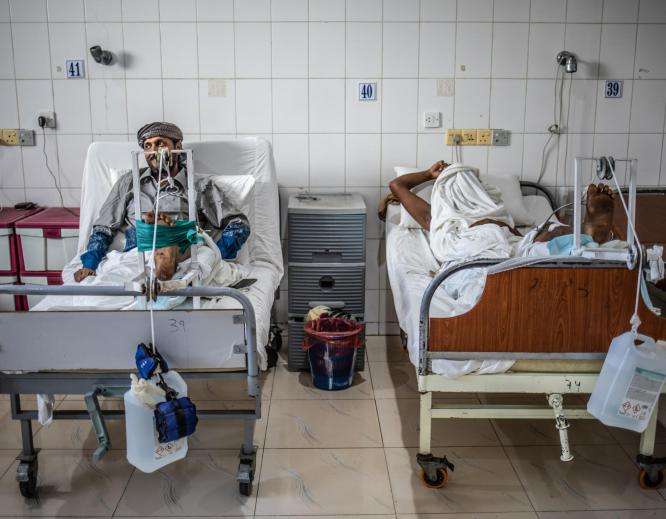
Faced with emergency conditions and a very large number of patients, MSF’s teams were not working under the most favorable conditions, with patients literally crammed into rooms and corridors for lack of space.


What are your comments regarding Pfizer’s trials?


As a humanitarian medical organization, it’s not our role to evaluate the administrative and ethical conditions under which Pfizer’s trials were carried out. However, our field team present in Kano at the time did voice serious concerns about several aspects. They spoke out against the fact that Pfizer conducted clinical trials in the midst of a large-scale meningitis epidemic. Medical responsibility requires all medical staff to focus on the same goal to address an emergency involving two particularly lethal epidemics, cholera and meningitis. The situation thus called for using treatment protocols known to be effective rather than carrying out clinical trials on a new antibiotic, with uncertain results. Moreover, this antibiotic was not intended for African patients.

Ethical rules regarding the conduct of clinical trials stipulate that in all cases, a treatment administered in the context of a clinical trial should be considered ineffective if it does not produce results within 48 hours or if the patient’s condition worsens (see interview with Philippe Guérin of Epicentre).


Are clinical trials carried out frequently Africa or in other resources limited settings?


Yes, but in most cases, their objective is not to do research on illnesses affecting poor countries. Between 1975 and 2004, only 20 of the 1,556 new drugs that appeared on the market treated the parasitic and infectious diseases that kill 15 million people every year. Barely 10% of medical research is currently dedicated to illnesses responsible for 90% of worldwide deaths – that is, where the needs are the greatest. It is thus critical that research be conducted in Africa and the developing countries to test new drugs for malaria, sleeping sickness and Chagas disease that sick people in poor countries need and these tests should always be conducted in an ethical way.

Public-private partnerships have led to the launching of several initiatives in recent years. They involve research on AIDS (the International AIDS Vaccine Initiative), malaria (Medicine for Malaria Venture) and tuberculosis (Global Alliance for TB Drug Development). Malaria, AIDS and tuberculosis are diseases that also affect wealthy countries and may thus be of economic interest to the drug industry. At this point, only the DNDi, the Drug for Neglected Diseases Initiative, is conducting research on the most neglected diseases and is carrying out clinical trials in Africa.

The danger of the lawsuit brought against Pfizer is that it may discourage large laboratories from allowing their drugs to be involved in clinical trials in Africa, which are of vital necessity to millions of sick people.

Tags: Nigeria, Chagas

  • Print
  • E-mail
  • Share
  • Donate
E-newsletter