Consequences of attacks on health care in South Sudan

Recent incidents of looting, gunfire, and the bombing of MSF’s hospital in Old Fangak have left communities with few options for care.

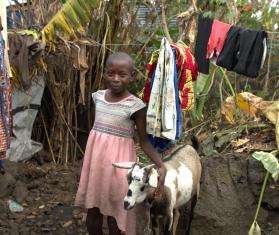
A woman in pink stands outside a maternity ward in South Sudan.

Outside the maternity ward at Ulang Hospital. | South Sudan 2025 © MSF

Every attack on health care is unacceptable and has real consequences for people's well-being.

In January this year, two Doctors Without Borders/Médecins Sans Frontières (MSF) boats in South Sudan were fired upon as they crossed a river, forcing MSF to make the difficult decision to suspend our outreach activities due to safety concerns. Just three months later, MSF’s hospital in Ulang was attacked and looted, resulting in the full suspension of all activities. These events have led to devastating consequences for people’s access to health care

“I thought my colleagues were dead”

At 2 p.m. on January 15, MSF’s outreach team was fired upon while returning to our base in Ulang by boat on the Sobat River. The team had just delivered medical supplies to Nasir County Hospital and was traveling in two boats bearing MSF’s flag—clearly marked with our logo—when suddenly, the sound of gunfire sparked a panic on board. Chuol, who is in charge of the outreach team, instinctively jumped into the murky water.

Riek, who works as a link between MSF and the local community, was in a nearby village when he heard the gunshots. He ran as fast as he could down to the river, where he saw an empty MSF boat drifting on the water. 

MSF boats on the Sobat River in South Sudan.
South Sudan 2025 @ MSF

“I was shocked, I thought my colleagues were dead,” said Riek.

Chuol managed to swim ashore and tried to locate everyone in his team. Five team members made it to safety, but one was missing.

Meanwhile, Riek heard someone calling his name. It was the missing team member, who had jumped into the water and was injured. Riek acted quickly, grabbing a canoe and paddling out to his colleague. He managed to help him into the canoe. It turned out that the injury was minor, and the colleague was taken to MSF’s hospital in Ulang for treatment.

I felt a nervousness in my body for two days after witnessing the boats being shot at. The shock I felt when I thought my colleagues were dead stayed with me.

Riek

MSF has been providing health care in Ulang since 2018, running a hospital and outreach activities at 13 sites along the river. Our outreach teams provide basic medical care, supply patients with medication, and refer patients to the local hospital. After the incident on January 15, MSF was forced to take the difficult decision to suspend all outreach activities in the area for security reasons. MSF also launched an investigation to find out exactly what happened.

Ulang is a volatile environment in which to live or work, affected by intercommunal violence, armed fighting, and displacement. Despite being used to the nearly constant insecurity, the shooting on the river left a mark on Chuol and Riek.

“I had trouble sleeping the first few nights after the attack,” said Chuol.

Riek added, “I felt a nervousness in my body for two days after witnessing the boats being shot at. The shock I felt when I thought my colleagues were dead stayed with me.”

Destruction after attacks on health care in South Sudan.
On the morning of April 14, MSF’s hospital in Ulang was attacked and looted, leading to the suspension of all activities. The area is now left without any fully functional health care facility. | South Sudan 2025 © MSF

People struggle to access care

At the hospital in Ulang, the MSF team provides services including maternal, pediatric, and emergency care. Many of the beds are now empty.

“Since we had to suspend our outreach activities, we have had fewer patients than usual in the hospital,” explained Dr. Philip. “Without MSF's boats to transport patients to the hospital, patients living far away sometimes have to wait days, or even weeks, for a boat which they can take to Ulang. Those who eventually make it here are often in very poor condition.”

The only other way to get to the hospital is on foot, as most roads are blocked or damaged. During the rainy season, floods make it impossible to cross some areas and boats are often the only way to move around. 

South Sudan: No health facility left in Ulang after armed looting

Read more

One woman reached the hospital too late to save her stillborn twins. Just as she was about to share her story, a staff member came to tell her that the boat she needed to take her home had arrived. It would take up to a week for the next boat to come. With the help of her relatives, she quickly packed up her things and hurried out of the hospital.

“She was from Nasir, close to where the attack happened,” said Veronica, an MSF midwife. “When complications arose during her labor, she had to get to a hospital as soon as possible. Since July 2024, the hospital in Nasir has not had the staff or technical resources to handle complicated deliveries, so she had to come here to Ulang. Normally, our mobile teams would have been able to pick her up by boat, but instead she had to wait two days for a boat to bring her here. When we were finally able to help her, it was too late, we couldn't hear any heartbeats from the twins in her stomach. She was angry and sad—sad about losing her twins and angry that the attack happened.”

A baby being held in South Sudan.
Nyawich Dabuol holds her daughter, Nyamal Kuol, in the neonatal intensive care unit at Ulang Hospital. | South Sudan 2025 © MSF

Violence robs vulnerable communities of their only hospital

Since mid-February 2025, escalating conflict between government forces and armed groups in Upper Nile state has driven further instability. On the morning of April 14, dozens of armed men stormed MSF’s hospital and office in Ulang, threatening staff and looting vital medical supplies and equipment. As a result, all medical services at the hospital have been suspended. 

I am completely heartbroken by what has happened. The hospital had been there for more than 10 years and was a lifeline to over 100,000 people in the area.

David Charo Kahindi, MSF medical coordinator

The area around Ulang is now left without a single functioning health facility. The attacks on MSF’s boats and the hospital are part of a broader pattern of insecurity affecting the provision of health care in the area. The violence forced the suspension of both outreach and hospital services, and the cost will be paid by vulnerable communities left without care.

On May 3, a deliberate bombing of the MSF hospital in Old Fangak, Jonglei state caused significant damage, including the complete destruction of the pharmacy, which was burned to the ground. All our medical supplies for the hospital and our outreach activities were stored in the pharmacy. As thousands of people fled the town, we evacuated the wounded and opened a temporary health facility nearby. However, the hospital in Old Fangak was the only one in the entire county. Now, the 110,000 people it served no longer have access to hospital-level care.

Staff testimony

"There is nothing left"

David Charo Kahindi, MSF medical coordinator in South Sudan, was in Old Fangak the day the hospital was bombed and was part of the team extinguishing the fire and treating and evacuating wounded patients.

I was woken by the bombing at around 4:50 a.m. on Saturday morning. I could hear the helicopters flying overhead and people screaming all around us. Every time I heard the helicopters, I was afraid for my life and the life of the population and the patients and the staff. The bombing continued for about an hour. All I could hear was the guns firing and the population screaming.

When it finally went quiet, I immediately took the boat to get to the hospital. l met our watchman at the gate and saw that it was completely shattered. There were bullets everywhere. As I walked into the compound, I saw pieces of weaponry that had exploded.

When I reached the pharmacy, it was on fire. Everyone, all the team and the community, were trying to fetch water with buckets to put it out. It was no easy task, because our fuel tanks were a few meters away from where the pharmacy was, so we were afraid that if the fire continued, this fuel was going to explode and cause another disaster on top of the disaster we were already dealing with.

At first I thought there was a chance that we could save some of the medications that were inside, but it quickly became clear that whoever bombed the hospital wanted this pharmacy and all the medications inside it to be completely burned. It took us about five hours before we could completely put it out.

Then, I walked into the hospital. First, I went to the men’s ward where there had been two patients the night before. When I entered the ward there was no one there, but there were bullet holes on the ground and there was blood on the floor. I was worried. I didn't know what had happened or where the patients had gone. It was the same in the female ward as well.

Next, I reached the emergency room, where the team was busy stabilizing and treating the patients that had just arrived from the town. There were 20 in total, and some of them were in very, very critical condition and we urgently needed to stop the bleeding. Some of them had been shot in the head, in the chest, in the abdomen. We tried to do everything we could, but there were no supplies other than what had been in the ward before the attack. What we had was definitely not enough.

Once we stabilized the patients, we evacuated them by speedboat to a village about an hour away that we considered to be safer. Most of the patients were women. There were also children of just 15 years old that were wounded. In this village, there was nothing but a tent. We were in the middle of nowhere. We kept the patients in the tent there and gave them what medication we had been able to bring with us. The next day, they were evacuated by air to a hospital in Akobo for further treatment.

However, around 10,000 people had fled to the same location and by morning it was clear that we didn't have enough supplies to run a health facility that would be able to provide this many people with any type of medical care. We called urgently for help from the team in Juba and with the support of the United Nations we were able to airlift 350kg [about 772 lbs] of medical supplies to run a health post from this tent. We hope that we wouldn’t receive any more wounded, but we continue to receive information that there was ongoing bombing in other areas.

I am completely heartbroken by what has happened. The hospital had been there for more than 10 years and was a lifeline to over 100,000 people in the area. Hospitals should never be the targets and I utterly condemn this bombing. It was a 35-bed hospital that had an outpatient department, inpatient wards, maternity—and we were able to refer severe cases to higher level facilities. Now, there is nothing left.
Read more about the bombing of MSF's hospital in Old Fangak >>
Fire from a bombing of MSF's hospital in Old Fangak, South Sudan.