
More than 310,000 people have contracted measles and at least 6,000 have died from the disease in the Democratic Republic of Congo (DRC) this year—the largest outbreak the country has experienced in decades.* The World Health Organization (WHO) says this is the largest measles epidemic in the world today. According to a survey by Epicentre—MSF’s research arm—these figures represent a fraction of the real number.
Measles has now spread to all 26 provinces of the country and more resources must be urgently committed to target areas where the outbreak is still raging. The epidemic is even deadlier than the ongoing Ebola outbreak in the northeast of the country, which has so far caused more than 2,196 deaths.
Several factors contribute to the rapid spread of this epidemic. In some regions of the country, there is an extremely low immunization coverage. This is due not only to a shortage of the measles vaccine in DRC, but, when vaccines are available, access is limited—the national vaccination program cannot keep up with the needs and many people don’t have access to health facilities. On top of this, the measles vaccine must be kept cold or it becomes less effective, and the “cold chain” is difficult to maintain in rural areas of the country that can only be accessed by motorbike or boat.
In northeast DRC, in North Kivu and Ituri provinces, the Ebola outbreak response has also caused a decline in measles immunization coverage. “When medical staff and equipment are already limited, epidemiological surveillance and medical care for patients may deteriorate for other diseases such as measles,” said Dr Nicolas Peyraud, an MSF vaccination referent who was recently in DRC, where he helped to set up measles vaccination campaigns in collaboration with UNICEF and the Congolese Ministry of Health. “Similarly, preventive activities, such as routine vaccinations, are drastically reduced. Measles immunization coverage has declined significantly in Ebola transmission areas since the beginning of the epidemic in mid-2018.
No signs of abating
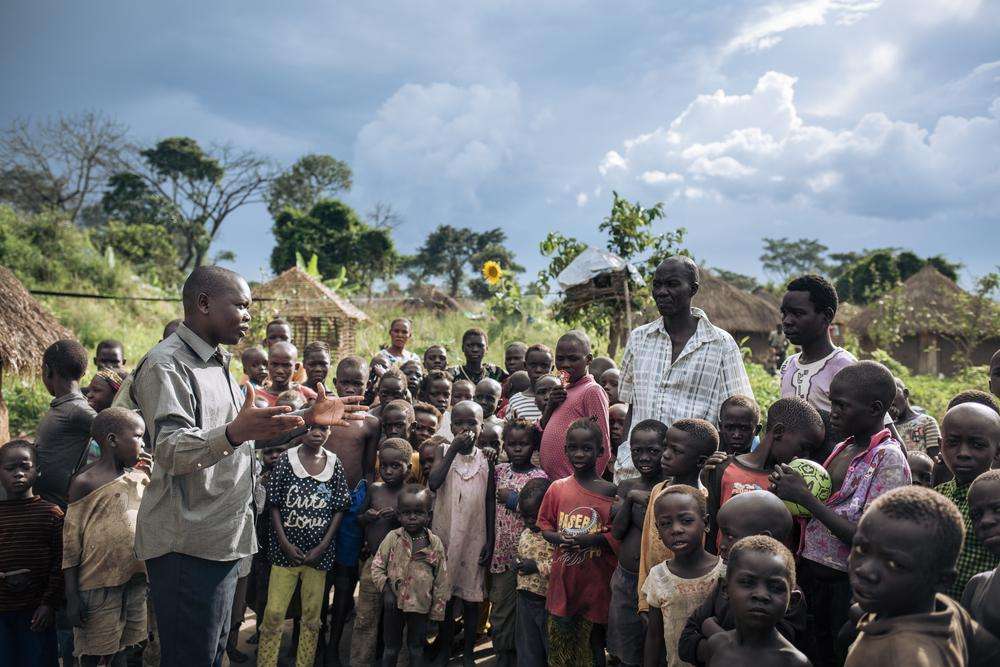
The epidemic shows no signs of abating: 9,605 new cases were reported in the last week of November—the highest number since the start of the year. The fatality rate this year is twice as high as in previous years, and 73 percent of deaths are in children under the age of five.
Measles is a highly contagious disease that is spread to others through coughing and sneezing. Right now, in DRC, a person with measles infects two to three other people on average. There is no specific treatment once someone contracts measles, but a well-executed vaccination campaign is extremely effective in preventing the spread of the disease. In areas with low immunization coverage, vaccination can reduce infant mortality by 50 percent.
“When an epidemic is declared, medical care and vaccination must be combined to stop the spread of the disease," said Alex Wade, head of mission for MSF in the DRC. "Since mid-November, the Congolese health authorities started measles supplementary immunization activities throughout the country. [And] MSF continues providing free quality medical care to patients. But for now, the epidemic is still several steps ahead of the medical-humanitarian response.”
Localized surveillance systems
Measles cases remain underreported across the country. MSF has set up surveillance strategies to identify new areas affected by the epidemic, in order to start interventions as soon as possible. At the beginning of December, MSF sent a small team to Viadana—a town in the province of Bas-Uélé in the north of the country—following a rapid increase in the number of recorded measles cases. But the situation they found was far worse than what the recorded numbers represented. In a single school of about 300 children, more than 100 students had measles. MSF immediately provided medical care for the children and organized a vaccination campaign in the area.
In the four provinces of ex-Katanga, in the south-east of DRC, MSF created localized surveillance systems and set up a decentralized laboratory to quickly analyze suspected cases of measles and rubella. The system was set up in October, but prior to that, the samples had to be sent all the way to Kinshasa—the capital of DRC—for analysis, which took several months.
MSF is also works in the province of Kongo Central, supporting the Congolese health authorities. On December 13, MSF opened a treatment center for complicated measles cases in the general hospital in Matadi, the capital of the province and the country's main port. A week earlier, another team opened a similar facility a few hours drive west, in the coastal town of Muanda. These treatment centers reached capacity within a few days after opening, and we had to relocate to larger structures.
In these treatment centers, MSF teams treat other pathologies, such as malaria and malnutrition, which greatly increase the risk of mortality in measles patients if left untreated. We also support the treatment of simple measles cases in areas surrounding these health zones by distributing treatment kits, strengthening surveillance and detection of new cases, and providing free transport for patients who need to be transferred to healthcare facilities for further treatment.
“Too many children have died”
Between January 2018 and October 2019, MSF teams treated 46,870 measles patients and vaccinated 1,461,550 children against the disease across 54 health zones in various provinces around the country, including Ituri, Haut and Bas-Uélé, Tshopo, Kasai, Mai-Ndombe, Kwilu, and Sud Ubangi.
In collaboration with the Congolese Ministry of Health, MSF also helped to strengthen measles vaccination activities in areas where the Ebola outbreak continues to spread. “In July, we introduced the first measles vaccination in an Ebola context,” said Dr. Peyraud. “Everything went smoothly and children in several health zones including Bunia and Ituri were vaccinated.”
Unfortunately, many regions still have low vaccination coverage.
"Supplementary immunization activities have been launched by the Congolese Ministry of Health, but there are still many health zones where the outbreak continues,” says Wade. “It is essential that humanitarian organizations and other responders pool all possible efforts to help the Congolese Ministry of Public Health to overcome this measles outbreak. Too many children have died from this easily preventable disease.”
MSF has worked in the DRC since 1981. Our teams respond to the needs of communities during health and humanitarian emergencies, including epidemics, pandemics, displacement of people, and natural disasters, with the primary objective of reducing morbidity and mortality.
*These numbers were updated on January 7, 2020.


Story Oct 23, 2024
Healing hands: A Sudanese doctor shares why he continues to provide ca...
Read More