March 25, 2026
12:00PM-12:30PM ET
Event type: Live online
90% of our funding comes from individual donors. Learn how you can support MSF’s lifesaving care with a gift.

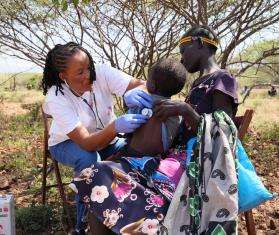
Lebanon 2026 © Maryam Srour/MSF
PAST EVENT
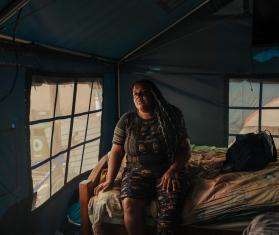
Lebanon 2026 © Maryam Srour/MSF
March 25, 2026
12:00PM-12:30PM ET
Event type: Live online
Read the transcript
The transcript is automatically generated and may include some typos*
00:02:19.000 --> 00:02:23.000
Good afternoon from New York, and thank you for joining us for today's briefing.
00:02:23.000 --> 00:02:34.000
My name is Elias Primoff, and I'm the editorial director on the communications team at Doctors Without Borders, also known by our French name Médecins Sans Frontières, or MSF.
00:02:34.000 --> 00:02:43.000
Over the next 30 minutes, we'll discuss the escalating conflict in the Middle East and some of the most pressing medical and humanitarian needs we're seeing across the region.
00:02:43.000 --> 00:02:53.000
You can submit questions at any time by using the Q&A or chat feature. We'll try to answer as many questions as possible today about this rapidly evolving situation.
00:02:53.000 --> 00:03:06.000
But first, it's my pleasure to introduce my colleagues, Dr. Luna Hamad, MSF's medical coordinator in Lebanon, and Tarana Hassan, MSF USA's new chief executive officer here in New York.
00:03:06.000 --> 00:03:10.000
Toronto, Luna, thanks very much for joining us.
00:03:10.000 --> 00:03:13.000
Thanks, Elias.
00:03:13.000 --> 00:03:25.000
So, just a bit of scene setting. On February 28th, the United States and Israel launched a military assault on Iran, including airstrikes on the capital, Tehran and other cities.
00:03:25.000 --> 00:03:35.000
Iran, an Iranian-backed armed groups based in Lebanon, have responded with attacks aimed at Israel and Gulf countries, as well as U.S. Military and diplomatic targets in the region.
00:03:35.000 --> 00:03:47.000
The conflict has now spread even wider. On March 2, conflict escalated dramatically in Lebanon as intensified Israeli airstrikes caused deaths, injuries, and massive displacement.
00:03:47.000 --> 00:03:54.000
Toronto, to start us off. How is this conflict impacting Msf's work in the region?
00:03:54.000 --> 00:04:09.000
Um, well, the short answer is quite dramatic. Um, it has created an incredibly volatile environment, which MSF teams across not just Lebanon and Palestine, but also Yemen, Iraq.
00:04:09.000 --> 00:04:25.000
Iran, Jordan, and Syria are all being impacted. Now, obviously, the nature of that impact, uh, is different between each of the countries, but also, like a lot of our patients and the communities that we serve.
00:04:25.000 --> 00:04:41.000
Um, we have thousands of staff across the region in the countries I've just named, and they are also experiencing this heightened level of insecurity and uncertainty. Some have also experienced displacement.
00:04:41.000 --> 00:05:05.000
So, you know, I think that it affects our colleagues who are in the field, but it also has really practical implications for, and it creates challenges for what we can do. I mean, one of the things that is impacting us is the closure of airspace, for example. That restricts the movement of our staff, being able to scale up and get people into the locations that we need to in certain places.
00:05:05.000 --> 00:05:21.000
And then we have challenges with supply chain. These supply chain challenges are not just impacting oil prices for the average person going to a gas station. For us, all these disruptions are delaying medical evacuations, which disrupt our activities.
00:05:21.000 --> 00:05:40.000
They create increased costs for doing our normal activities. So we have a real strain on logistics, our supply routes with the disruption through the Strait of Hormuz affects supply chains, but also we are seeing increases in critical medical supplies that are.
00:05:40.000 --> 00:05:47.000
vital for us to be able to continue the life-saving medical assistance that our teams are trying to deliver.
00:05:47.000 --> 00:06:04.000
Thanks, Tirana. And this is all on top of the the serious medical humanitarian consequences for people who are living in the region and are experiencing this conflict firsthand. Luna, you're in Beirut right now responding to those humanitarian needs.
00:06:04.000 --> 00:06:09.000
What are you seeing as the most urgent needs there right now? What is the team seeing?
00:06:09.000 --> 00:06:37.000
Hello, everyone. So thank you for having me. I'm speaking to you, yes, from Lebanon, from Beirut, where over the past three weeks we've been, um… seeing a very rapid escalation of the situation. Just to let you know, Lebanon is a country of around 5 to 6 million people that is hosting not only Lebanese, but Syrian refugees, Palestinians, and migrants from.
00:06:37.000 --> 00:06:51.000
A lot of different countries and today we are looking at more than 1 million people displaced. So this is not a localized crisis, it's affecting the entire country at a very large scale.
00:06:51.000 --> 00:07:07.000
It is important to understand that this is happening in a context that was already fragile from the previous war that did not stop. People did not recover, and the system did not recover.
00:07:07.000 --> 00:07:21.000
The health system was already under pressure, and many families were already struggling before this second escalation. And did not get any recovery.
00:07:21.000 --> 00:07:32.000
Chance, if we could look at the map, I can really show how the crisis is moving across the country.
00:07:32.000 --> 00:07:51.000
So these red areas are the areas that received a blanket evacuation order. The most affected areas are in the south and Nabatae Governorate. And there is another one in.
00:07:51.000 --> 00:08:17.000
southern Beirut, and a third one in North Vecca Valley. Uh, uh… From here, uh, we are seeing people moving from the south, we are seeing people moving from northwards toward Beirut, Mount Lebanon, and West and South Bekka, where they're relatively would feel safer. So the crisis is not only where the strikes are happening.
00:08:17.000 --> 00:08:33.000
It's also where people are arriving and where the pressure is now building. Today, we are looking at over 1 million people displaced across Lebanon around out of these 150,000 people are.
00:08:33.000 --> 00:08:49.000
in official open shelters, but a majority are, uh, in, in, um, not in the shelters. They are staying with relatives in overcrowded homes or in unformal conditions.
00:08:49.000 --> 00:09:15.000
And we're seeing an extreme overcrowding. Sometimes, uh, people stating that 50… 60, uh, people, people are staying in one single apartment, and many others are completely outside the system, staying in unfinished buildings and buildings under construction, parks, open spaces, streets.
00:09:15.000 --> 00:09:37.000
Even sleeping in their cars. And it's important to say that it's still even very cold in Lebanon, so at night, temperature drop. A couple of days ago, there was a thunderstorm, and families without proper shelter and heating, blankets, uh, become really, um… a direct health risk.
00:09:37.000 --> 00:09:57.000
Regarding the shelters, even, the conditions… the official shelter, their schools and halls, and the conditions are extremely difficult as well. People are staying in shelters that are not ready for living, they're overcrowded, lacking privacy, without adequate water, toilets, showers, sanitation, or heating system.
00:09:57.000 --> 00:10:02.000
In many cases, conditions are not suitable for people to live with.
00:10:02.000 --> 00:10:19.000
dignity or safety. uh, after 3 weeks, the situation is not improving, and it's accumulating, so we are seeing now… what we are seeing now today is really a combination of acute and chronic medical needs at the same time.
00:10:19.000 --> 00:10:33.000
The acute side of it is the injuries and the trauma cases. We have over an accumulation of 4,000 casualties, out of which around one… more than 1,000 deaths.
00:10:33.000 --> 00:10:50.000
including women, children, elders, patients arriving late, sometimes already either dead to the hospitals or in a critical condition. Hospitals are under pressure to absorb these cases.
00:10:50.000 --> 00:11:06.000
And beyond trauma, the acute knees are also include respiratory infections due to the cold and the skin diseases, dehydration, stress-related symptoms.
00:11:06.000 --> 00:11:22.000
And all of these are linked to the conditions that people are living in overcrowded and poor or caused sanitations.
00:11:22.000 --> 00:11:37.000
People that flee without their medication, without follow-ups, without access, proper access to care, so we're as well seeing patients with diabetes, insulin-dependent, with hypertension, epilepsies.
00:11:37.000 --> 00:11:49.000
asthma, mental health conditions, arriving after days or weeks, even now, without their medication yet, or treatment, and their conditions are already deteriorating.
00:11:49.000 --> 00:11:56.000
a very specific group that I would like to highlight is particularly the children.
00:11:56.000 --> 00:12:12.000
We're seeing children with respiratory infection linked to the cold and overcrowding, interrupted vaccination, lack of pediatric follow-ups, and increasing psychological distress. So, for children specifically.
00:12:12.000 --> 00:12:22.000
They are very quickly affected by these conditions. Um, I do want to highlight as well the strong and growing mental health burden.
00:12:22.000 --> 00:12:35.000
So people who are distressed, exhausted, with living in uncertainty and affecting both children and adults.
00:12:35.000 --> 00:12:47.000
Thank you, Luna. And I'm glad that you brought up those issues of chronic illness of things like vaccinations. We often, in conflict settings like this, consider war wounds, right?
00:12:47.000 --> 00:12:57.000
It's worth reminding, I think, our viewers that this is we're talking about displacement of a million people in a matter of weeks, and when you're forced to drop everything and flee your home.
00:12:57.000 --> 00:13:15.000
Often treatment for chronic conditions is interrupted. As you mentioned, children are not able to get routine vaccinations. So we're not just talking about the direct effects of conflict, right? We're also talking about all of these health issues that come along with sudden and massive displacement.
00:13:15.000 --> 00:13:31.000
I have a couple questions for you, Luna, about MSF teams, actually. I think it's important to note that as an all MSF projects, most of our aid workers are from the community that they're now serving, right?
00:13:31.000 --> 00:13:49.000
They're Lebanese, often working in the places where they are from. And many of our team members are experiencing the same realities on the ground as our patients are. Could you help us understand what this means for them and also how these ties to the community inform our work?
00:13:49.000 --> 00:13:51.000
In Lebanon.
00:13:51.000 --> 00:14:07.000
So before the war, we had our regular activities as well, and it was in north of Becca or in the south. So currently most of our staff are from the community that we're serving as well.
00:14:07.000 --> 00:14:27.000
They could be from the displaced communities, so they're not only responding, they are also living this crisis. Some are displaced themselves, some have families in affected areas, still away from them. And what it brings is very strong understanding of the context. They know where people are, they know.
00:14:27.000 --> 00:14:41.000
how they move and what they need. But it also means they are under emotional and personal pressure. So part of our responsibility is also to support our teams so they can continue supporting others.
00:14:41.000 --> 00:15:00.000
Thanks, Luna, and I think that's a really crucial point to reinforce here that this is difficult work and trauma is often part of the work. And it's a part of all MSF projects to provide psychosocial support to patients, but also to staff, right, to make sure that they have the resources they need to provide care.
00:15:00.000 --> 00:15:17.000
Um, and related to this, I actually have a question from, uh, submitted from a viewer. This is a question from Philippe. Given the intensity and unpredictability of the current conflict in Lebanon, how does MSF ensure the protection of staff and patients there?
00:15:17.000 --> 00:15:34.000
It is indeed a more, like, an aggressive escalation this time compared to the previous, uh, one. Uh, staff safety is always a priority. We have a continuous.
00:15:34.000 --> 00:15:48.000
access risk and adapt our movements, and we follow strict protocols in that regards. It's always a balance between maintaining access to care and managing the risks.
00:15:48.000 --> 00:16:07.000
I'd like to follow up on something you just said about the ferocity of these recent attacks. This is not the first time that you've responded to an escalation in conflict as an MSF staff member. Two years ago, MSF teams expanded activities following intensified Israeli bombardments.
00:16:07.000 --> 00:16:20.000
and ground incursions in Lebanon. In addition to the intensity of the attacks, what has made this different? What makes the situation more urgent than the one that you and your team responded to two years ago?
00:16:20.000 --> 00:16:46.000
It's really rapid, the escalation is very rapid, and the changes are very rapid as well, and we have to manage and adapt to the needs, and um… The difference is that there are still in those evacuation blanket, the areas that received an evacuation order, there are still families staying and stuck over there, not because they want to stay there, but they don't have a choice.
00:16:46.000 --> 00:16:54.000
So elders, the families that have elders or people with disabled.
00:16:54.000 --> 00:17:10.000
that don't want to leave their homes, or rather stay home, cannot live in shelters, do not have the possibility financial to rent a home or.
00:17:10.000 --> 00:17:26.000
we are even seeing more civilian casualties due to this. We're seeing more of civilian casualties in the hospitals. We cannot predict where the airstrikes or the attacks would be.
00:17:26.000 --> 00:17:33.000
anywhere. It could be anywhere in Lebanon, at any time.
00:17:33.000 --> 00:17:48.000
Yeah, um, and in addition to the security concerns, we're contending with a lot of other issues, as Tirana alluded to earlier in the in the briefing about supply issues, staffing issues.
00:17:48.000 --> 00:18:04.000
Aside from the insecurity, what are the current biggest challenges MSF teams are facing when trying to provide care right now? Is it about staffing, supplies? We know that infrastructure has been targeted. What are the biggest challenges you're facing?
00:18:04.000 --> 00:18:23.000
So there are several key challenges. First, it's the access. So especially reaching people outside of the formal shelters, access to reaching people who are in the areas that receive the blanket evacuation orders.
00:18:23.000 --> 00:18:41.000
There is the second that is the situation evolving very quickly, so we need to adapt very fast. There is the hospital managing the trauma at a large scale that is increasing in basic healthcare needs as well.
00:18:41.000 --> 00:18:59.000
Uh, for the other services, the medical services, uh, the logistical and supplies, uh, it's insuring medication and equipment to reach multiple locations, uh, where we are having our activities in the South, in Becca, uh, Valley, or in Beirut.
00:18:59.000 --> 00:19:11.000
And finally, of course, it's the staff capacity and well-being, so the teams are working around the clock, under pressure, while being affected themselves.
00:19:11.000 --> 00:19:30.000
Thanks, Luna. I'd like to turn back to you, Tirana, for a couple additional questions about MSF's work in the region. You mentioned earlier that this is a regional conflict that's impacting operations both in Lebanon and outside. And many folks watching know that MSF has been very vocal about.
00:19:30.000 --> 00:19:39.000
The continuing and worsening humanitarian needs in Gaza and the West Bank. Can you tell us what we're hearing from colleagues there now?
00:19:39.000 --> 00:20:09.000
Sure. Yeah, I think that the situation in Gaza and the West Bank has somewhat fallen out of the media spotlight in the current circumstances, but… The short answer is, you know, like Israeli civilians, those who are living in the West Bank and Gaza are also at risk from aerial bombardments that are coming from Israel, from Hezbollah forces in Lebanon, and also missiles from Iran. And there is debris that falls when missiles are being intercepted, and that can fall in the middle of a civilian population.
00:20:14.000 --> 00:20:29.000
Now, what is particularly… what creates a particular vulnerability for the civilian population in Gaza and the West Bank is that there are no bomb shelters, or there are very few, rather, bomb shelters in these areas.
00:20:29.000 --> 00:20:47.000
That means that, um, people really have virtually no protections. Um, so that is one very, you know, real risk, um, to the civilian population, but unrelated to this newest war, Gaza has been under Israeli blockade since.
00:20:47.000 --> 00:21:08.000
2007. And that has made it very difficult for humanitarian organizations to bring in staff and to bring in supplies. That situation has been compounded and more difficult since October 2023, but, you know, we have seen an increasingly challenging environment when it comes.
00:21:08.000 --> 00:21:28.000
to getting supplies and staff into Gaza in particular. And then this is really compounded by the fact that since January, we have not been able to get in or rotate any international staff into Gaza, nor have we been able to get any new supplies, and that is a con… direct consequence.
00:21:28.000 --> 00:21:48.000
of the deregistration by the Government of Israel. Now, the situation and, you know, the… there are real-life consequences to this, you know, Elias, and for our viewers, is that, you know, when we're talking about no supplies, that we have a thousand, uh, of our.
00:21:48.000 --> 00:22:03.000
Palestinian colleagues who continue to run our operations inside Gaza, but they need to get those supplies into Gaza to be able to continue to deliver that urgent, life-saving medical, humanitarian care that we provide.
00:22:03.000 --> 00:22:23.000
The West Bank is a, um, is a slightly different situation, because supplies can be purchased on the local market there. Um, and so… but that is still, um, you know, it's still a challenge. Um, we cannot, however, get any international staff from… into the West Bank. We are blocked.
00:22:23.000 --> 00:22:41.000
Uh, due to the deregistration by the authorities, which I mentioned is also impacting our operations in Gaza. Um, and also in terms of the situation in the West Bank, there has been a severe escalation in violence against Palestinians.
00:22:41.000 --> 00:23:00.000
Um, in the West Bank, and that's… we have seen attacks on Palestinian villages, on farms, on homes, and those attacks have been led by settlers who have been subsidized by the Government of Israel, um, and the Israeli military, who has been involved in destroying Palestinian homes and forcibly displacing thousands of people.
00:23:00.000 --> 00:23:04.000
It's an incredibly difficult situation.
00:23:04.000 --> 00:23:17.000
It is an incredible difficult, incredibly difficult situation, and in some ways, I know I've been feeling, and I'm sure others who are tuning in right now have been feeling this way as well, that in many ways this.
00:23:17.000 --> 00:23:33.000
feels like uncharted waters in a lot of ways, this sort of regional conflict, and there's an interesting question from Jessica, uh, who's watching right now, who asks, will this crisis change the way MSF works in the future? What can MSF do to improve preparedness for future crises like this one?
00:23:33.000 --> 00:23:46.000
It's a big and very difficult question that I think we're trying to work through in real time. I'll put that question first to you, Tarana, to consider, and then maybe Luna, if you have any thoughts as well.
00:23:46.000 --> 00:23:52.000
Um, certainly, I'd be happy to sort of give some initial comments before Luna, but.
00:23:52.000 --> 00:24:06.000
Does this change the way Msf operates? Absolutely not, in terms of our focus as MSF is very clear. We are there to provide life-saving humanitarian medical assistance to those who most need it.
00:24:06.000 --> 00:24:21.000
The challenge for us, however, is greater in a context like this, because our resources, our ability, our capacities are being stretched to the max because we have simultaneous crises happening across the region.
00:24:21.000 --> 00:24:37.000
And that is, you know, that's taxing on our logistical capacities that's taxing on our staff. But, you know, we have been dealing with emergency preparedness, I would say, is part of what MSF is one of those.
00:24:37.000 --> 00:24:53.000
One of those responses that MSF. Has really honed after decades of experiences working in contexts like this. You know, we MSF as an organization globally, we spend a lot of time preparing in advance for emergencies. So.
00:24:53.000 --> 00:25:09.000
How we do that is by pre-positioning supplies, for example, at the regional and the national level. We are constantly building out plans for specific emergency preparedness, as we call it, e-prep. And those ePrep plans.
00:25:09.000 --> 00:25:29.000
can be for specific emergencies, but also we do… we think a lot about what are potential emergencies that could happen. So they could be conflicts, they could also be natural disasters, they can be epidemics. Um, so it's those plans coupled with what we do across our global movement, which is ensuring that we are.
00:25:29.000 --> 00:25:39.000
Providing the right training that we ensure that we have the right supplies so that we're able to respond quickly during these first phases.
00:25:39.000 --> 00:25:42.000
Thanks, Toronto and Luna, do you have anything to add for that question?
00:25:42.000 --> 00:25:59.000
Yes, yeah, of course, but in a more simple way, I would say that MSF is a is an emergency machine. We're here for the people. We will remain here for the people and make sure we adapt our activities and services to reach to the most vulnerable at all times.
00:25:59.000 --> 00:26:05.000
Uh, uh, in regards to medical and non-medical services and care.
00:26:05.000 --> 00:26:21.000
Thank you both. I want to touch on MSF's role not just to providing medical humanitarian assistance in emergencies like this, but also our role of bearing witness to the experiences of our patients and staff.
00:26:21.000 --> 00:26:38.000
Um, probably viewers have seen a lot in the news about how this conflict is unfolding across the region. But I wonder, Luna, if you could answer, what do you think is happening on the ground that the news is not reporting?
00:26:38.000 --> 00:26:55.000
Uh, so some what what is what is sometimes missing from the news is how people are living really the day to day. It's not just the strikes, but the conditions after displacements.
00:26:55.000 --> 00:27:11.000
the families that are living in overcrowded spaces that are not meant to live in, people sleeping in the cars, and people without treatment. I would like to give an example, it might give a better perspective of.
00:27:11.000 --> 00:27:18.000
Couple of days ago, a mother comes with her child who is insulin dependent.
00:27:18.000 --> 00:27:35.000
very sick. Uh, she's in the shelter with other, uh, she has other 3 children, uh, staying with her. And this child is very sick and has symptoms, severe critical symptoms, medical symptoms.
00:27:35.000 --> 00:27:48.000
needing hospitalization and further care. The mother refused to send the child to hospitalization because she doesn't have any support to stay with the other little kids.
00:27:48.000 --> 00:28:07.000
And we had to find other means to convince her to send the child to the hospital to receive proper medical care and find another way to support her as well with.
00:28:07.000 --> 00:28:18.000
Her other children. It's very small. Another thing is that regarding the hospitals, we visited a couple of days as well, hospitals in.
00:28:18.000 --> 00:28:28.000
We assessed hospitals' conditions in the South, in Nabatae Governorate, and the staff over there stated that when the sun sets.
00:28:28.000 --> 00:28:50.000
the people from the neighborhood comes to park near the… The hospital and the surrounding of the hospital, seeking for safety, and sleeping, not even sleeping, you know, just spending the night in the surrounding of the hospital due to fear.
00:28:50.000 --> 00:29:09.000
women and her mother knocking on the door of the ER, not seeking for healthcare, requesting to spend the night at one of the, you know, staying at one of the… sitting on the chair of the ER, because they fear staying at home.
00:29:09.000 --> 00:29:10.000
Yeah.
00:29:10.000 --> 00:29:25.000
I think it's so important to highlight those effects of conflict. We talked earlier about the health effects, the humanitarian effects, aside from war wounds and injuries, but also how all of those effects are cascading, really, right?
00:29:25.000 --> 00:29:32.000
There are effects that are produced, knock-on effects and knock-on effects with which, you know, just produce.
00:29:32.000 --> 00:29:39.000
insurmountable challenges for people living in these circumstances, so thank you for sharing that.
00:29:39.000 --> 00:29:46.000
I… we're coming up on the end of our time here.
00:29:46.000 --> 00:29:54.000
I think, um… You touched on this a little bit, Luna, but I would like.
00:29:54.000 --> 00:30:15.000
both of you to consider this question. I think I'll ask Luna first. What would you like people who are watching this, who are reading about this emergency, who are following MSF's work, what do you want them to understand most about the patients and communities that are affected by the conflict in the region right now?
00:30:15.000 --> 00:30:25.000
So if if there is one thing I would want people to understand, it's that beyond the numbers, people are trying to live in conditions that are simply not sustainable.
00:30:25.000 --> 00:30:40.000
Families in the shelters not fitting for living, people sleeping in the cars in the cold, patients without treatment, and after 3 weeks, people are no longer coping. They are running out of options.
00:30:40.000 --> 00:30:50.000
Uh, because every contribution allows us to reach more people, maintain essential care, and prevent further deterioration.
00:30:50.000 --> 00:30:56.000
This is not only a crisis of conflict, it's a crisis on how people are forced to live.
00:30:56.000 --> 00:31:05.000
And that is where the health impact becomes more visible, and where support makes the biggest difference.
00:31:05.000 --> 00:31:21.000
Thank you, Luna. I think that's that point about preparedness and about every piece counting towards our response here. Maybe I'll kick it back over to you, Tirana, for one final question just about what viewers who are watching right now and wondering can do to help.
00:31:21.000 --> 00:31:39.000
Um, absolutely. I mean, as we talked about in relation to just how taxing and how stretched our operations are, you know, I think that Luna has has given you a real vivid insight into the realities of what it is, both.
00:31:39.000 --> 00:31:56.000
you know, just the scale of what the civilian population is going through in places like Lebanon. But we also have seen inside Syria, for example, there have been tens of thousands of Syrians who were living in Lebanon who were forced to flee back, and that has also had real implications for our operations in.
00:31:56.000 --> 00:32:16.000
In Syria. And the same, obviously, for our operations in Iran and across the region. So, you know, when we… we are doing everything that we can, and it is really thanks to your support, um, in these moments, that we are able to be able to not only continue.
00:32:16.000 --> 00:32:36.000
Operating and providing this care in multiple countries at the same time, um, but it's… we're able to scale it. One of the… one of the things that we touched on at the beginning of this webinar was, you know, what are the actual practical implications of this? You know, you have heard about how this is impacting.
00:32:36.000 --> 00:32:52.000
The communities that we serve. On a really practical side, with the Strait of Hormuz now being, you know, very limited in what can pass through, that does mean our stocks, um, the fuel for our vehicles, etc.
00:32:52.000 --> 00:33:08.000
Our general costs for moving our critical supplies around are increasingly going up. And so for us to continue to do these operations, we rely on the support of all of you.
00:33:08.000 --> 00:33:25.000
And so that is a key and very practical and pragmatic part of, you know, what, um, what, uh, folks on this call are able to do to support these operations and our colleagues who are doing this important work across the region.
00:33:25.000 --> 00:33:43.000
Thanks so much, Toronto, and thanks a million to you as well, Luna, for joining us and for sharing your insights and your experiences today. And thank all of you for joining us and for being part of the MSF community. It's your commitment to this vital work that enables us to deliver lifesaving care every single day.
00:33:43.000 --> 00:33:54.000
independent, unrestricted private funding keeps our programs running. And as you've heard today, gives us the flexibility to adapt our programs and scale up our response quickly as crises escalate.
00:33:54.000 --> 00:34:05.000
If you've not yet supported MSF this year, we hope you'll consider making a gift to help sustain this work and ensure that MSF can continue providing care wherever it's needed most.
00:34:05.000 --> 00:34:21.000
As always, please don't hesitate to reach out to your MSF point of contact if you have any questions or would like more information. I see that our production team is sharing some helpful links in the chat as well for contact and to follow our channels for more news.
00:34:21.000 --> 00:34:29.000
I want to thank you for standing with us and for standing with the patients that we serve and hope you have a good rest of your day. Thank you, everyone.
00:34:29.000 --> 00:34:59.000
Thank you.
Join Doctors Without Borders/Médecins Sans Frontières (MSF) for this timely webinar on Wednesday, March 25, at 12:00 PM ET, as we discuss the humanitarian fallout of the growing conflict in the Middle East. A joint US-Israeli military assault on Iran at the end of February triggered a sharp escalation in violence across the region. Iran and Iranian-backed armed groups responded with attacks aimed at Israel and Gulf countries, as well as US military and diplomatic targets. Israel then renewed a massive bombing campaign across several areas of Lebanon and issued mass evacuation orders, forcibly displacing more than a million people.
Amid this spiraling conflict, we will focus on the humanitarian impacts our teams are witnessing in Lebanon. MSF has scaled up medical and humanitarian assistance to support displaced people, even as many of our staff members are directly affected by the conflict. MSF experts will also discuss the wider impacts across the region, the challenges of delivering aid amid uncertainty and insecurity, and the urgent need to protect civilians. MSF USA editorial director Elias Primoff will lead the conversation with MSF USA CEO Tirana Hassan and MSF’s medical coordinator in Lebanon Dr. Luna Hammad.
© Médecins Sans Frontières 2026 Federal tax ID#: 13-3433452
Unrestricted donations enable MSF to carry out our programs around the world. If we cannot honor a specific request, we will reallocate your donation to where the needs are greatest.
For Donors
For Supporters
For Media
General Interest
© Médecins Sans Frontières 2026 Federal tax ID#: 13-3433452
Unrestricted donations enable MSF to carry out our programs around the world. If we cannot honor a specific request, we will reallocate your donation to where the needs are greatest.
Your gift helps us provide medical humanitarian aid for hundreds of thousands of people each year.
Learn more85%
Programs
14%
Fundraising
1%
Management & General Admin