
Amid the deadly battle for Mosul, Iraq, in 2018, Doctors Without Borders/Médecins Sans Frontières (MSF) opened Al-Wahda Hospital to help the region cope with an influx of wounded, providing orthopedic and post-operative care.
Now, after six years of providing surgical care in the aftermath of the war, MSF is handing over medical services at the hospital to the Directorate of Health. Mosul has made progress in its recovery journey after years of deadly battles that left much of the city in ruins.
"When I compare Mosul today to what I saw during my last visit, I see that the city is recovering—the roads, hospitals, schools, neighborhoods. Although it is slow, it is surely happening,” said Gilberta Jayros, MSF medical lead in Mosul, who first came to the city as an operating theater nurse when the war was ongoing.
By the numbers: Our work at Al-Wahda Hospital
- 4,914 surgical operations
- 3,068 inpatient department admissions
- 33,998 outpatient consultations
- 96,173 health promotion sessions
Healing the scars of war
When Al-Wahda opened, it started with a mobile surgical operating theater and a 40-bed inpatient department where patients could stay until they recovered enough to go home. Mosul’s ability to meet the community’s health care needs at the time was critically low, both due to the number of people requiring care as well as the major damage that rendered the main health care facilities out of service.
"During the war, we were displaced many times, [and] our days were dark and sad," said Taha Hussein, MSF health promoter at Al-Wahda. "When we finally returned home after the war, nothing was working as it used to before. Nothing was spared. The health care sector was among the hardest hit in the city."
Soon after the hospital started receiving war wounded patients, the true extent of people’s medical needs became more evident. In response, MSF decided to expand the hospital’s bed capacity and admission criteria to accommodate more patients.
“I couldn't stand on my feet for a long time, and my condition was only getting worse. I came here and I received all the treatment I needed for free. The care was comprehensive, and now I feel much better than before," said Saddam Abdul-Munim, who started receiving treatment at Al-Wahda Hospital in 2019.
Working on two fronts: construction and a pandemic
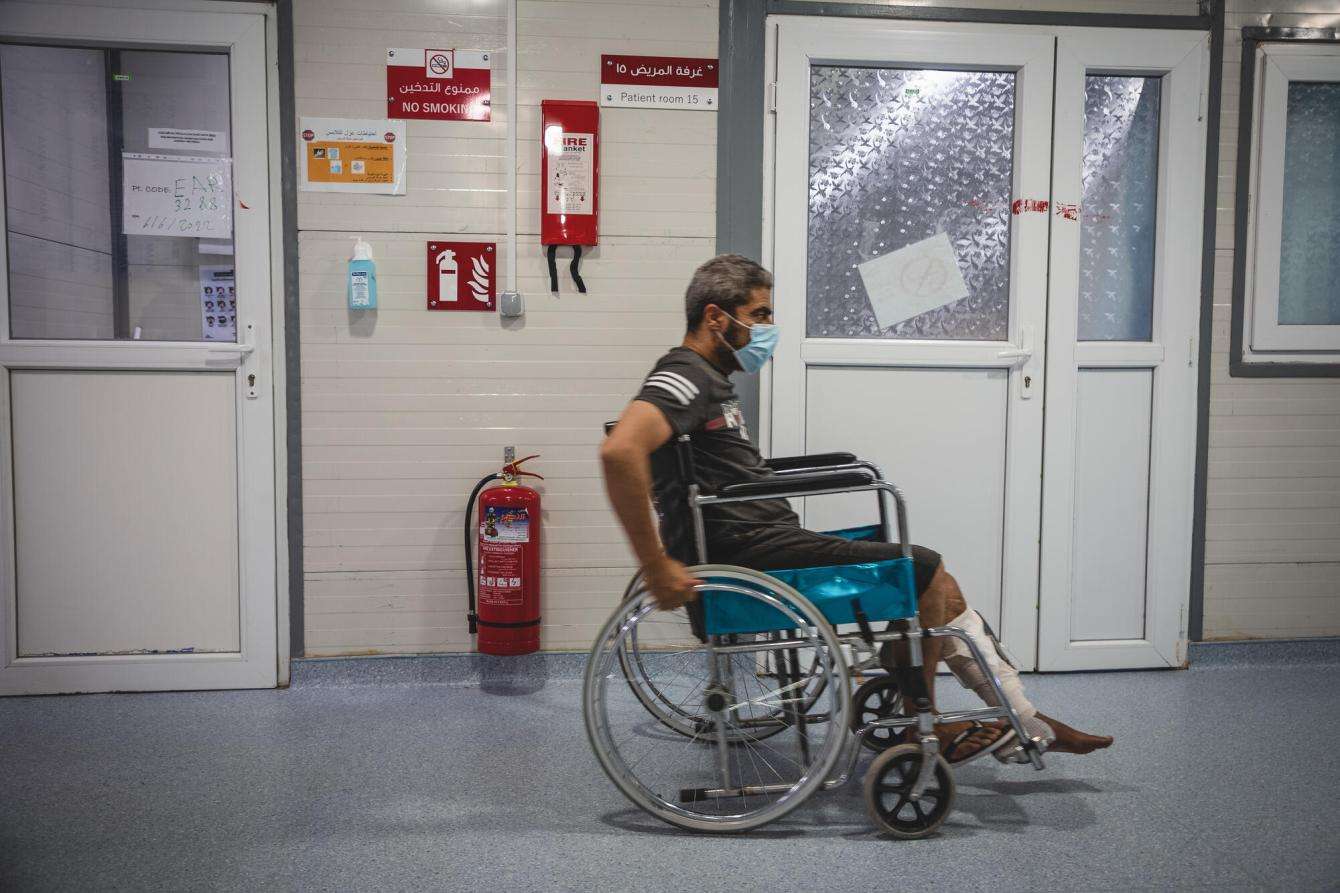
Construction work to expand the hospital had already begun when the COVID-19 pandemic emerged, creating a new challenge for the city’s already weakened health care system. While it was under construction, MSF converted the 40 newly built inpatient rooms meant for patients recovering from fractures into isolation units for those with mild to moderate COVID-19 infections.
When the acute impact of COVID-19 started to fade, Al-Wahda reopened as an orthopedic surgery hospital with two fully equipped operating theaters to allow a wider range of surgical operations for people with arm and leg wounds.
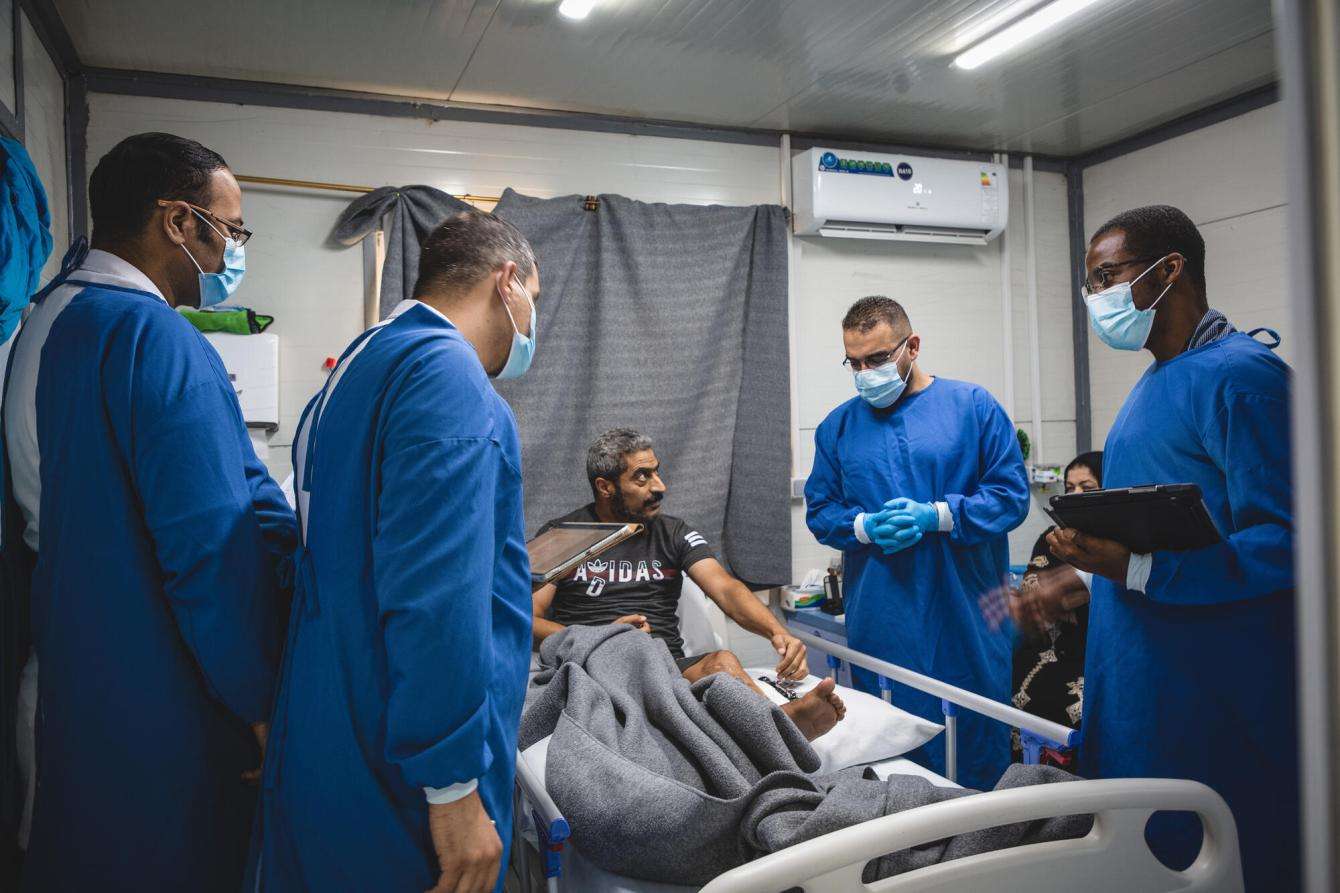
Antimicrobial-resistant infections were among the major challenges that complicated patients’ healing and recovery during the war. The individual isolation rooms were a game-changer in avoiding the spread of these infections from one patient to another.
Rahma was one of the patients treated at the hospital. Ikram, her mother, recalled the difficult days Rahma went through because of her infection. "There was a time when we thought we lost Rahma’s arm—she couldn’t move it—and the infection was really bad. I couldn't afford to take her abroad for treatment, but four surgeries and 40 days later, her arm was saved and now she can use it.”
During its first six years, the hospital not only addressed immediate medical needs but also contributed to Mosul’s long-term health infrastructure. By providing specialized training and support to local health workers, the hospital aimed to enhance their skills and capabilities, ensuring the community would continue to have access to quality health care even after MSF’s handover.
MSF remains present in Mosul, providing much-needed mental health, maternity, pediatric, and neonatal care in the Al-Nahrawan and Nablus neighborhoods, where teams run Nablus Field Hospital and the Al-Amal Maternity Clinic. MSF also recently extended activities to the Al-Aboor neighborhood, to increase people’s access to primary health care.

News Jul 26, 2024
ViiV must urgently help get more people on lifesaving HIV prevention m...
Read More