
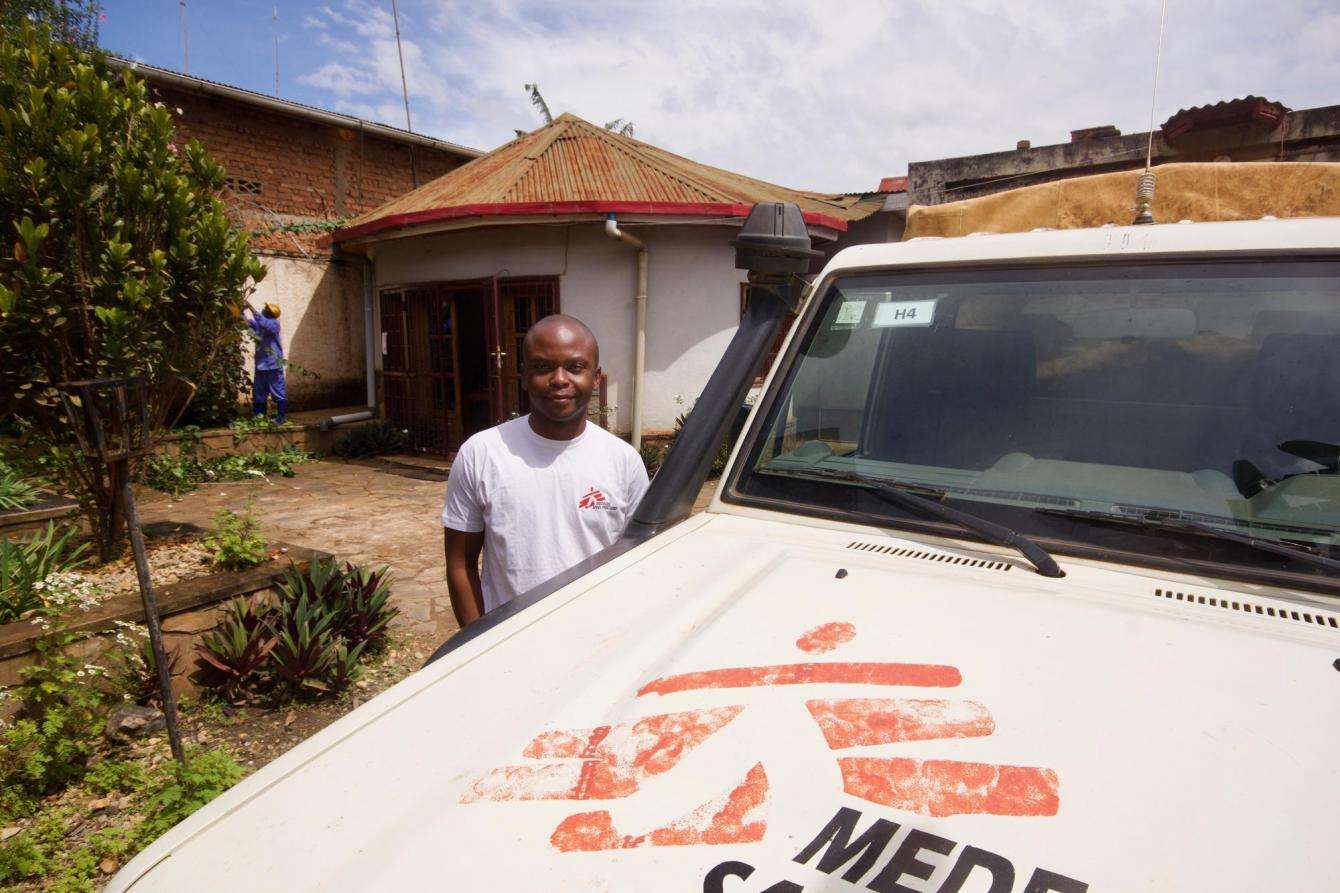
In Democratic Republic of Congo (DRC), there have been 682 confirmed cases of the new coronavirus disease, known as COVID-19, and 34 deaths reported by the World Health Organization as of May 4. Doctors Without Borders/Médecins Sans Frontières (MSF) teams are responding to the new challenges presented by COVID-19 while addressing other urgent and ongoing health needs. David Walubila Mwinyi works with MSF as a medical data supervisor in South Kivu, an area affected by violent conflict as well as other epidemics. Here, he explains why many people are skeptical about new measures to curb the spread of the coronavirus—and why the spread of misinformation is so dangerous.
When the first confirmed case of COVID-19 was reported here in Democratic Republic of Congo (DRC) in early March, I wondered straightaway how people learned about it, and whether it really was the first case. Had other cases gone unannounced?
While there are low numbers of confirmed cases [of COVID-19] in DRC, this is more likely due to the fact that very few tests have been conducted in the country so far. There is currently only one laboratory that can analyze samples, and it is in Kinshasa. This lab can execute around 100 tests a day for a country of 80 million people. Yet even if people manage access to a health facility to get a test, there are still huge logistical challenges in getting these tests from rural areas in South Kivu, where I work, all the way to Kinshasa. Right now, the current average wait time for results is around a week.

One of my main worries when it comes to a pandemic of such proportions hitting DRC is misinformation, or lack of information. Far too often, people lack reliable sources of information, such as from recognized medical experts who are working on this new virus or from the Ministry of Health. Instead, they get their news from unchecked and often untrustworthy sources through social media—WhatsApp especially. These sources, in most cases, spread rumors rather than truths. Without clear official communications it’s hard for anyone, even me, to discern the truth.
Misinformation makes already vulnerable people even more vulnerable
Across the country—especially in the east, where it is still volatile after decades of instability, war, and conflict—we have several groups of already very vulnerable people. This includes people with diabetes or high blood pressure, and those who are already affected by some of the main killers of the region, like malaria and acute respiratory infections, or other diseases such as measles, cholera, HIV/AIDS, tuberculosis (TB), malnutrition, or even Ebola. As a medic, these are the people I am very worried about, as we still don’t even know how the coronavirus will behave with these pre-existing conditions.
Many of these vulnerable groups already face stigma within their communities. My concern is that if they become infected with COVID-19, at a time when people are hearing so many myths and misinformation, they will face further stigma, making their lives even harder.
Not enough food, let alone ventilators
To make matters worse, now that all borders are closed it is very difficult to bring in not just everyday supplies, but also humanitarian staff and medical supplies to help fight COVID-19. Medical equipment such as ventilators are desperately needed. There are only around 40 ventilators here in South Kivu, and all of those are here in the [provincial] capital Bukavu. These 40 ventilators will have to make do for a population of several million. Quite simply, it’s not enough.
One might ask, have we thought about setting up intensive care units (ICUs) in the past? It’s a hard ask when people here in DRC are still dying of hunger. Hunger makes ICUs seem a bit of a distant problem. We do not even have the money to guarantee enough food for everyone, let alone ventilators.
A lot of skepticism
This is one of the reasons why comparisons between the health systems here in DRC to that of China or Western countries seem inappropriate in our context. Even when it comes to prevention measures, if you want people to wash their hands with soap and water, you need to provide them with soap and water. The reality here is that many simply don’t have access to either. If they do not even have food to eat—why would they have soap?
It is especially difficult to explain to a community that has behaved in a certain way for generations to change customs to avoid negative health consequences. The introduction of measures like social distancing are very difficult to not only explain but also to implement. People are accustomed to shaking hands when they meet, especially with the elders. To not do so could be seen as a sign of disrespect, something against tradition, and that can cause trouble, especially in rural communities.
There is a lot of skepticism from much of the population. Many people ask me how many people have died from COVID-19 here, compared to malaria, measles, and diarrhea. The answers often exacerbate confusion, as the reality is it’s very few in comparison. Even the Ebola outbreak did not bring about movement restrictions or measures such as social distancing and obligatory use of masks, such as those brought about by COVID-19—and without a clear explanation.
Learning from other epidemics
People are used to epidemics, sadly they are common here. There is something that we can—and should—learn from them. Most important is to listen to communities, talk with community leaders, and acknowledge the traditions they hold so dear. We need to acknowledge that COVID-19 is just one of many medical or humanitarian emergencies they are faced with on a daily basis. During the Ebola outbreak, many people with other diseases, like malaria, or women who were seeking prenatal care, were told they could not be looked after because there was no money for that. The money was only for Ebola. So many people started to believe that Ebola was just a business, that people came only to make money, and that medics were ignoring the actual needs of the population.
We need to meet people’s needs by continuing to provide general health care across the country, earn their trust, and work together towards the end of the outbreak. We must include the community every step of the way, by not only listening to them but also by employing as many local staff as possible to ensure that we actively contribute to the overall well-being and prosperity of the entire community.


News Jul 26, 2024
ViiV must urgently help get more people on lifesaving HIV prevention m...
Read More