
On July 9, 2021, the Republic of South Sudan marked its tenth birthday. But this milestone is also marred by the bloody legacy of its first decade, including a five-year civil war.
In a new report, South Sudan at 10: An MSF record of the consequences of violence, Doctors Without Borders/Médecins Sans Frontières (MSF) gives an account of the medical and humanitarian challenges since South Sudan gained independence, serving as a record and a reminder of the human toll of violence as seen by our staff and patients.
For nearly 40 years, the area that now constitutes South Sudan has been among MSF’s highest priorities, in terms of the scale of our operations, staffing, and financing. As the young nation moves into its next decade, MSF remains committed to the people of South Sudan.
From exuberance to civil war
At the time it gained independence in 2011, South Sudan was grappling with at least 30 humanitarian emergencies. Parts of the country were engulfed in fierce intercommunal fighting, and there was renewed conflict in border areas with Sudan. Despite the challenges, the first years in the post-independence period were a time of anticipation and optimism and, for most of the country, a period of relative peace.
However, by December 2013, South Sudan had spiraled into civil war, quickly exposing the new nation’s fragility.
Extreme violence
The five-year conflict resulted in nearly 400,000 deaths. Civilians, including children and the elderly, were targeted on the basis of their ethnicity or politics. Many were subjected to sexual and gender-based violence as part of the conflict.
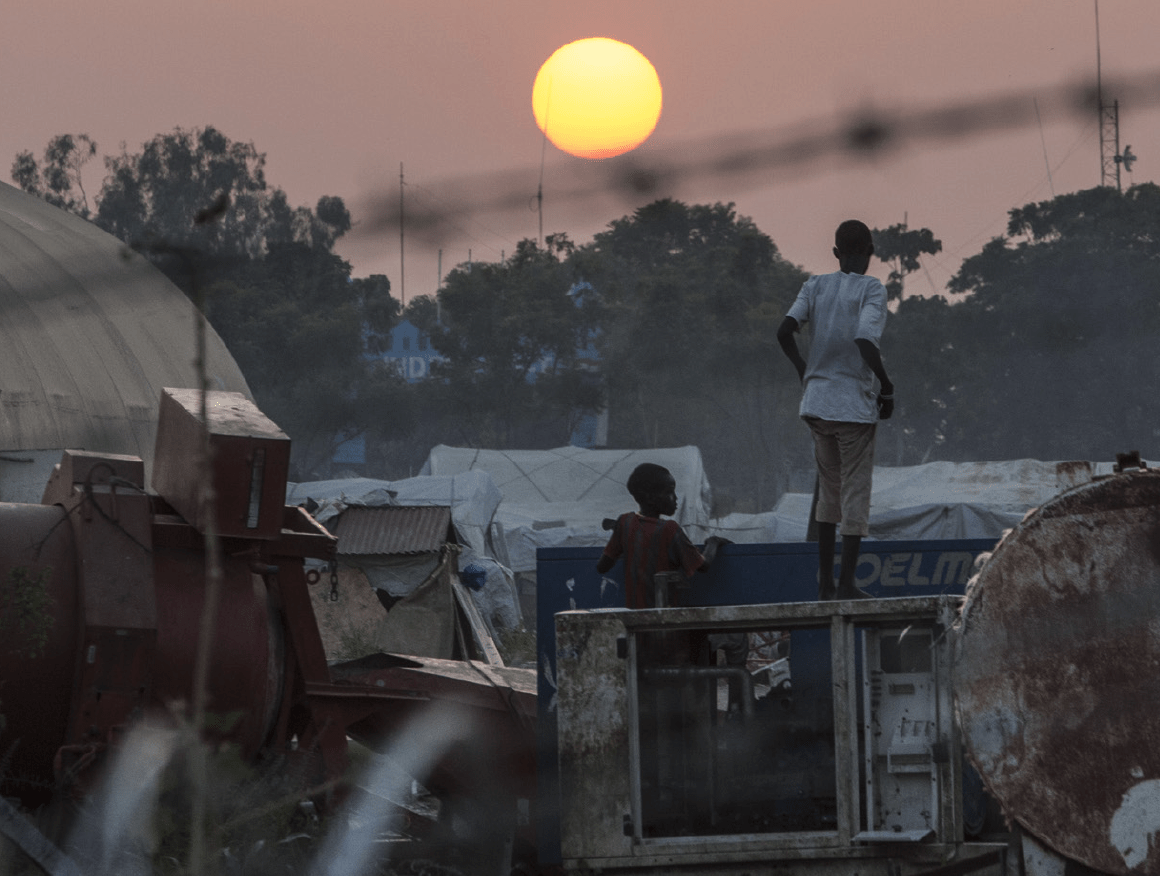
Some of the most extreme violence was carried out in places of refuge and sanctuary, including state hospitals, where patients and people seeking shelter were killed in a series of brutal attacks. Millions of people were displaced, often multiple times, inside and outside South Sudan. This includes hundreds of thousands of people who sought shelter in Protection of Civilian (PoC) sites, inside the bases of the United Nations Mission in South Sudan.
Since independence, 24 of MSF’s South Sudanese staff have been killed, five of whom were killed while on duty. All of our patients and staff and their communities have been affected directly and indirectly by conflict and violence.
Deaths from preventable diseases
Violence disrupts access to health care, including routine vaccination, while increasing the risk of disease transmission and food insecurity.
There have been repeated failures to ensure dignified living conditions for displaced people. Instead, people fleeing conflict and violence have, again and again, been forced to live in deplorable conditions—with basic requirements for living space, water, and sanitation unmet, far below the minimum emergency thresholds for survival. At the worst times, MSF recorded three to five children dying per day from preventable diseases—such as malaria—in individual camps or sites for displaced people.
People displaced far from essential services have been forced to live in the open, in the bush and swamps, and have repeatedly suffered the consequences of diseases and extreme hunger. Conflict brought a resurgence of kala azar, a deadly parasitic disease, in some places. There have been outbreaks of measles, hepatitis C, and cholera, among others.
A mental health crisis
Millions of people in South Sudan have been repeatedly exposed to traumatic events. MSF has witnessed increases in suicide attempts and has worked with patients coping with post-traumatic stress disorder.
The impact of protracted conflict and repeated humanitarian crises in South Sudan is worsened by a weak, chronically underfunded health system, which has been destroyed in many areas and largely neglected in others. In 2020, of approximately 2,300 health facilities in the country, more than 1,300 were nonfunctional. Less than half (44 percent) of the total population and just 32 percent of internally displaced people live within three miles of a functional health facility.
Ongoing humanitarian crises
Despite a peace agreement in 2018 that ended five years of civil war, and the formation of a unified government in early 2020, the situation remains volatile in many areas. In 2019, South Sudan saw a resurgence of subnational conflicts and factional fighting, which has since escalated in 2020 and 2021.
Today, 8.3 million people—more than two-thirds of the population—are estimated to be in dire need of humanitarian assistance and protection. Today, in what is the largest refugee crisis in Africa, 2.2 million South Sudanese people are sheltering in neighboring countries. More than 1.6 million people remain displaced within the country. Even in a best-case scenario, South Sudan will remain vulnerable to humanitarian crises for the foreseeable future, and people in South Sudan will need assistance for some time.
South Sudan’s leaders must make every effort to ensure civilians' safety and security and an environment conducive to the delivery of humanitarian assistance, independent of any political agenda.


Story Oct 23, 2024
Healing hands: A Sudanese doctor shares why he continues to provide ca...
Read More