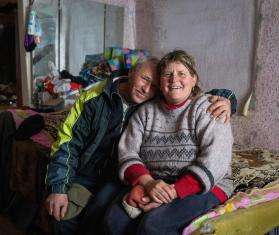

"The shell hit the yard and destroyed everything,” says Gevork of his home. “It was like I was in a movie about the apocalypse.”
In June, Gevork’s family home in Novaya Tavolzhanka, a village in the Russia-Ukraine border region, was destroyed during massive shelling and bombardment. Now, Gevork is staying in a friend’s apartment in the Russian city of Belgorod, 42 kilometers (26 miles) from the border.
Since October 2022, Belgorod has seen the arrival of thousands of people displaced from their homes in the border region. Many have had their homes partially or completely destroyed after shelling and bombardment intensified in the area in May and June 2023, forcing them to flee and increasing the number of displaced people in the region.
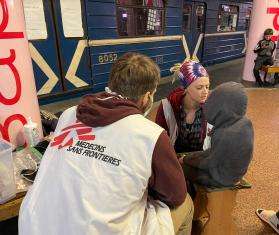
In response, Doctors Without Borders/Médecins Sans Frontières (MSF) is helping the local nonprofit organization Path to the Future provide free medical consultations, mental health care, and covering the costs of prescriptions and medical supplies. We also provide urgently needed items such as food, underwear, personal care products, and basic household supplies, which are distributed by the organization’s local volunteers.
Together, MSF and Path to the Future have provided more than 2,800 displaced people with medical assistance and more than 9,600 people with humanitarian aid since October 2022. Since the escalation of the armed conflict in Ukraine in February 2022, more than 1.2 million people have been displaced to Russia, according to UNHCR. The full scale of displacement is challenging to discern, however, because there is a lack of reliable data or a coordinated humanitarian response. Large cities in the south of Russia like Belgorod, Rostov-on-Don, and Voronezh have become hubs for people who have fled the fighting. Many have been profoundly traumatized both mentally and physically.
The trauma of shelling, bombardment, and fear
“Before we fled there were constant explosions,” says Nina*, who is from the Kharkiv region and currently resides in Belgorod. “There were dead bodies lying in the streets, there was no mobile connection.”
Another resident of the same region, Oleg*, frantically fled his home to save his mother who had been injured by shattered glass during the shelling. “The worst [part] is that you can call neither an ambulance, nor emergency services, nor a fire brigade, because there’s nobody. You are helpless. I was not thinking about myself. On the one hand, I was running and thinking about my mother, and on the other hand I was thinking: If I am injured, I won’t be able to help her.”
Many people seeking safety in the city told MSF that despite being away from areas of intense violence, echoes of their traumatic experiences cannot leave them.
“When I hear bangs, I often jump out of bed and start frantically thinking of where to run to shield us. Then I breathe out. My pulse is racing… I just spent one month in such conditions, and people live like this for months,” says Anatoly*, who is from the Kharkiv region and lives with his elderly mother in Belgorod. “When something is constantly flying over your head and exploding, you are under great tension thinking where it will land. You hear it approaching and there is a second when you do not know where it will land. Once there was a very loud explosion and it turned out that it had hit our neighbors’ house.”

Treating the psychological wounds of war in Ukraine
Read moreFor many, the shelling and bombardment were a source of constant fear and stress, preventing them from sleeping or going about their daily lives. Others developed coping mechanisms and started to regard it as a part of normal life.
“If the shelling is really bad, you toss and turn for an hour or two, then you fall asleep,” says Gevork. “In the morning, you have coffee at work to cheer yourself up.”
As well as living under the threat of shelling and bombardment, many displaced people have difficulty affording a place to live. After an initial stay in government-provided temporary accommodation centers, most people rent private accommodations. However, the price of housing has increased dramatically due to high demand, and the arrival of newly displaced people from the border area has pushed rents even higher. Many people struggle to afford the daily living costs of rent, bills, and food.
Limited access to care for chronic health issues
The most vulnerable are older people and those with chronic diseases or disabilities. Anatoly’s mother, who is in her 70s, has drainage catheters in her stomach after extensive surgery and needs complicated medical follow-up and medicines. Several years ago, the mother and son had to sell their house in the Kharkiv region to afford the surgery. Anatoly takes care of his mother, helping her keep the catheters in her stomach properly, devoting at least one hour a day to care for her and closely looking after her medical needs.
Anatoly himself has a health condition that prevents him from finding manual work, which is how many other people displaced by the international armed conflict in the region earn money to survive. He has had two heart attacks and surgery in the past. He has now found a way to make a living by singing in church choirs, which also gives him time to take care of his mother.
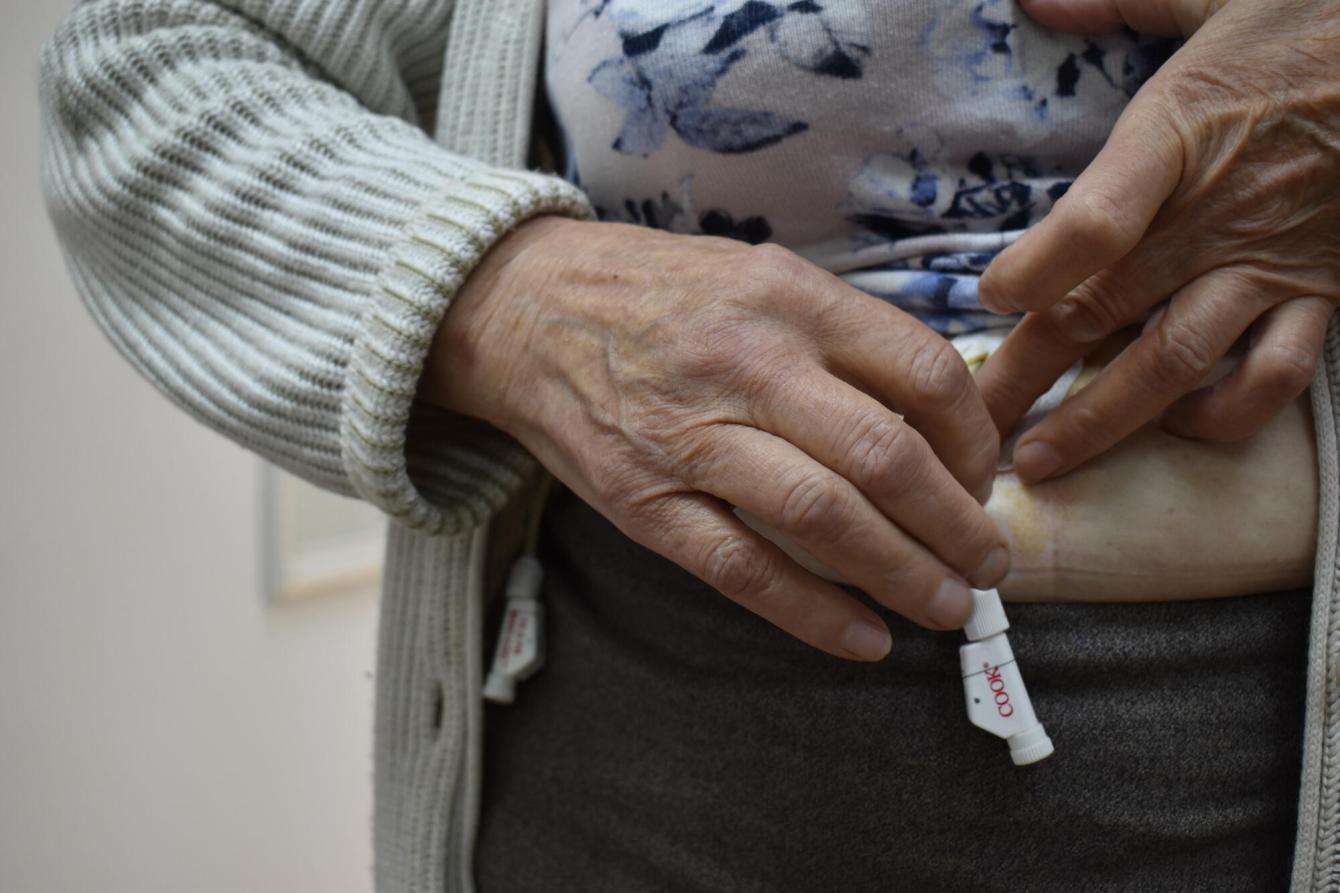
Elena* is not so fortunate. Separated from her beloved husband, she brought her children to Belgorod from Donetsk, in eastern Ukraine. The hostilities have had a serious impact on her family’s mental health and well-being. The death of her eldest son has changed their lives and added tragedy to the situation the family found themselves in. For Elena, faith and creative writing are a major support that help to cope with her tremendous grief.
“My son was a cardiologist. During COVID-19 times, he worked in the restricted area of a hospital. On the day he died, he went to help with humanitarian aid. He always went there to help. Until then it was safe,” says Elena. “It becomes a bit easier for me when I start writing. There are times when I feel really bad.”
Because of their circumstances, displaced people’s needs for medical care and mental health support in Belgorod are significant, yet often they are unable to access these essential health services. Many hope to return to their homes in the near future, which can complicate their legal status in Russia and affect their access to services and care in Belgorod.
Displaced people organize support for each other
Displaced people across the Belgorod region are helping each other by joining volunteer organizations or starting their own help centers.
“First we were helping refugees from Ukraine and then we found ourselves in the same situation,” says Svetlana, 50, who volunteers for a local voluntary organization in Belgorod that helps people displaced by the fighting, focusing on those residing in or transiting through the Belgorod region.
Svetlana moved to Belgorod from Shebekino, an area that has been experiencing continuous shelling and bombardment for over a year. Back home, she owned a pharmacy.
“It was in November 2022. In broad daylight, they shelled a school and our pharmacy with mortar fire. Three people were killed due to this shelling,” she says. “A man was killed on our porch, a man was killed in a pharmacy, and a woman died while the doctors arrived. These were old people. It was at 5:00 p.m., when people were coming home from work and moving around the town. That day, the pharmacy cashier took her son to work. We had to cover his eyes with our hands when her body was removed from the pharmacy, so he wouldn’t see it”.
Svetlana says that what she went through made her more honest with herself and now she has of the stamina to help others.
Oksana*, who is also from the Kharkiv region and is the founder of a help group, would understand Svetlana better than anyone. Oksana spent four months with her family in the basement and had no other choice but to move to Belgorod when she was nine months pregnant.
Russian Federation 2023 © MSF
After fleeing her home, Oksana settled with her family and her newborn baby in Shebekino, where she started helping other displaced people who found themselves in the same situation. Oksana established contacts with donors and organized a warehouse, where displaced people could get urgently needed relief items like blankets, pillows, and tableware. However, due to the intensified shelling and bombardment in Shebekino in May and June 2023, Oksana had to move with her family once again. She now resides near Belgorod and continues helping other displaced people.
“Now I understand that you cannot go through it alone," she said. "It just happened that I became a volunteer myself and started helping others. We are all human beings. The situation is obviously hard for everyone—it's hard for them, and it is hard for us. We're just trying to survive holding on to each other. Without the help of others, it would be impossible to overcome.”