
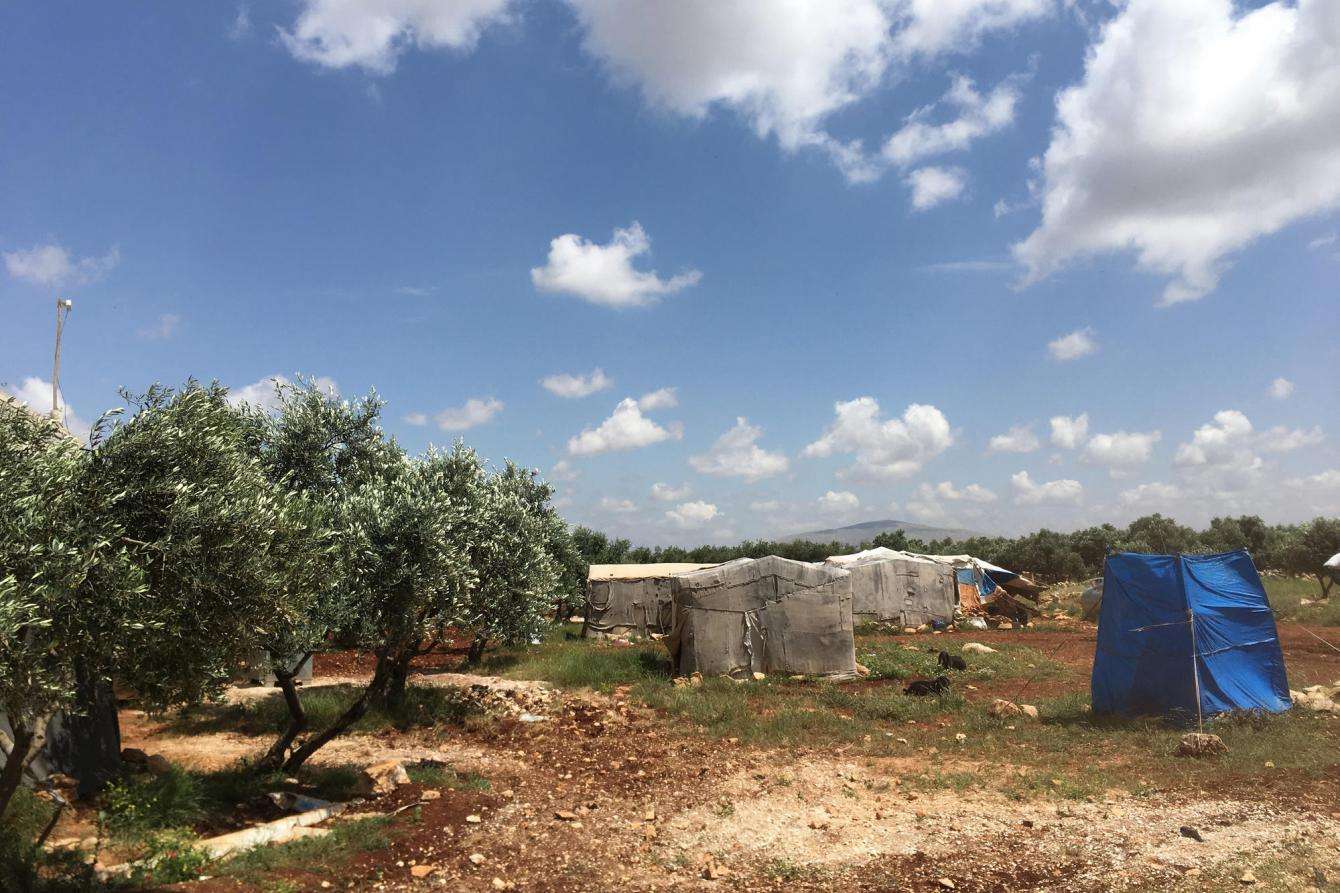
Over the last seven years, among the rolling hills and olive groves of Idlib province in northern Syria, tents seem to have sprouted from the ground to house hundreds of thousands of Syrians who have fled fighting elsewhere.
"This is our fourth displacement,” says Suleiman, who originally comes from the countryside of eastern Hama. He explains how war forced him from place to place before he ended up four months ago in this white tent, stained red by the earth, with his wife and four children. "When we first arrived, some nongovernmental organizations (NGOs) came to our aid, but now for three months there’s been nothing."
More than half of Idlib’s population of roughly two million people are displaced. The arrival of 80,000 more in the last two months from eastern Ghouta, rural Damascus, and northern Homs has further taxed the ability of local residents and humanitarian organizations to address their needs. While some families are crowded into rented accommodations, many others live in camps, some of which lack even the most basic services. "We are 135 families here in the camp," says Abu Ahmad, who lives in a field near Atmeh. "There are just six or seven toilets for all of us. You have to wait for half an hour in order to use them, and they are not clean."
In the face of these great needs, Doctors Without Borders/Médecins Sans Frontières (MSF) has ramped up efforts to bring health care to hard-to-reach and underserved patients. "We have added three emergency mobile clinics to the two that were already operating in these camps," says Hassan Boucenine, MSF head of mission for northwest Syria. "These people are living in very overcrowded camps crammed into a small area, and they have already lived through years of war. We are doing our best to provide care in places where it is not at all easy to see a doctor or afford private care."
In addition to the mobile clinics, MSF runs two hospitals in this part of the northwest, supports 14 other hospitals and health care centers, runs two clinics for noncommunicable diseases, runs or supports four dedicated vaccination teams, and also incorporates vaccinations into other activities.

"As doctors, we have a duty to remain here and help the people afflicted by displacement," says Dr. Mohammed Yacoub, an MSF team leader in one of the mobile clinics. "At first our work was mainly routine diseases – bronchitis, throat infections, diarrhea – but recently many displaced [people] arrived from different parts of the country and many infectious diseases have spread among them because of overcrowding."
An unsafe destination
Over the last year, many of the remaining enclaves of opposition-held territory in Syria have been partially evacuated following agreements to end fighting with the Syrian government. While each "reconciliation" agreement has been different, they have all resulted in many civilians leaving their homes and moving to new areas at the same time as fighters who had negotiated safe passage in convoys.
These people, as well as those who fled from areas in southern Idlib governorate, have made up the most recent waves of arrivals to Idlib, an area where people have sought sanctuary for years.
"Some planes came and bombed our village, and I lost my arm," says Safwan, as he gestures to the stump where his right arm used to be. "The regime bombed our village again, so we moved here to the mountains. An NGO gave us tents, and we’ve lived in them for nearly four years now."
Idlib is by no means a safe haven. Active conflict continues between the government-led coalition and non-state armed groups on the fringes of the area. Syrian-led coalition shelling and bombing persist, even deep into the areas outside of the government’s control. Fractious relations between the armed groups in Idlib may also be behind waves of assassinations over recent months.
Displacement has not marked the end of peoples’ suffering. Difficult living conditions only add to worries about security.
Escaping under fire
Yasir fled from Hama with his wife, 12 children, daughter-in-law, and grandson. "The day we left," he remembers, "we left at night and we were bombed. I had put all the provisions for my children and clothes in the car – but now it’s all gone, stolen. We are without everything. We had to take our children and run."
He, and many others like him, arrived in the camps with basically nothing. "I just have this shirt that I’m wearing," Yasir says. They are living now in tents that are exposed to the winter cold and summer heat. A lack of sanitation means that open sewers run down the street in some camps, and residents complain of the large numbers of insects that swarm their tents.
"We fled under heavy bombing, walking from night until morning," says Fawzia. "No food, no drink, no nothing." The situation they found in the camps has not been any better, she says. "We have nothing but this tent. One night I couldn't breathe inside the tent, and I spent two hours outside trying to breathe. [It felt] just like suffocating – we are fourteen in the same tent."
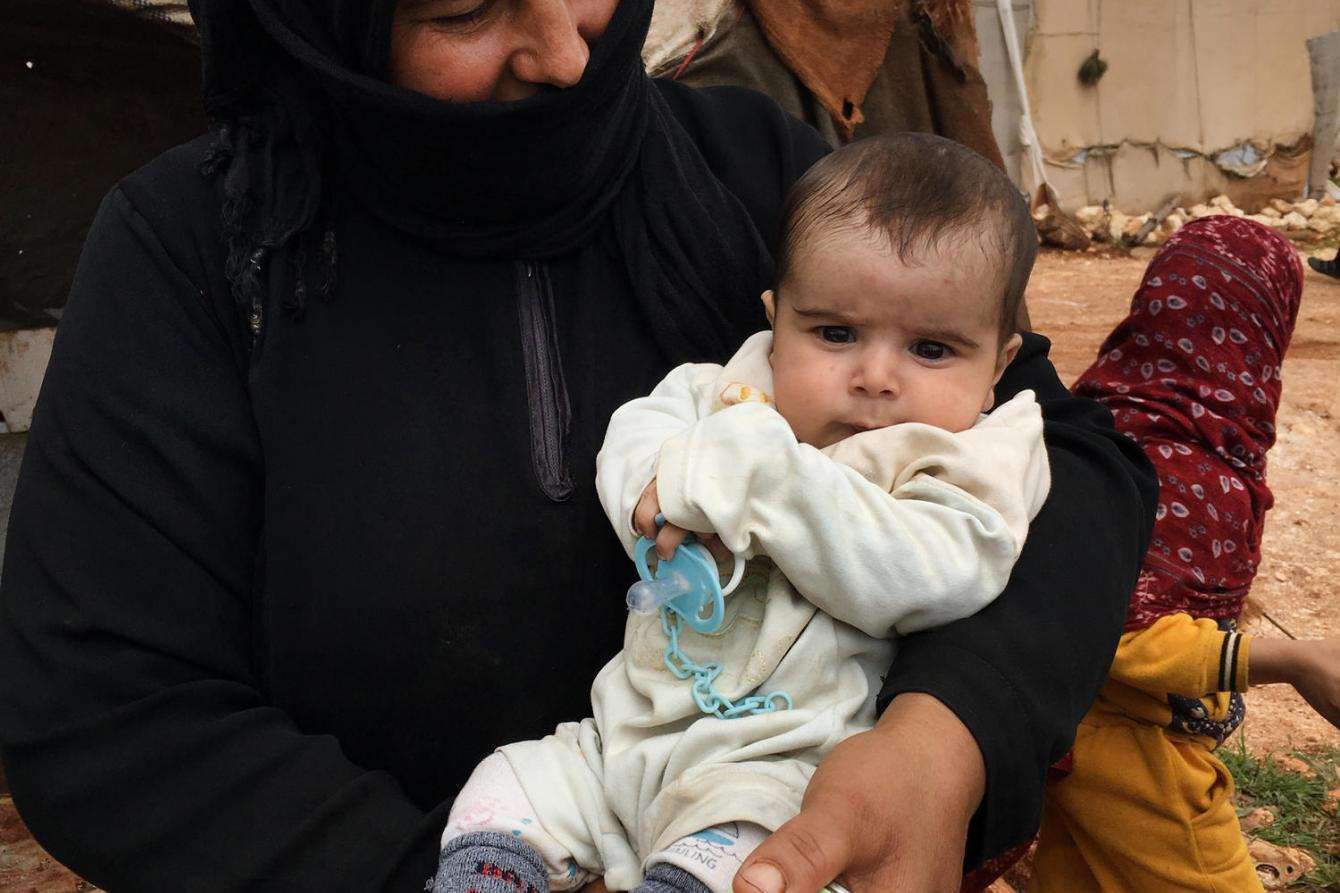
Mothers describe a constant struggle to find enough food to feed their children. Four percent of children under five seen in MSF mobile clinics in the first months of 2018 were moderately malnourished – a small but persistent number. "I went to a private clinic to ask for milk but they wouldn't give me any," says Fawzia. "We aren’t able to buy anything."
As the wind blows dust through the open tent flaps, Fawzia demonstrates how she is forced to wash five of her youngest children with a small amount of water. She also lacks soap and diapers.
Treating displaced people in Idlib
After three trucks pull in together at one of MSF’s mobile clinics to create a space shaded by a piece of tarpaulin, the medical team gets to work. A data officer records details of the people seeking treatment and a nurse measures their vital signs. A doctor sees patients in his room in one of the trucks, a midwife provides ante- and post-natal consultations in her room, vaccinations are performed, and a pharmacist dispenses prescribed medications.
"People’s exposure to the elements means that respiratory diseases are the most numerous sicknesses we treat in the mobile clinic in this season," says Dr. Sonja van Osch, MSF medical coordinator. "We are also seeing skin diseases in large numbers because of the living conditions and cases of diarrhea because of a lack of sanitation.
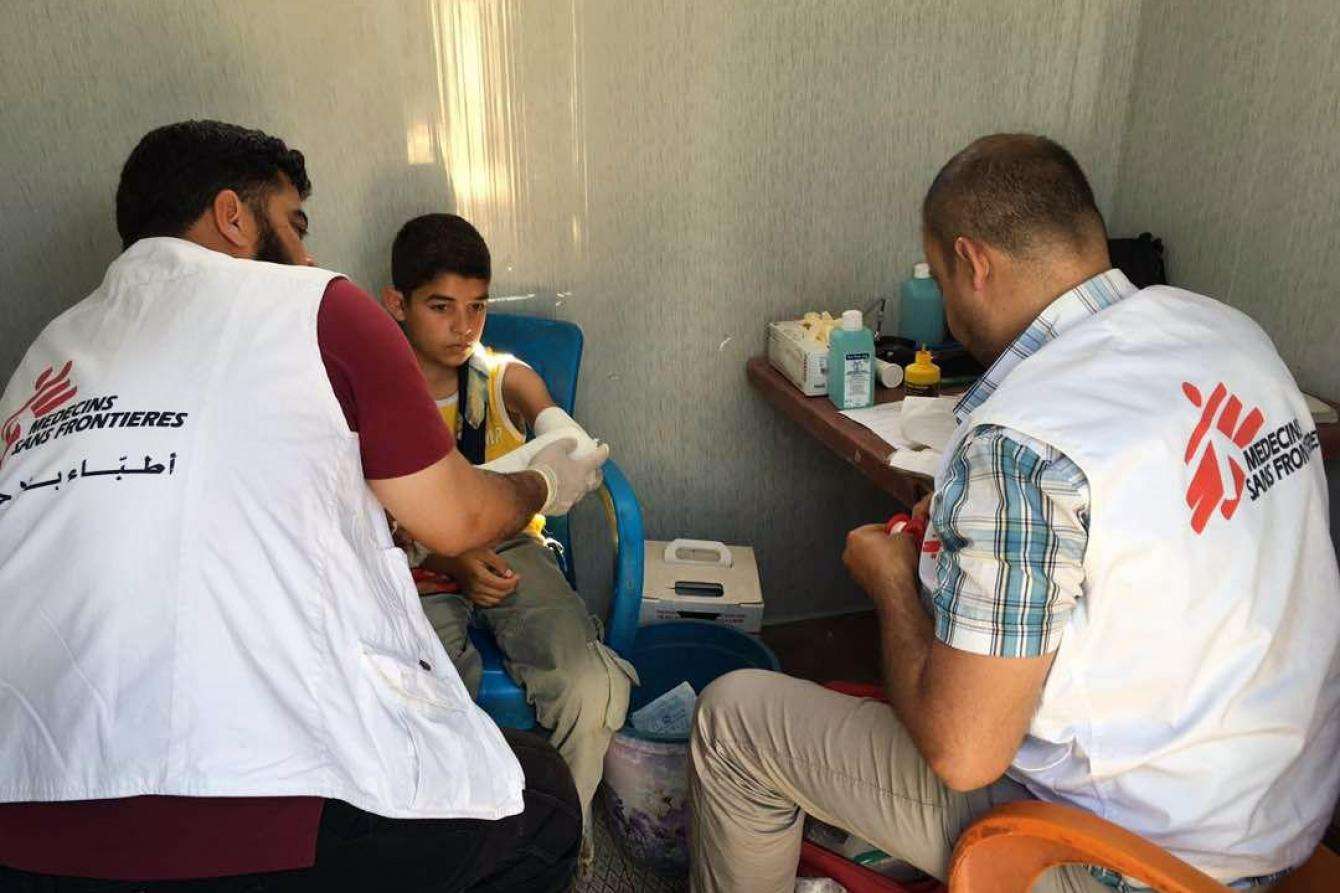
Non-communicable diseases, such as diabetes and hypertension, also make up a large part of the clinic’s work: these illnesses require follow-up and sustained treatment, which can be hard to access for displaced people.
Such services, which are provided free of charge by MSF, are especially critical at a time when all people living in the area—new arrivals and residents alike—face challenges accessing health care due to high prices and a lack of doctors who can provide high-quality care.
Though many organizations are assisting people in Idlib, the needs are still not adequately covered. Where there are clear gaps, MSF steps in to assist with mobile clinics. "Sometimes there are security issues that our cars are exposed to, and sometimes there are explosions," says Dr. Yacoub. Despite the difficulties, he takes pride in his work and recognizes the importance of the services provided by the mobile clinic. "We are giving something to those who are unfortunate and isolated," he says.
Across northwest Syria, MSF runs two hospitals directly and supports 14 hospitals and health centers. We also operate five mobile clinics, two noncommunicable disease clinics, and four vaccination teams. MSF also provides distance support to around 25 health facilities countrywide, in areas where teams cannot be permanently present.
MSF does not operate in government-controlled areas of Syria, as our requests for access have been denied. To ensure independence from political pressure, MSF receives no government funding for its work in Syria.


News Jul 26, 2024
ViiV must urgently help get more people on lifesaving HIV prevention m...
Read More