Malaysia's non-signatory status to the 1951 Refugee Convention leaves this community exposed to immigration raids, arbitrary arrest, prolonged detention, discrimination, and deportation. While the government has taken steps to transfer detained mothers and children from immigration detention centres to dedicated facilities, sustainable and humane alternatives to detention have yet to be established.

Malaysia 2022 © Kit Chan
Malaysia
Providing medical and humanitarian support while advocating for Rohingya refugees facing deterrence-based policies
News update
Forced repatriation of refugees to Myanmar is neither safe nor viable
September 29, 2026 — The Malaysian government plans to move forward with its repatriation plan to send 1,500 refugees, including Rohingya, back to Myanmar as soon as September 29, despite the dangerous conditions in the country. Civilians in Rakhine state and other parts of Myanmar face extreme violence, and the country remains in active conflict, with bombings, mass killings, forced recruitment, and severe restrictions on humanitarian access. Returns to Myanmar are neither safe nor viable under these conditions.
Doctors Without Borders/Médecins Sans Frontières (MSF) calls on world leaders to halt these unsafe returns, expand humanitarian access and assistance, and stop treating the repatriation of Rohingya refugees as a solution when conditions are clearly unsafe. Refugees must have viable options for the longer term.
Our work in Malaysia
In Malaysia, Doctors Without Borders/Médecins Sans Frontières (MSF) assists refugees, primarily the Rohingya community, who face systemic barriers to health care.

What's happening in Malaysia?
The Rohingya community in Malaysia has grown from approximately 5,000 in the 1990s to more than 200,000 today, reflecting decades of persecution and displacement. Last year was the deadliest year on record for people undertaking crossings via the Andaman Sea, with approximately 900 people reported dead or missing at sea.
Over 5,100 Rohingya refugees undertook dangerous sea and river crossings between January and October 2025 — navigating the Naf River, the Bay of Bengal, and the Andaman Sea. At the same time, the Malaysian Coast Guard has routinely intercepted boats, often capsizing them or forcing them to return to Myanmar or Bangladesh.

How we're helping in Malaysia
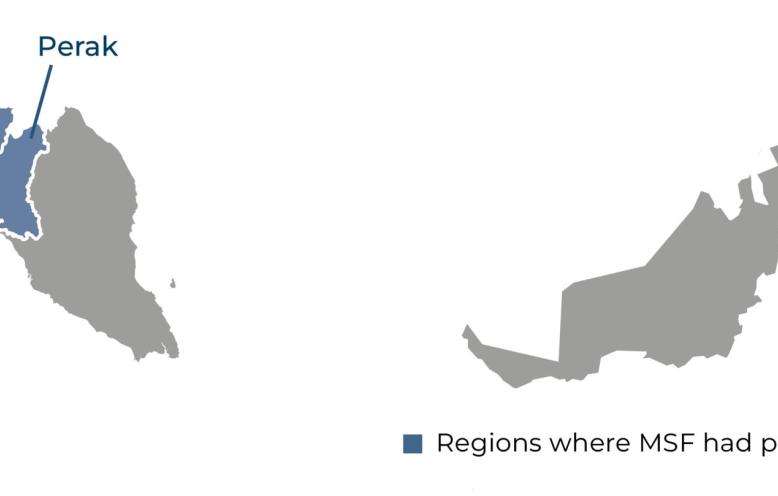
Our teams in Malaysia work to reach the most vulnerable among Rohingya refugees — women and children without a registration card from UNHCR, the UN refugee agency — through a fixed clinic in Butterworth, Penang, and six mobile clinics across Penang and Kedah. Our services include general health care, treatment for sexual and gender-based violence, mental health support, health awareness sessions, routine vaccinations for children, and specialist referrals to other facilities. We also refer patients to UNHCR, where registration enables access to health care at a reduced cost. Demand for prenatal care and family planning remains consistently high.
How we're helping
18,900
Outpatient consultations
4,700
Prenatal consultations
1,730
Individual mental health consultations
52
People treated for sexual violence
*Data from MSF International Activity Report 2025
More news and stories
Learn about MSF’s journalistic roots and our commitment to bear witness and speak out about the plight of the people we treat.

Story Oct 02, 2024
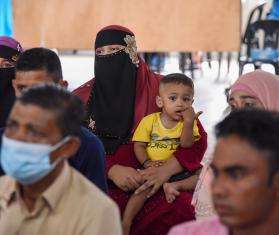
Rohingya are at risk “wherever we go, whether Myanmar, Thailand, or Ma...
Read more
Learn about MSF’s journalistic roots and our commitment to bear witness and speak out about the plight of the people we treat.
How you can help
Not everyone can treat patients in the field. But everyone can do something.
Some humanitarian crises make the headlines—others don’t. Unrestricted support from our donors allows us to mobilize quickly and efficiently to provide lifesaving medical care to the people who need it most, whether those needs are in the spotlight or not. And your donation is 100 percent tax-deductible.