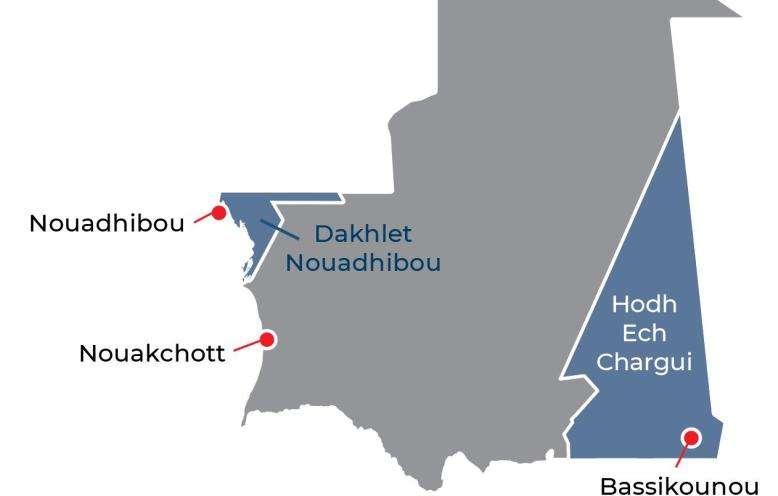
At the same time, many Malians cross the border into Mauritania, seeking safety in the southeastern region of Hodh Ech Chargui.

Mauritania 2018 © Nyani Quarmyne
Mauritania
Providing care to refugees, asylum seekers, and migrants embarking on dangerous journeys
News update
Atlantic migration: Urgent action needed to prevent more deaths
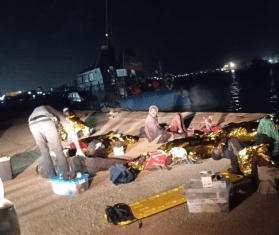
July 23, 2026 — On July 18, Doctors Without Borders/Médecins Sans Frontières (MSF) teams in Nouadhibou, Mauritania, supported the disembarkation of survivors from a boat that reportedly departed from The Gambia toward the Canary Islands. According to initial testimonies from survivors, around 190 people were on board. After 25 days at sea, only 38 people survived. The survivors were first assisted by fishermen and the Mauritanian Coast Guard, then brought to the Mauritanian Red Crescent, which requested MSF’s support.
The incident is one of the deadliest disembarkations MSF teams in Mauritania have witnessed this year.
Our work in Mauritania
Doctors Without Borders/ Médecins Sans Frontières (MSF) continues to scale up medical and humanitarian assistance for Malian refugees and people on the move through Mauritania.
What's happening in Mauritania?
Refugees attempting to take the Atlantic migration route — one of the deadliest in the world — frequently disembark along the Mauritanian coast. According to the Spanish NGO Caminando Fronteras, almost 10,000 people were reported dead or missing while attempting the Atlantic crossing in 2024, and almost 2,000 in 2025. It is very likely that the actual number of deaths is higher than these reported figures, as not all sea crossings are reported or lead to rescues.
How we're helping in Mauritania
MSF launched its Atlantic migration project in Mauritania in response to increasing tragedies at sea. In Nouadhibou, we offer medical and psychological assistance to migrants on intercepted boats heading toward the Canary Islands, strengthening our response with the opening of the Center for Reception, Care, and Assistance (CASA) in April 2025.
While Spanish authorities reported a drop in the number of arrivals from Mauritania in 2025, in part due to increased maritime surveillance and stricter enforcement by Mauritanian authorities, many people continue to attempt the sea route, leaving from other West African countries to reduce the risk of interception. Some of our patients have reported being on board for up to 15 days with no water, fearful of drowning because they do not know how to swim. Others have witnessed people dying during their journeys and bodies being thrown into the sea.
How we're helping
38,000
Outpatient consultations
2,100
Prenatal consultations
81
People treated for intentional physical violence
*Data from MSF International Activity Report 2025
More news and stories
Learn about MSF’s journalistic roots and our commitment to bear witness and speak out about the plight of the people we treat.
Learn about MSF’s journalistic roots and our commitment to bear witness and speak out about the plight of the people we treat.
How you can help
Not everyone can treat patients in emergencies. But everyone can do something.
Some humanitarian crises make the headlines—others don’t. Unrestricted support from our donors allows us to mobilize quickly and efficiently to provide lifesaving medical care to the people who need it most, whether those needs are in the spotlight or not. And your donation is 100 percent tax-deductible.