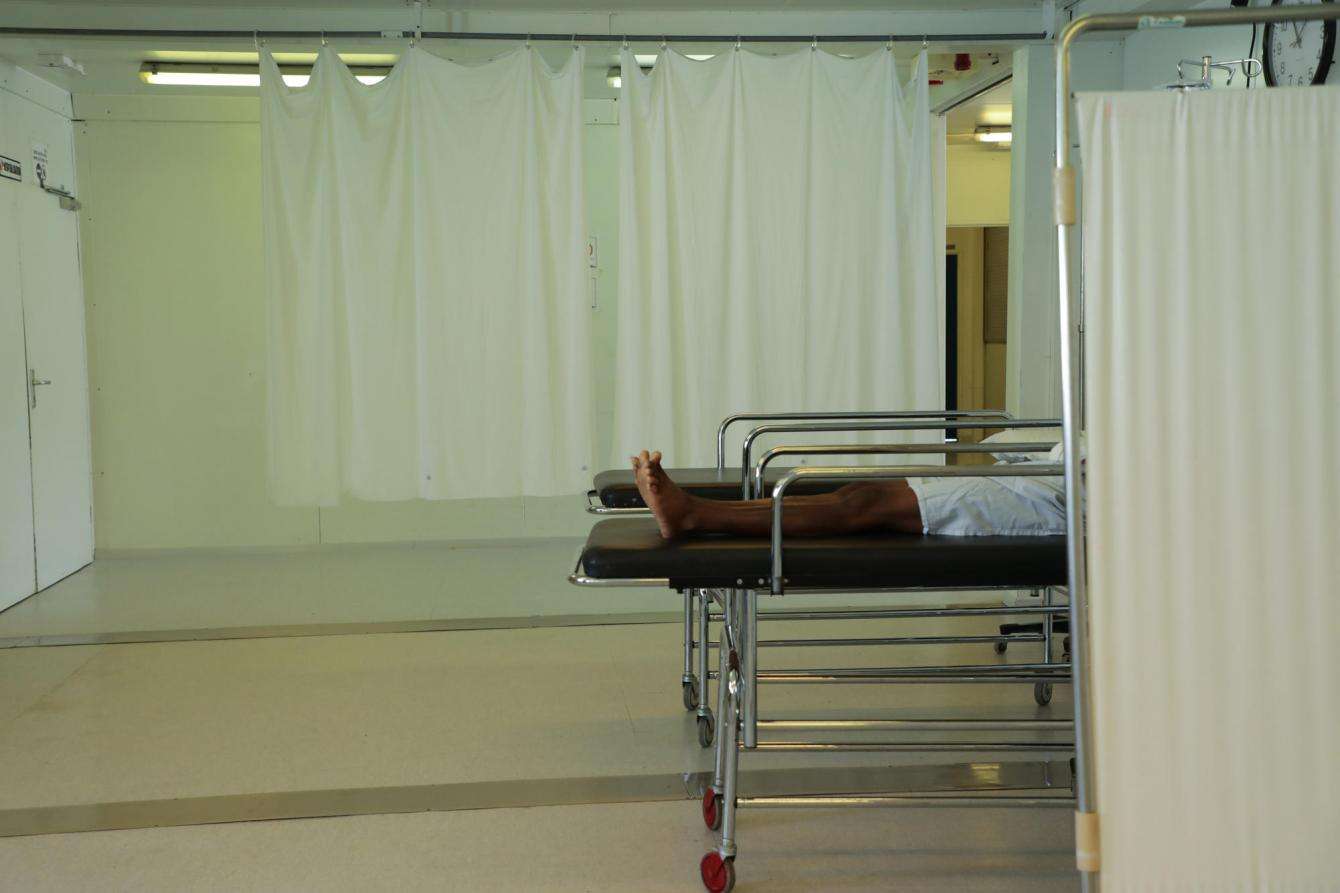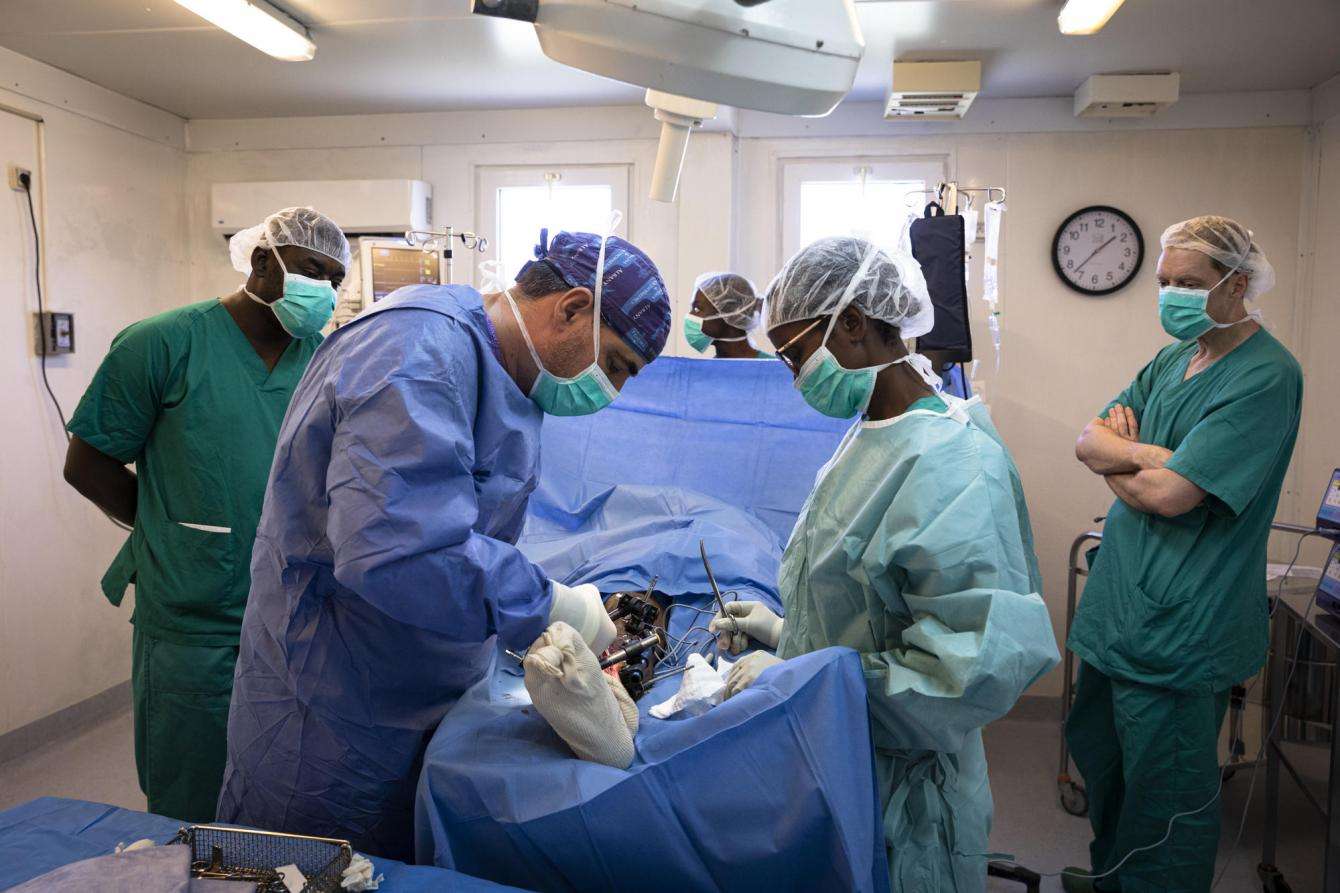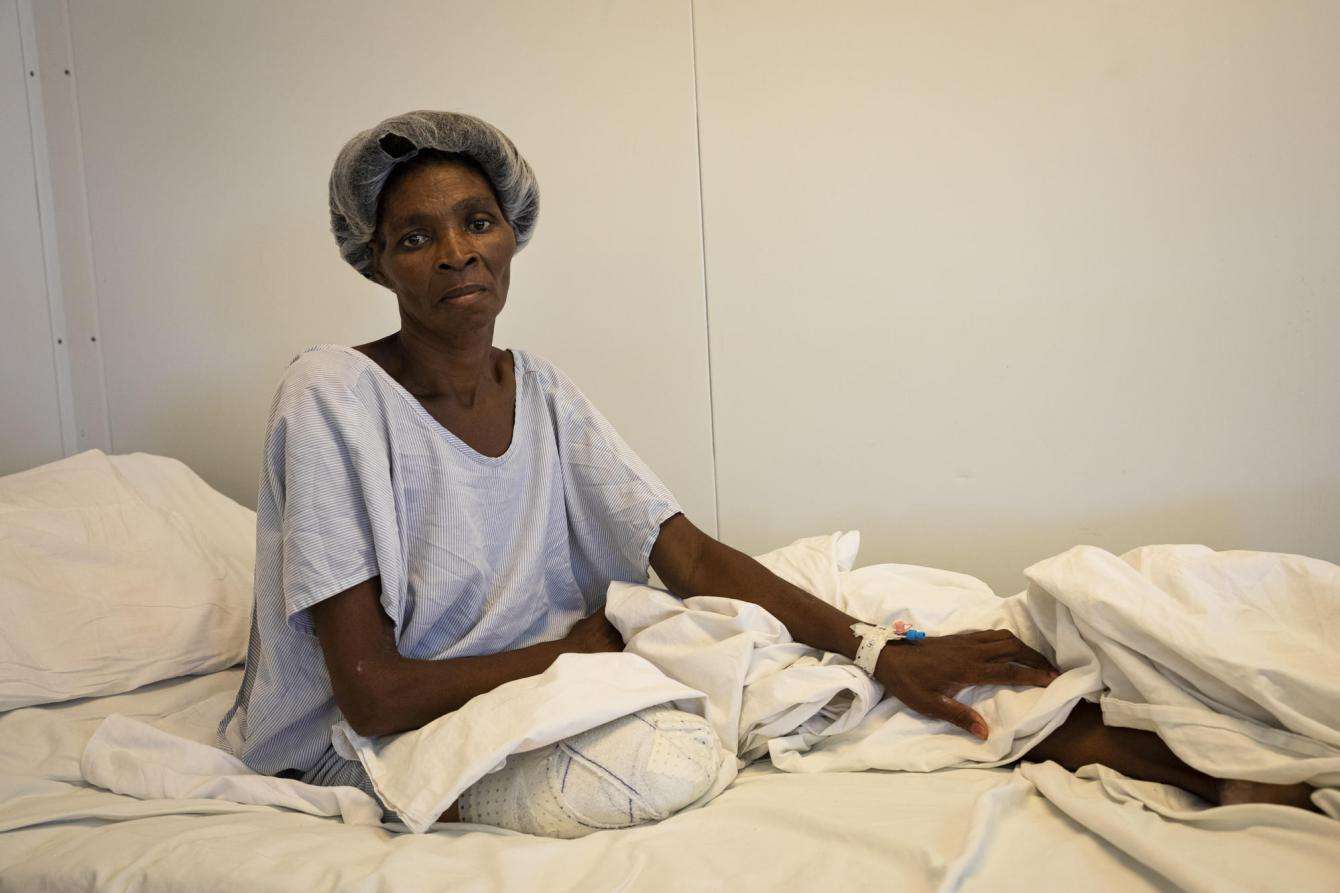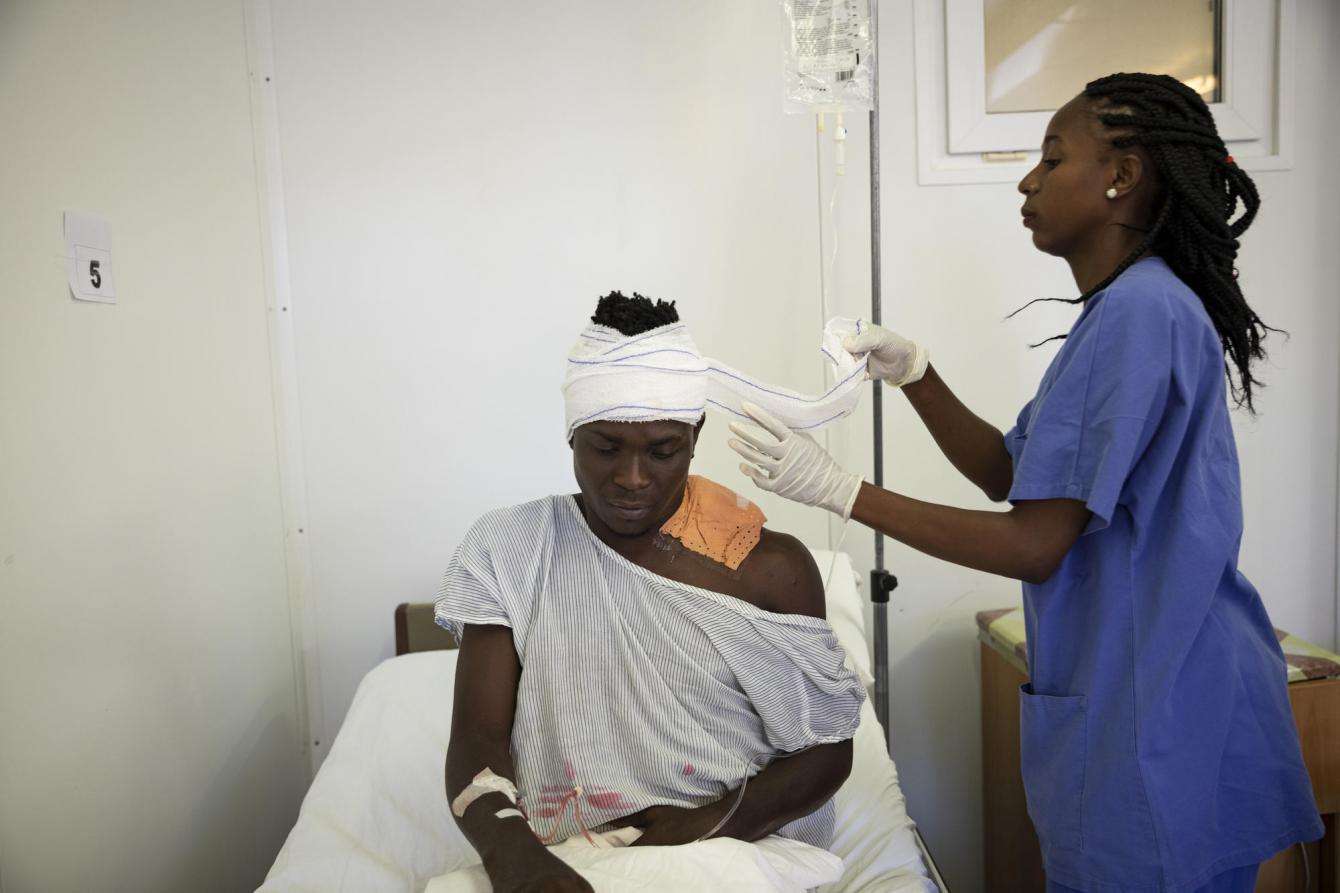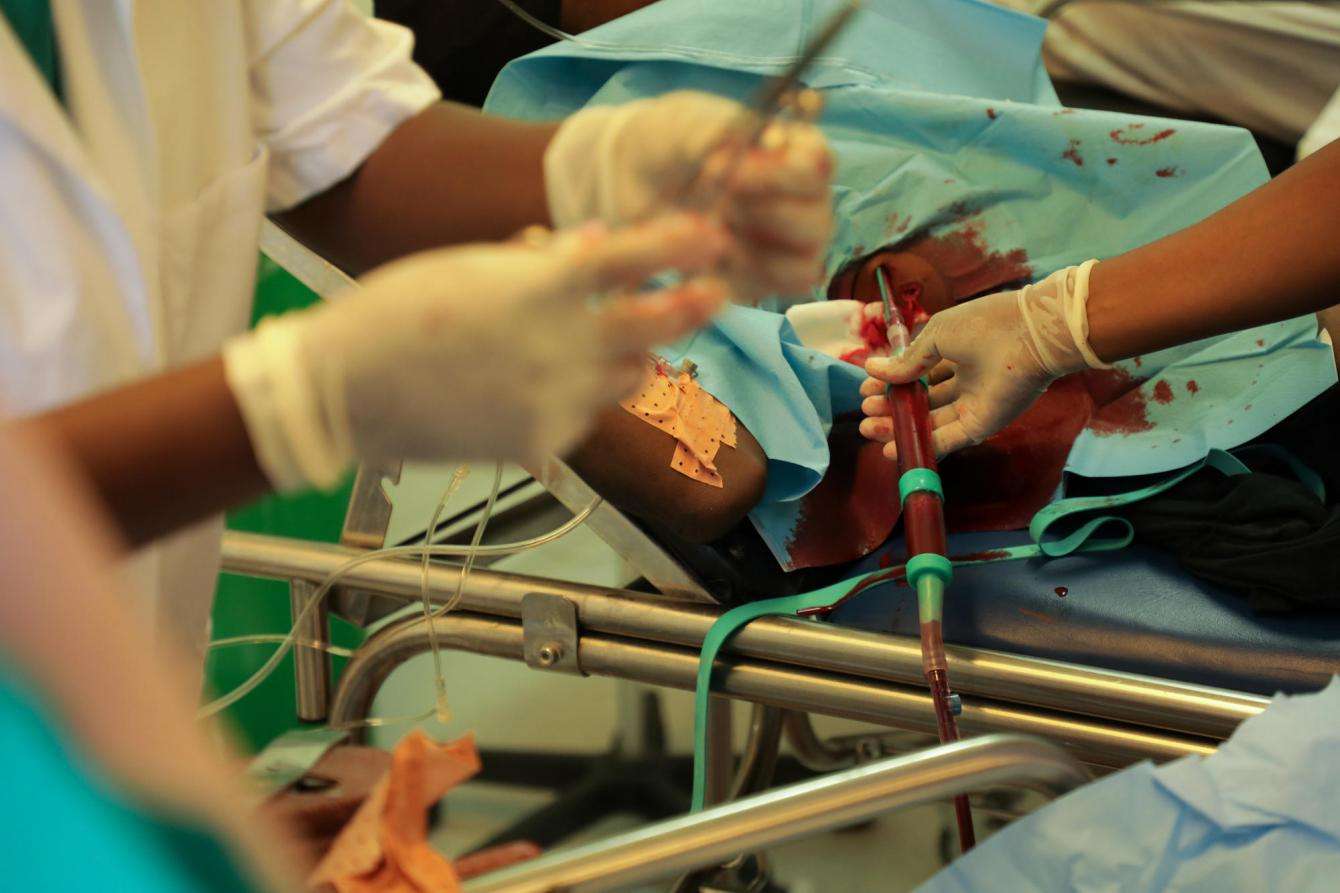

It is 9 a.m. on Sunday, December 8, when the first patient of the day arrives at the Doctors Without Borders/Médecins Sans Frontières (MSF) emergency trauma hospital in the Tabarre area of Port-au-Prince, Haiti. The 29-year-old woman has gunshot wounds and her hands are swollen and bloody. The teams—doctors, nurses, and stretcher-bearers—attend to her immediately. "Bandits ordered her to put her hands together before shooting her twice," a nurse says. The X-ray reveals a double fracture on each hand.
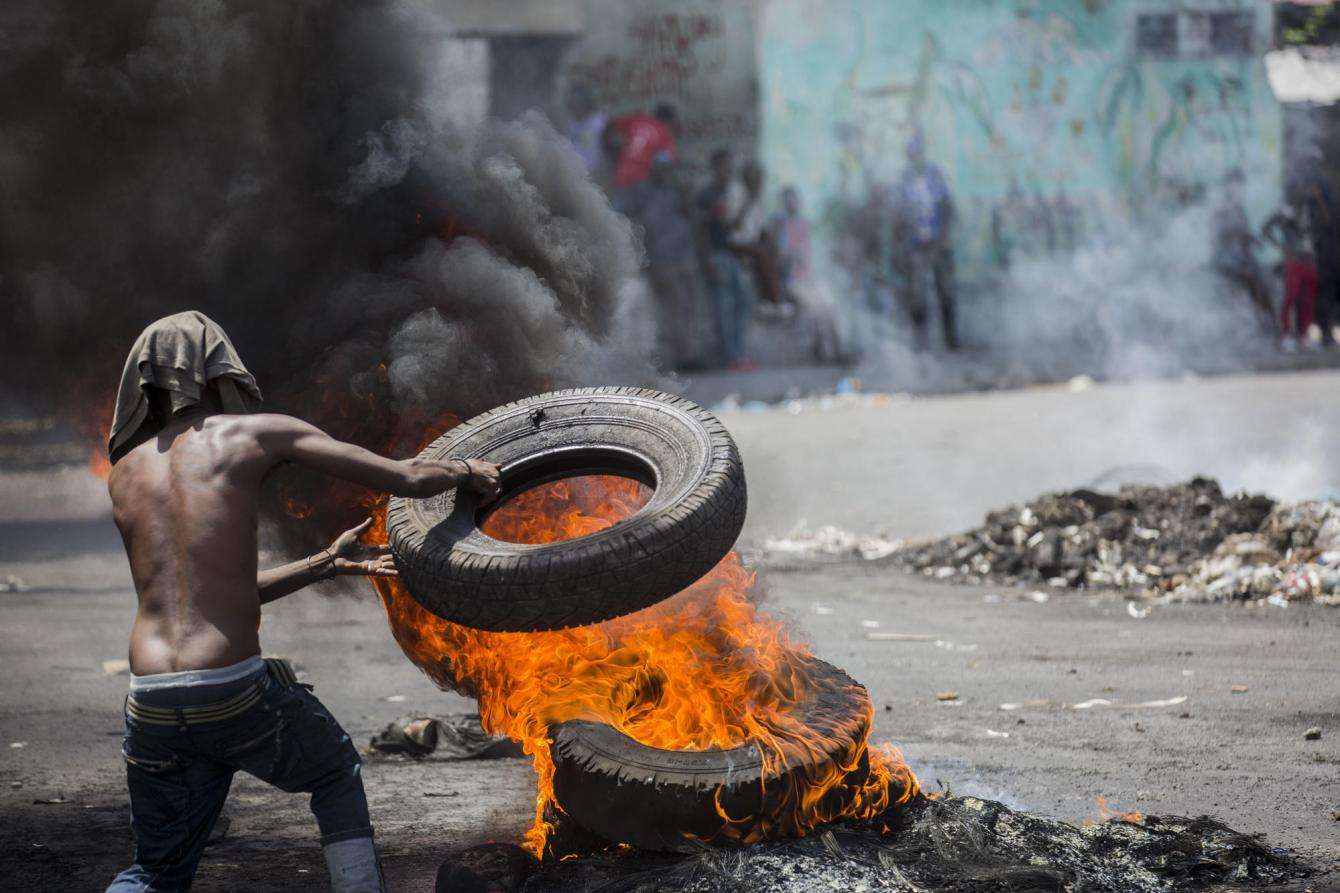
MSF opened the new emergency trauma hospital on November 27, and in the first two weeks the hospital reached its initial capacity of 25 beds. The medical needs the team treats reflect a high level of violence as political and economic crisis continues in the country. Since September 2018, widespread demonstrations—known as “peyilòk” (which roughly translates to "closed country")—have taken place in Port-au-Prince and beyond, with barricades in the streets, protests, and clashes.