
Today, Doctors Without Borders/Médecins Sans Frontières (MSF) and Epicentre, its epidemiological research center, launched a study that will evaluate the effectiveness of the ERVEBO vaccine among frontline health workers responding to the current Ebola outbreak in Democratic Republic of Congo (DRC).
Conducted as part of the Ministry of Health-led outbreak response, the study will follow 20,000 frontline workers in Ituri and North Kivu provinces over a period of nine to 12 months. As the Ebola disease outbreak caused by the Bundibugyo virus continues to spread in DRC, no vaccine or treatment specifically targeting this virus is immediately available.
The study, known as BRAVO, is being conducted with the Ministry of Health, Africa CDC, the Congolese National Institute for Biomedical Research (INRB), and other scientific partners. It will document and evaluate the use of ERVEBO, the only Ebola vaccine currently available at scale. The vaccine has a well-established safety profile and has been widely used in DRC. However, it was developed and licensed for Zaire ebolavirus — not Bundibugyo ebolavirus, which is driving the current outbreak.
Ebola in DR Congo: “The outbreak is not shrinking — it is moving”
Read more“Although ERVEBO was not originally developed to protect against Bundibugyo, preliminary data suggest that it may offer some degree of protection against the virus,” said Guyguy Manangama, epidemiologist and deputy director of operations at MSF. “In a race against time, such as the one the DRC is currently facing, we must use every tool available to us. Even partial protection could help reduce severe illness and deaths. However, these potential benefits must be demonstrated scientifically. That is precisely the purpose of BRAVO.”
Launched on September 19, 2026, at the World Health Organization (WHO)-run training center for health workers in Bunia, the study will include three months dedicated to vaccination and a minimum of six months of participant follow-up. It will target 20,000 frontline workers in Ituri and North Kivu provinces who face a high risk of exposure to the virus and are essential to the outbreak response. The study will generate real-world data on the use of the ERVEBO vaccine and its potential effectiveness in the current outbreak context.

ERVEBO as an interim measure
Several vaccines specifically targeting Bundibugyo virus are under development and may become available in the coming months. Continuing and accelerating this research remains essential. In the meantime, ERVEBO is being offered as an interim measure because of its established safety profile and its approval by several leading regulatory authorities, including the United States Food and Drug Administration (FDA), the European Medicines Agency, and the WHO.
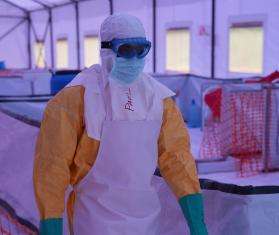
Participation in BRAVO and vaccination are entirely voluntary. Vaccination is an additional protective measure; it does not replace proven infection prevention and control measures. All frontline workers must continue to use personal protective equipment, follow safe-care procedures, and report symptoms quickly.
“It is important to stress that this vaccine will not end the current outbreak,” Manangama said. “However, it may offer additional protection to those most exposed and help strengthen the response alongside other essential interventions.”