
Over the past year, Doctors Without Borders/Médecins Sans Frontières (MSF) has responded to the unprecedented threats posed by COVID-19 across all our projects. We also see how the pandemic can compound existing problems, trigger new crises, and overshadow other humanitarian needs.
For this special edition of Alert, we highlight some of the world's forgotten emergencies—forgotten by many in the international community but certainly not by our teams on the ground. In this photo essay, we bear witness to suffering, survival, and extraordinary strength during a tumultuous year.
Our teams around the world work hard to negotiate access to these areas and ensure that local communities, governments, armed groups, and other actors respect our independence and understand our principles. However, there are some extreme situations where our teams are not able to get the assurances we need to protect our staff and patients or simply cannot get access. In such humanitarian emergencies, we may be forced to provide remote support—meaning our coordination teams are not where the patients are.
Throughout more than nine years of war in Syria, the level of medical care MSF has been able to provide has shifted constantly. Despite ongoing requests, MSF has not been granted access to work in areas controlled by the Syrian government. Our activities in areas not controlled by the Syrian government are conducted in agreement with the relevant local health authorities. In some cases, MSF can run operations the way we do in the vast majority of our projects—with a team of locally hired staff supported by international staff working side by side. But there are other situations when remote support is our only option.
Sometimes, we are able to have Syrian staff on the ground supported by a remote management team, usually located in a neighboring country. This happens when international teams can’t get access to an area or the risk of employing foreign nationals there is too high, but it is still possible to staff our operations with people from the local area. In other instances, as the context becomes more volatile, our ability to have MSF staff on the ground in any capacity is impossible—so we provide remote support to local organizations that are already active in the response.
Reaching across the distance in eastern Ghouta
During the five-year battle over eastern Ghouta, an area in the suburbs of the capital, Damascus, MSF struggled to assist the 400,000 people who were living under siege with little access to health care. Medical facilities were frequently attacked, and hospitals were forced to move underground. No one could get in or out, so the only support MSF could provide was from abroad.
From 2013 until 2018, MSF supported over 20 hospitals and health centers in besieged eastern Ghouta. “We always had MSF doctors outside Syria talking to doctors in eastern Ghouta on a weekly basis,” said Joel, an MSF project coordinator for Syria who also worked on the remote support team for almost five years.
One of the doctors MSF supported was Dr. Amani Ballour, a pediatrician and managing physician of a hospital known as the Cave—named after its network of tunnels that linked underground operating theaters and wards where patients would be evacuated during bombings by the Syrian government forces and their allies. (A documentary about life inside the hospital—“The Cave”—was nominated for an Academy Award this year.)
There were only five pediatricians and two medical residents for approximately 100,000 children under the age of 12 in eastern Ghouta. Dr. Amani treated between 30 to 50 children per day—sometimes more. “Every aspect of life was difficult,” said Dr. Amani. Medications for the wounded were rationed, and resources were prioritized for those more likely to survive.

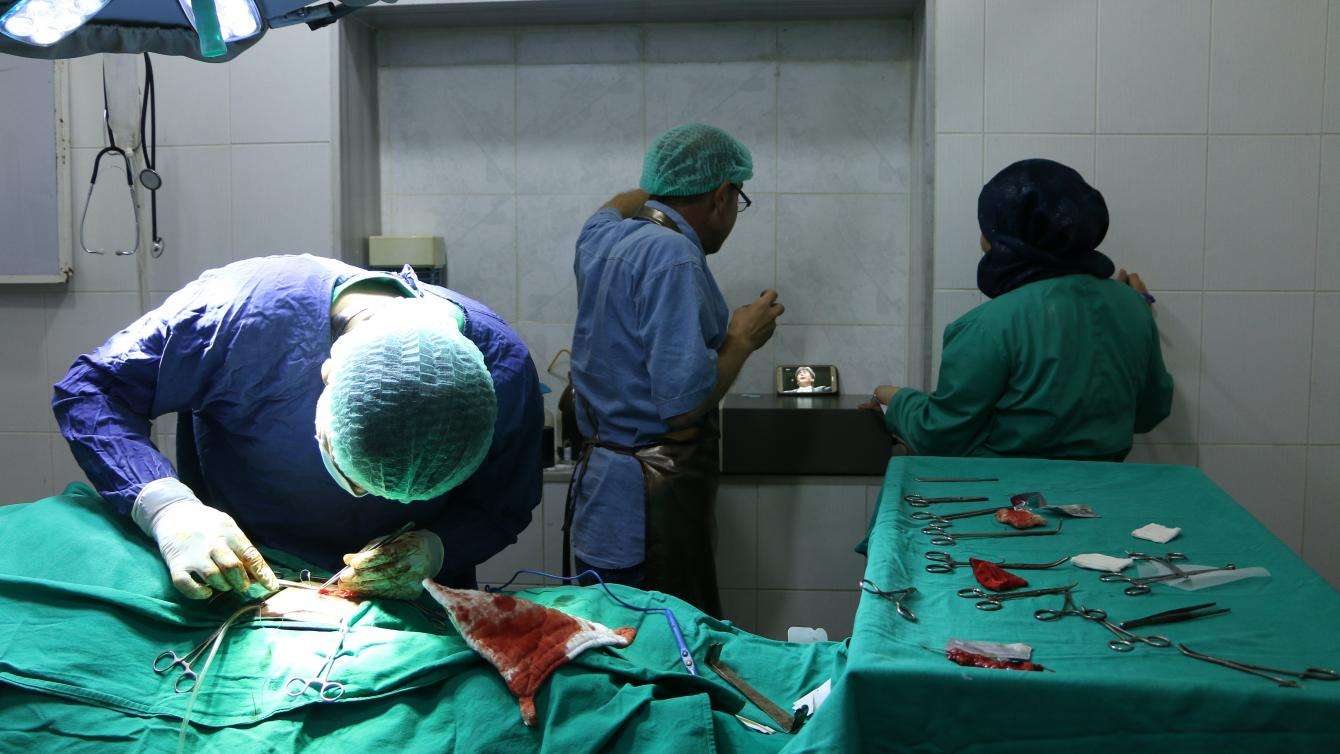
Dr. Amani remembers resuscitating a five-month-old baby girl rescued from under the rubble: “This was a very happy moment because we were able to bring her back to life. I [often] felt that I had accomplished something, and that me being where I was had an important impact. This is what kept us going all these years.”
MSF provided material support. Initially, we were able to send surgical kits, anesthesia equipment, and medical supplies and equipment. As the siege tightened, we had to switch to financial aid so that hospitals could buy their own medical supplies and cover operational costs, such as salaries, fuel for generators, and food for staff and patients.
“MSF’s support was the reason why activities in the hospital continued,” said Dr. Amani. “Without the organization’s support, we wouldn’t have been able to get the medical supplies, fuel, or anything else.”
MSF carefully manages and tracks all financial support provided to local projects we do not directly operate. We also respect the needs identified by those on the ground. “Because of our financial independence, MSF is more flexible than many other organizations,” said Joel, “We try to adapt to their needs.” To ensure accountability from facilities, MSF requests data on the medical care provided, receipts for anything purchased with MSF’s support, and reports on how our support is used.
It is also essential that facilities supported by MSF uphold our principles: free medical care to anyone who needs it, regardless of who they are and where they are from. In eastern Ghouta, we required that posters with MSF contact numbers be placed prominently in the supported facilities, so that patients could anonymously report concerns about the quality of care or if they were charged for medical treatment. “I remember one town was receiving a lot of displaced people from another town, and the facility in the area said, ‘My hospital is for the residents of this town only,’” said Joel. “In these instances, we try to correct the behavior because we don’t want to compromise our impartiality in giving care. That is a red line for us.”
Maintaining a presence in Idlib
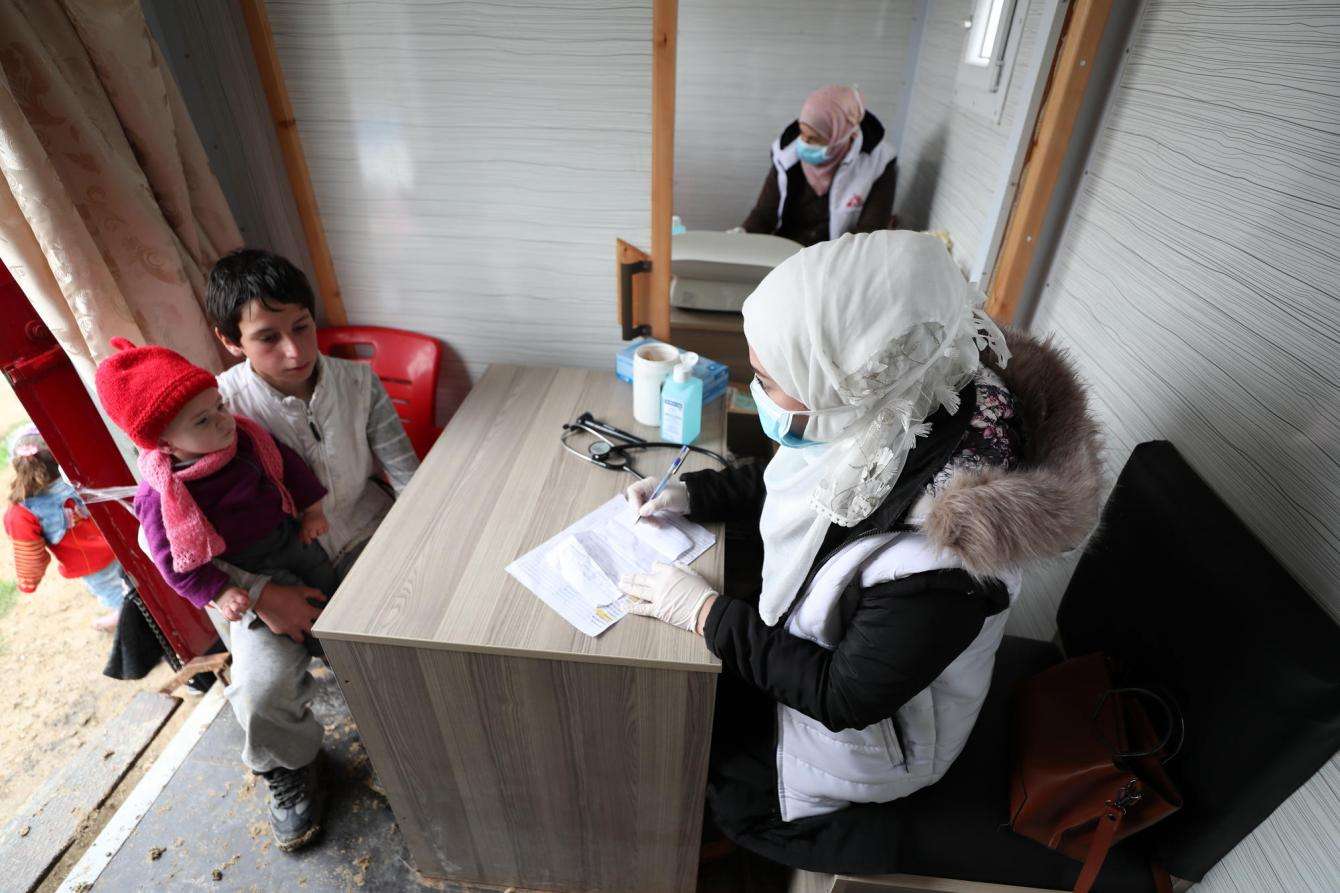
Today in Idlib, in northwestern Syria, a similar scene is unfolding as more than three million people are trapped in a narrow stretch of territory along the Turkish border with little access to health care. “The need for MSF to be present in Syria today is unquestionable. There is no debate about it,” said Cristian Reynders, who works remotely as a field coordinator for MSF in northwestern Syria. “It’s just how to be present.”
MSF has teams of Syrian staff working in pockets of Idlib province providing care and relief items to displaced people through mobile clinics. We also run a burn care unit in Atmeh and provide remote support to several health facilities, including through the co-management of three hospitals in Idlib province.
Reynders’ team works closely with our team in Idlib to define the operational strategy for MSF in the region—a big part of that strategy is training. “For example, we have a midwife working with the remote team who is constantly in touch with midwives in the three hospitals,” said Reynders. “We also have monitoring officers who are in charge of visiting the hospitals to ensure that agreed plans are being implemented.”
“It’s important for us here to keep an open mind and listen to the experience of our colleagues in Syria,” said Reynders. “My colleagues and I on the remote team have all been in conflict settings with MSF, which facilitates a certain understanding of the situation. But if I base my decisions on my experience in Democratic Republic of Congo or South Sudan and how we did things there, it will fail. Our team in Syria has an invaluable input, because in the end we are not there.”
In July, cases of COVID-19 began to spread in northwestern Syria—with health care workers among those infected. There are now more than 17,000 confirmed cases of COVID-19. “The fact that essential services have been temporarily closed or reduced and that we are facing even more human resources shortages than before the pandemic is extremely worrying.”
MSF’s priority is to safely keep our regular operations running during the pandemic, but the needs are growing and there are still areas we cannot access.

Crisis upon crisis in northeastern Syria
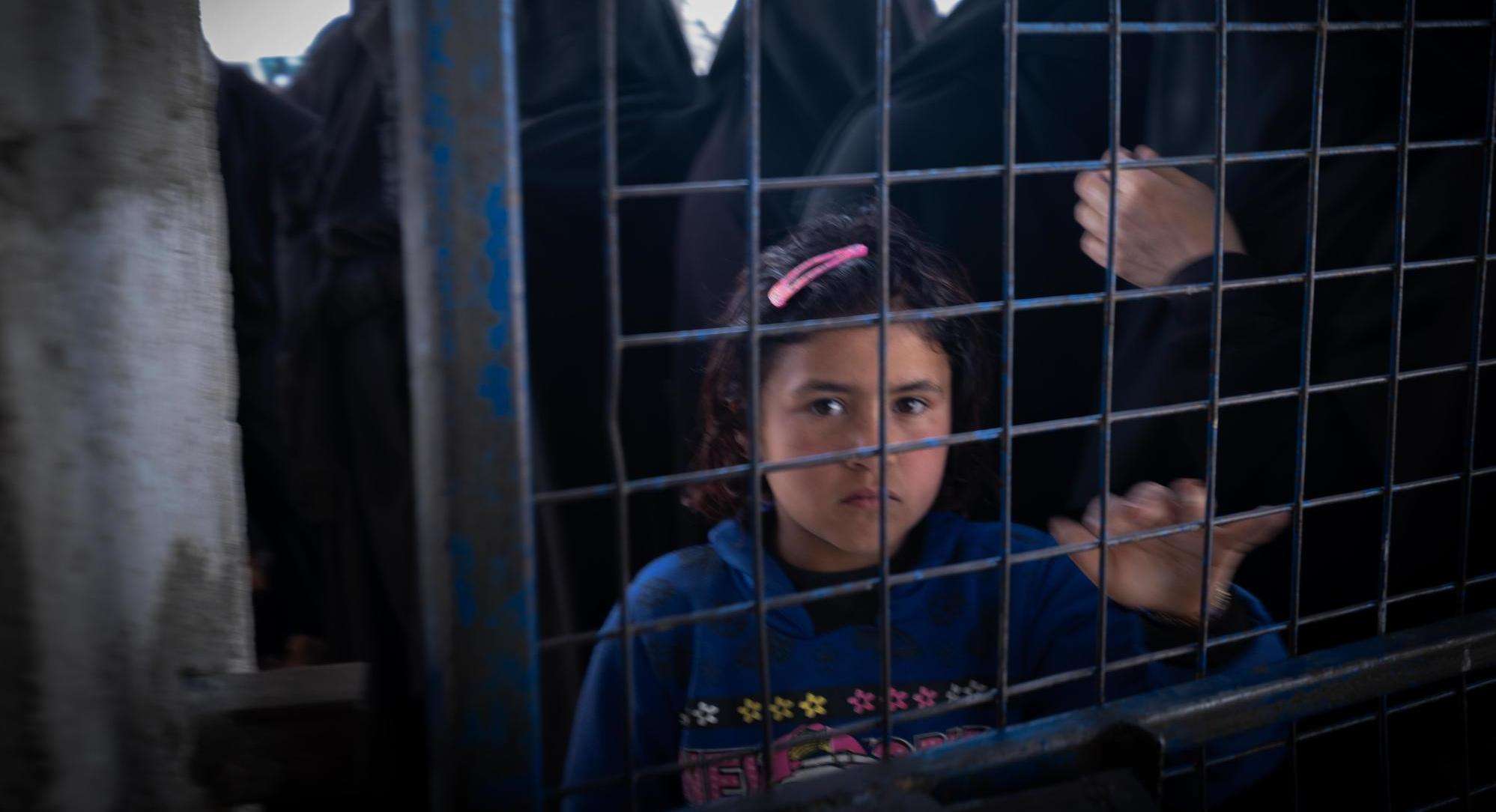
The COVID-19 pandemic is also deepening the crisis in northeastern Syria, where some 700,000 people are dis- placed across Raqqa, Hassakeh, and Deir Ez-zor provinces, as well as in parts of eastern Aleppo province. MSF is able to run operations here from inside the country—including an inpatient nutrition center and a tent-based wound care program in Al Hol camp for displaced people in Hassakeh.
A Turkish-backed military operation late last year forced us to temporarily reduce activities. That offensive also damaged the Al Halouk water station, which served some 480,000 people in Hassakeh. MSF cannot access Al Halouk at this time, so we are supporting local authorities with a more recently established water station and donating laboratory equipment and chemicals needed to treat water. Without this support, a dire situation could get much worse.
“We are worried that there could be severe public health implications,” said Will Turner, emergency manager for MSF in Syria. “Access to clean water is essential in any emergency situation. Water shortages could spell disaster in the face of COVID-19.”
MSF is one of the few international aid organizations with staff on the ground in northeastern Syria, which means that we are in a unique position to speak firsthand about the enormous needs we see. We are calling for more humanitarian actors to step in. Right now additional staffing support is critical as COVID-19 continues to spread, adding to the array of existing medical needs.
We are particularly worried about the high rate of infection among health workers—some 30 percent have been infected. “First, of course, is the impact on them and their families. Then we see a knock-on impact on an already extremely fragile health system,” said Turner. “As MSF, we are trying to meet as many of the people’s needs as we can, and to support the work of other organizations. But, far more attention and commitments are needed.”
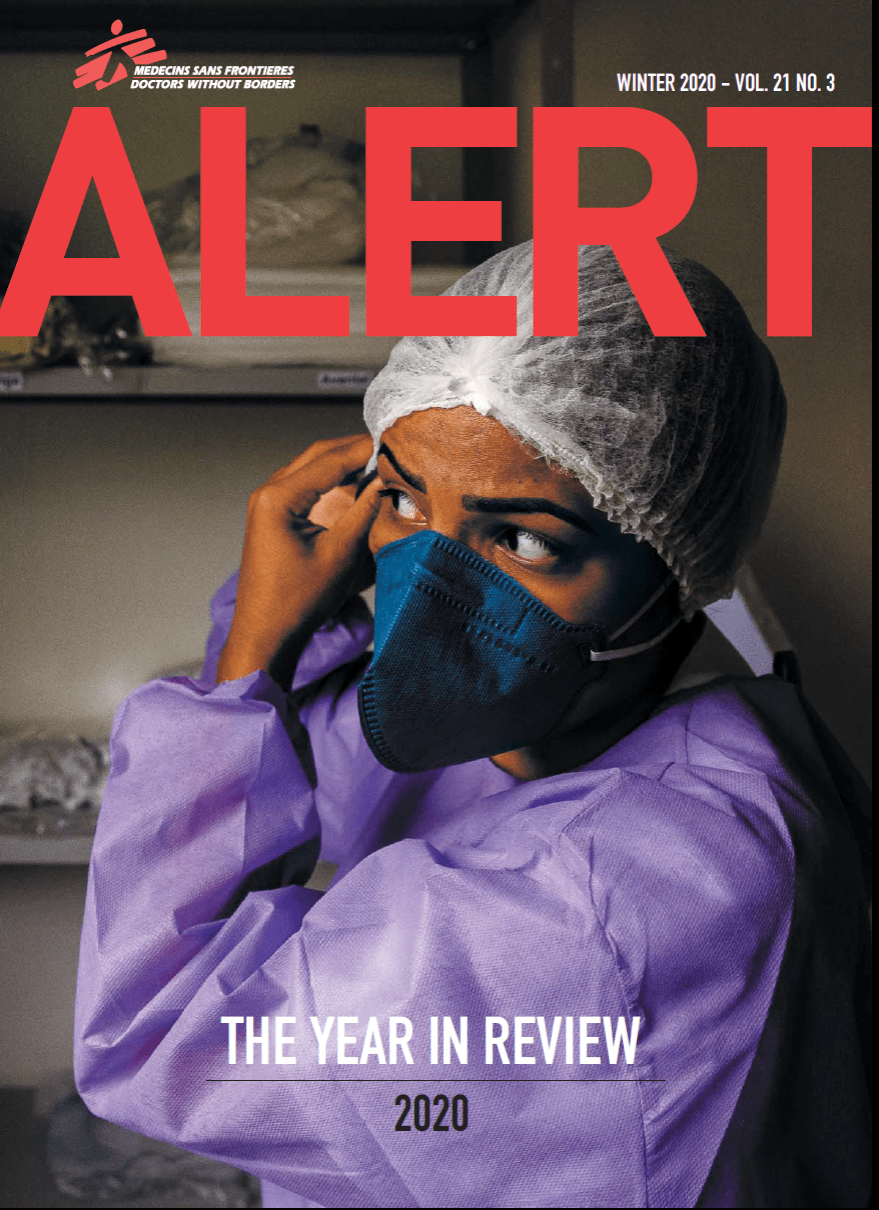
Winter 2020: The year in review
Read more

News Jul 26, 2024
ViiV must urgently help get more people on lifesaving HIV prevention m...
Read More