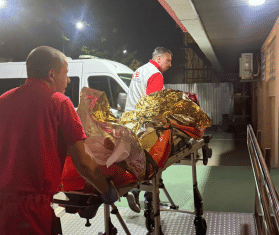
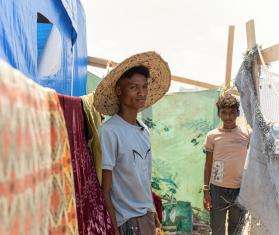
Famine thresholds are expected to be crossed in Deir al-Balah and Khan Younis governorates by the end of September. In hospitals and clinics, both patients and staff are fighting to survive on what limited food is available, often going days at a time without eating.
Doctors Without Borders/Médecins Sans Frontières (MSF) teams have seen a steady and significant increase in patients with malnutrition coming to our clinics, in addition to those we’re seeing with wounds from gunshots, shrapnel, assaults, or stabbings. Here are some critical findings from our work in recent months.
The malnutrition detection and treatment activities described below focus on children aged 6 months to 5 years old, and pregnant and breastfeeding women, unless otherwise specified.
The starvation in Gaza is man-made.
What we are seeing in Gaza is a result of Israeli authorities’ use of food as a weapon of war.
Since March 2, when Israeli authorities imposed a total siege of the Strip—preventing the entry of all humanitarian trucks carrying food, fuel, and medical supplies—only a small number of humanitarian aid trucks have entered the Strip. Food supplies are extremely limited and what’s available is incredibly expensive and out of reach for many Gazans.
According to UN estimates, 80 percent of Gaza’s population already relied on external supplies before 2023, as the Strip has been under blockade since 2007.