
Doctors Without Borders/Médecins Sans Frontières (MSF) was granted access to El Fasher, capital of Sudan’s North Darfur state, to assess the current situation for civilians and health facilities after the Rapid Support Forces (RSF) seized the city last October following a prolonged siege and atrocities. It was our first visit since halting operations in El Fasher in August 2024, and in Zamzam camp in February 2025.
On Thursday, January 15, our team spent four hours in El Fasher while under the constant supervision of security officials. We saw destroyed areas, largely emptied of the communities that used to live there. The regional capital now looks like a ghost town, with few civilians remaining.

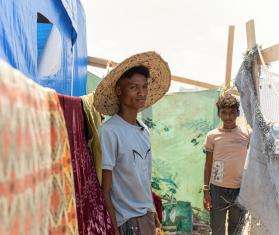
Sudan 2025 © Natalia Romero Peñuela/MSF
"We were split into groups of men and women and subjected to beatings, horrible and racist verbal abuse ... The women were eventually released, but the men were left there under the intense heat. We left them behind, not knowing whether they were alive or dead; we do not know their fate."
— I.O., displaced from El Fasher
We went to health facilities and two displacement sites hosting mostly women, children, and elderly people. In the health facilities, we reiterated our willingness to support referrals of patients in need of surgery to existing MSF projects with surgical capacity. Although we were unable to carry out a thorough and independent assessment, we did not find massive acute medical needs in the changed city.

What MSF's visit tells us about El Fasher
Our visit was too limited to allow us to get more than a glimpse of El Fasher, yet this glimpse was a grim reminder of the sheer scale of the destruction that took place in the city as many of its residents were wiped out. Our patients in the nearby town of Tawila have shared stories of mass killings, torture, kidnappings, and other violence occurring in the city and along escape routes.

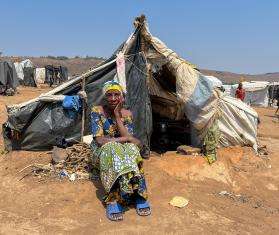
Sudan 2025 © Natalia Romero Peñuela/MSF
"What we faced in the streets was horrifying. They would snatch mobile phones, and if you had any cash, they would take it from you. If you tried to resist in any way, you would be shot and killed. The last time we left our home, we couldn't even carry a simple water container with us. We left just like that, leaving the house furnished and the car where it was."
— A.A., displaced from El Fasher
After the RSF takeover of El Fasher in late October, MSF has been relentlessly trying to locate and help survivors in need of assistance across Darfur and along the border in eastern Chad. Our fears are now growing that most of the civilians who were still alive when RSF seized the city have since been killed or displaced.
MSF’s medical and humanitarian programs in North Darfur currently focus on Tawila, Korma, and Gerne, as well as the cities of Nyala, Zalingei, El Geneina, and other locations across the broader Darfur region.