Challenges of addressing a forgotten disease
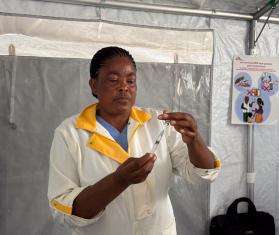
Upon their arrival at the Center for the Treatment of Epidemics in Siguiri, which is supported by MSF, patients receive medical consultations and treatment, such as with a diphtheria antitoxin. However, the means and resources to tackle this disease are limited.
“We lack health professionals who know how to recognize and treat this disease,” says MSF deputy medical coordinator Dr. Charles Tolno. “The treatment is complex and requires a lot of resources, especially in terms of the antitoxin’s availability. Given its scarcity, we have no choice but to be selective in giving it to patients with the most severe symptoms.”
With only 50 beds at the treatment center, patients with mild symptoms are sent home with antibiotics to treat the disease and reduce the risk of spreading it to others. They also receive strict instructions on how to reduce the risk of transmission. After three and seven days, patients return to the center for a check-up.
Patients with more severe symptoms are admitted to the center for treatment, where they stay for up to five days. If they need to receive the antitoxin, they must first undergo tests including blood oxygen, glucose, and temperature. For instance, the antitoxin cannot be administered if the patient has a fever that needs to be lowered.
This strategy has been successful in decreasing the number of deaths from diphtheria. “Thanks to MSF's intervention, the mortality rate has dropped drastically,” says Dr. Tolno. “When we arrived, the mortality rate was around 38 percent. Now it’s under 5 percent.”