

Violence and displacement
Northeast Nigeria
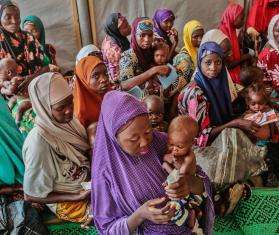
In 2022, the authorities continued to close displacement camps in the state’s capital, Maiduguri, and only three remained in and around the city by the end of the year. Most displaced people now live in host communities and in informal settlements. Our teams continued to provide lifesaving specialist health care to children under 15 years old in Gwange pediatric hospital, the only facility offering pediatric inpatient services free of charge in the area.
MSF suspended activities in Gamboru/Ngala and Rann in May, and in December took the difficult decision to close the project due to the unacceptably high risks faced by our teams.
North West Nigeria
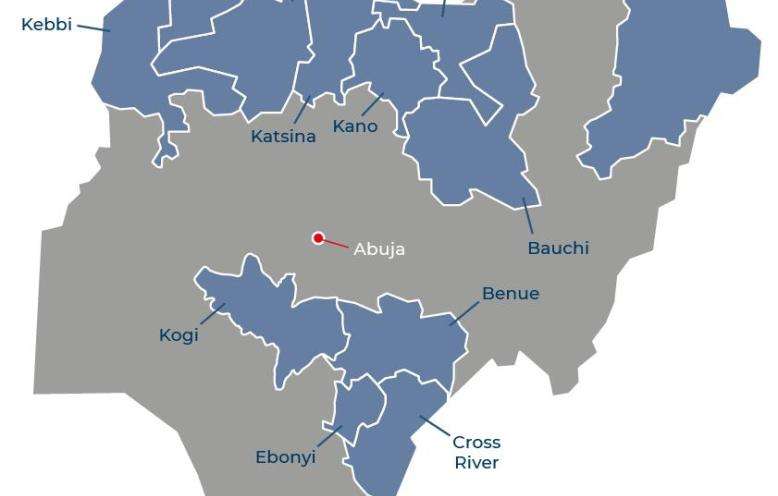
The levels of violence against people in Nigeria’s North West region significantly increased during 2022, with armed groups frequently killing, looting, kidnapping for ransom, and causing more than a million people to flee their homes. Due to the insecurity, in Anka, Zamfara, we had to scale down our 130-bed hospital to 40 beds. Nevertheless, we continued to provide medical care in the town, for both local residents and displaced people. We also worked in two hospitals and 10 general health facilities in Shinkafi and Zurmi, responding to the consequences of this violence.
Central Nigeria
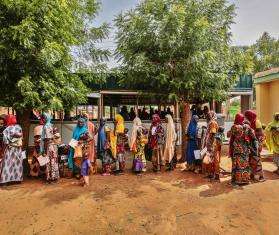
Intercommunal clashes between herders and farmers led to further waves of displacement in Benue state. In 2022, more than 443,000 people were living in dire conditions in informal camps with limited access to health care, food, water and sanitation. To address the immense needs, we supported victims of the violence at our general health care clinics in Mbawa and Ortese camps. In three other camps, we ran community-based general health care services.
Sexual and gender-based violence
Another alarming consequence of the violence in some parts of Nigeria has been the increasing number of victims of sexual violence, including in Ortese camp, Benue, where we escalated our response to assist the high number of women reaching our facilities. In Zamfara, we also offer outpatient consultations for victims of sexual and gender-based violence.
Maternal care
Our teams run the maternity and neonatal departments of Jahun general hospital, in Jigawa state, and a clinic dedicated to treating women affected by obstetric fistula, a condition caused by damage to the birth canal during prolonged or obstructed labor. We also support basic obstetrics in four health centers to reduce complications during pregnancy.
In Kano state, we continue to support two general health care centers and a clinic providing maternal and pediatric health care. Meanwhile, in our newly-opened project in Cross River, we support two outpatient facilities, general health care services, basic emergency obstetric and neonatal care, and referral systems for emergency and lifesaving care. Training is a key element in our activities in this state. In 2022, we ran training courses for health staff on Lassa fever, nutrition, laboratory skills, and water and sanitation.
Noma
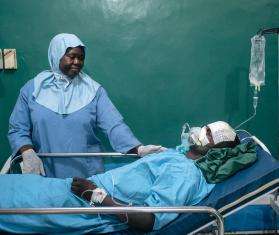
In Sokoto, we support treatment for noma, a neglected tropical disease that mainly affects young children and can be deadly if left untreated. Our team provides reconstructive surgery, physiotherapy, nutrition, and mental health support, and conducts outreach activities for the early detection of cases. Our teams also run an international advocacy campaign calling for noma to be included in the WHO Neglected Tropical Diseases list.
Disease outbreaks
In 2022, MSF emergency teams worked alongside the Ministry of Health to bring cholera outbreaks in Borno, Kano, Bauchi, and Cross River states under control. Our support included treating infected people, supporting oral rehydration points, launching vaccination and health promotion campaigns, and improving water and sanitation services.
Lassa fever, an acute hemorrhagic illness, is endemic in Ebonyi state. At the Alex Ekwueme Federal Teaching Hospital in Abakaliki, we reinforce medical capacity to tackle the disease by training medical workers early detection, case referrals, and case management during the peak season. We also run community outreach activities to inform people about Lassa fever symptoms, transmission, and mitigating the risks, as well as to tackle the stigma surrounding the illness.
Emergency response
MSF remains prepared to respond to medical emergencies or disease outbreaks in Nigeria. In 2022, our emergency teams launched interventions in Zamfara, Katsina, Bauchi, Borno, Kano, and Ebonyi states to respond to various urgent needs, including malnutrition, Lassa fever, and cholera. In Kogi state, we provided safe drinking water, donations of medicines, and technical training on health care management and water purification for medical staff.