
Access to comprehensive sexual and reproductive health care improves quality of life for all people, yet cisgender and transgender women and girls alike around the world face myriad challenges when it comes to getting this necessary care.
Contraception, protection from sexually transmitted infections, maternity care, safe abortion care, counseling, and self-care tools empower women to have active and positive sexual lives, free from physical or psychological suffering. But stigma and fears among communities at large, friends and families, and even women themselves can cast a negative light creating barriers to women’s well-being.
Unmarried women, teen girls, sex workers, women who are part of the LGBTQI+ community or those already living with a stigmatized condition can be especially excluded from information, care, and support.
In recent years, Doctors Without Borders/Médecins Sans Frontières (MSF) has tackled these challenges in a variety of ways. Projects in Greece, Honduras, and Zimbabwe have shown that strengthening a woman’s agency and offering community support can enable positive engagement with women’s sexual and reproductive health needs in ways that reverberate throughout the social fabric.
In each of these countries, women, girls, men, parents, and neighbors have compelling stories to share as they participate in and drive this change.
Supporting transgender women seeking asylum
Persecution and discrimination continue to force people to seek asylum far from home, as is the case for a small community of transgender women who have, over time, fled Cuba via Russia for the safety of Greece. Although the women are safer now, they still struggle to access health care in their new locations.
“Most of the trans people who came here do not have any medication,” said Yuli, an advocate for her community. “They experience sexually transmitted diseases—that is life. But it is very difficult to find the medical support.”
Since 2016, MSF has operated an outpatient care center in Athens which offers a comprehensive package of multidisciplinary services for migrants, asylum-seekers, refugees, and other marginalized people in need of health care. The activities are supported by a large team of cultural mediators, including translators, who also join the urban outreach team, extending services as far as they can to communities like Yuli’s.
Yuli has made it her mission to encourage and motivate her peers to prioritize their sexual health and protect themselves.
March 07 05:06 PM
Providing inclusive care for trans asylum seekers in Greece
“I feel more safe now. I feel that I belong to a community for the first time in my life.”
Read More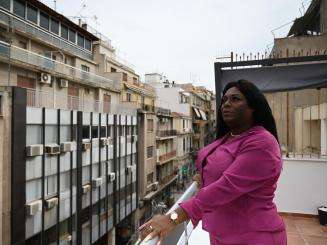
Standing up for sex workers’ sexual health
For sex workers in San Pedro Sula, Honduras, access to medical and psychological care is limited by social stigma and a lack of inclusive services. Historically speaking, health care staff have not been welcoming to sex workers who seek information and treatment for or protection from infection.
MSF opened the San Pedro Sula Clinic in July 2021 to improve access to care for the sex worker and LGBTQI+ community. Nadia has been visiting the clinic for almost two years now. “It has been a blessing to find MSF’s clinic,” she said. “I can find everything: prevention and control of HIV, syphilis, and sexually transmitted diseases, family planning, psychological help, and social work.”
Outreach teams also visit the community to help overcome mistrust and misinformation. “Personally, I suffered too much during the time I didn't take care of myself,” said Nadia. “I realized that everything has a price—and taking care of myself is priceless.”
March 07 03:13 PM
Honduras: Sex-positive health care for women in San Pedro Sula
“Taking care of myself is priceless.”
Read More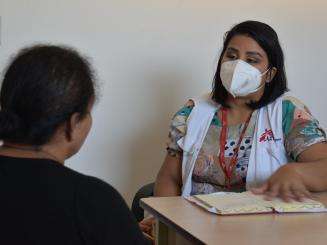
Empowering teen mothers with health care and social support
For teenage girls in Zimbabwe pregnancy is considered taboo, but they often have little or no say in decisions affecting their bodies and lives. They also have little or no access to important information and services and are often dissuaded from seeking it.
In 2020, as COVID-19 lockdowns closed schools and limited people’s mobility, there was a surge in unplanned pregnancies in Zimbabwe—including in Mbare and Epworth, where MSF runs an adolescent sexual and reproductive health program. To respond to the specific needs of the pregnant girls, the MSF team formed the Teen Moms’ Club.
March 07 03:54 PM
Zimbabwe: Supporting teen moms and building community in Mbare
“The assistance I got from MSF inspired me to give back to my community, realizing that I was not the only one with the same problem.”
Read More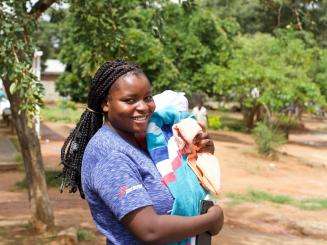
When Marvellous became pregnant just before starting a new year of school, her parents were shocked. She said, “I did not know what to do or who to turn to.” But discovering the club gave her the opportunity to meet other girls like her, learn about the risks associated with early pregnancy, and gain knowledge about issues such as contraception, safe sex, and pregnancy. Inspired by her experience Marvellous is now a peer educator in the club.