

Vulnerable people in Haiti’s capital of Port-au-Prince are caught in a spiral of ongoing violence and insecurity, living under the threat of stray bullets and kidnappings as well as economic uncertainty. Doctors Without Borders/Médecins sans Frontières (MSF) runs mobile clinics almost daily to treat hundreds of people trapped in their neighborhoods.
In the first four months of 2023, MSF mobile teams cared for 7,781 patients and distributed more than 79,000 gallons of drinking water in the areas of Delmas, Bel-Air, and Bas Bel-Air, where people have been particularly affected by violence. Another 79,000 gallons of drinking water and 607 hygiene kits were distributed to people displaced by violence in the neighborhoods of Fort National and Poste Marchand in February. In 2022, these teams carried out 17,800 consultations.
Haiti's multidimensional humanitarian crisis
A series of major political, social, and economic events have resulted in a complex, multidimensional humanitarian crisis in Haiti. Access to essential services, including medical and mental health care and water and sanitation, is severely limited across Port-au-Prince, and especially in neighborhoods most affected by the violence. Conflict between rival armed groups makes it difficult for people to move freely across the city, and many people are living in extremely precarious conditions.
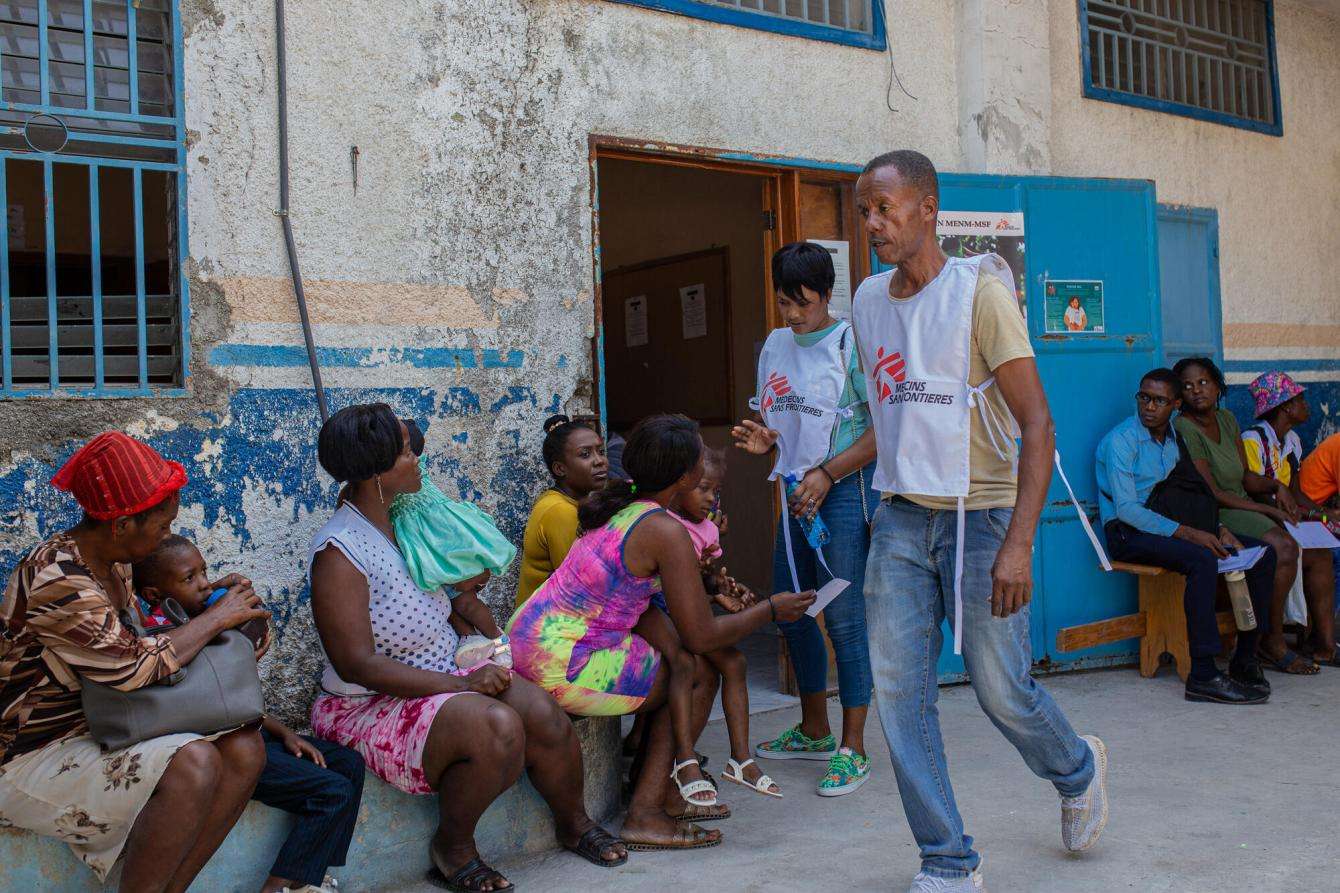
The role of mobile clinics amid urban violence
At least four times a week, three MSF cars transport a multidisciplinary team comprising doctors, nurses, psychologists, health promoters, midwives, and water specialists to treat patients in areas affected by urban violence in the city center.
“Mobile clinics are necessary in a context like Port-au-Prince,” said Michele Trainiti, MSF Head of Mission in Haiti. “Health facilities in some of the most violence-affected neighborhoods are closed. Partly functioning health structures are difficult to reach and unaffordable for many. People are too afraid to travel due to violence and insecurity, including the high risks of stray bullets, and even then, transportation options are limited.”
Public health care facilities often face regular shortages of staff, medicines, and supplies, so even when people are able to overcome all the barriers to reach a health center, they might not be able to receive the care they need.
“Although not perfect, mobile clinics are flexible and adaptable. They allow us to bring health care closer to patients in parts of the city affected by violence. We can therefore overcome some of the barriers that people face,” said Trainiti.
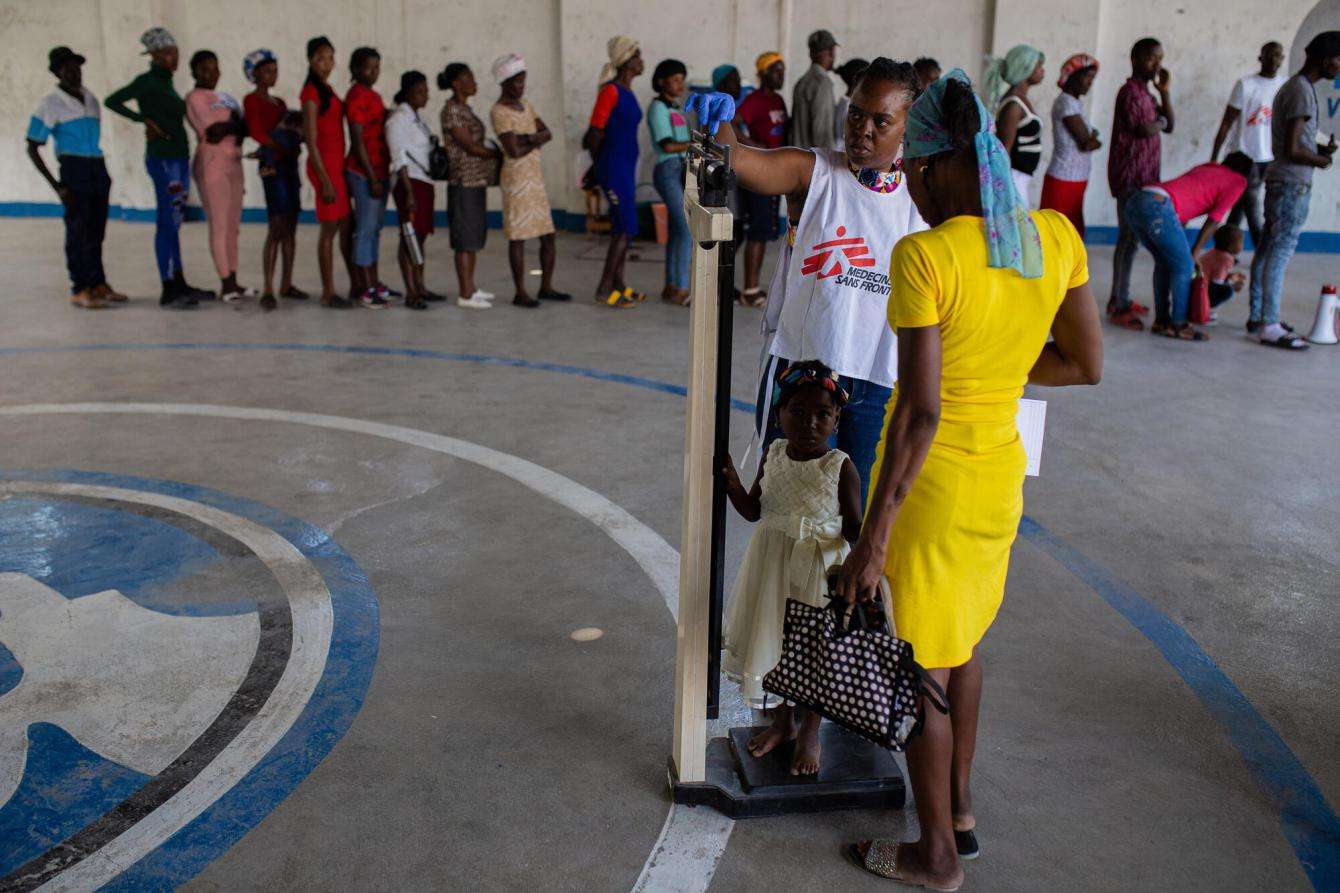
Mental health, sexual health, and other issues
The violence people experience also has a significant impact on their mental health, according to Camille Dormetus, MSF psychologist at the mobile clinic. “The sound of bullets, the fear of being attacked by armed groups, the death of relatives…are parts of the traumatic situation experienced by our patients. I saw many people suffering from anxiety [or] depression, with sleep disorders or hypervigilance…with some of them consuming psychoactive substances to escape from their reality.”
Dr. Engleed Emeran also works with the mobile clinic team. “I usually see around 50 to 70 patients on a normal day, mostly young women for sexually transmitted infections, elderly women for chronic pain and hypertension, and young children with respiratory infections,” she said.
Scabies is the most common illness treated in the clinics. A contagious skin condition caused by tiny mites that burrow into the skin, scabies is a symptom of unsanitary living conditions. It is especially common in parts of the city where access to water is limited and sanitation facilities are inadequate.
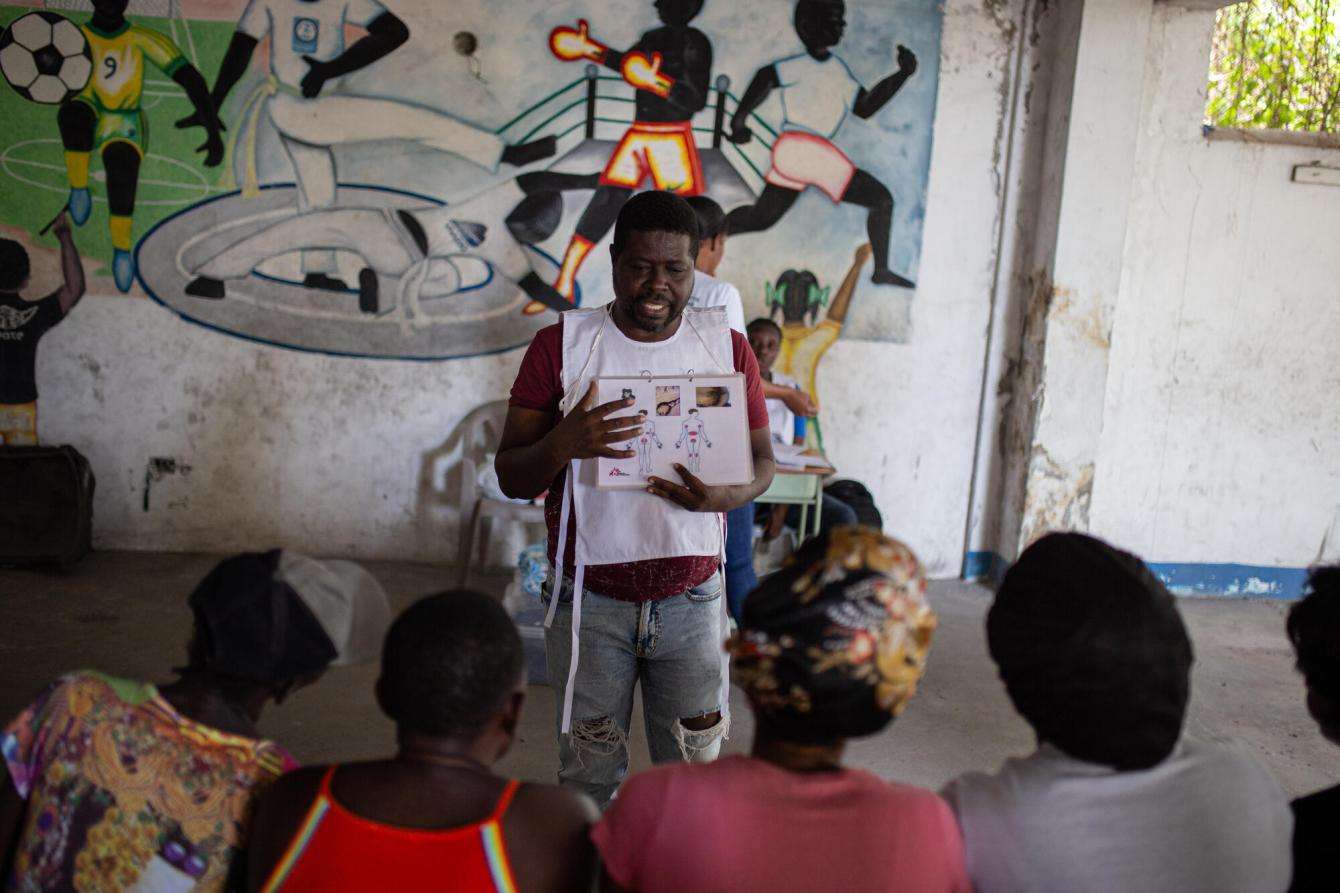
“Through our mobile clinics, we provide primary health care along with health education, and refer patients with more complicated cases to other health structures,” said Trainiti. “We also provide drinking water and repair sanitation facilities. We are always looking at what additional assistance we can provide, but the needs are just so massive."
Adapting to changing needs
MSF’s mobile clinics were suspended from September to December 2022, partly due to mass protests. When a cholera outbreak gripped the country, they were redeployed to respond, setting up new treatment facilities and other community-based measures. MSF treated more than 16,829 patients for cholera in collaboration with the Haitian authorities between October 2022 and April 2023.
Although the mobile clinics are up and running again, they are doing so at a moment in which levels of violence are extremely high, making continued flexibility a priority.
MSF has been working in Haiti for 30 years, providing free quality medical care for all Haitian people, and we remain committed to this work.


News Jul 26, 2024
ViiV must urgently help get more people on lifesaving HIV prevention m...
Read More