
A study published this week by Doctors Without Borders/Médecins Sans Frontières (MSF) in the Journal of the American Medical Association (JAMA) Network reveals a dramatic markup and exorbitant corporate profiteering on the prices of newer diabetes medicines and insulin pens.
In the US, this represents up to a 35,000 percent markup on what a profitable generic price could be on some products. If policymakers, governments, and procurers take action based on the findings of this study, diabetes treatments could become significantly more affordable everywhere, especially for people in low- and middle-income countries.
FINDING #1
Newer class of drug could cost just $0.89 per month
The first key finding of the study regards a newer class of drug used to treat people with diabetes, GLP-1s, including those marketed as Ozempic and Trulicity by the pharmaceutical corporations Novo Nordisk and Eli Lilly, respectively. These drugs are now routinely recommended and included in treatment guidelines in high-income countries. However, this drug class is not included in World Health Organization (WHO) diabetes treatment recommendations or its essential medicines list, or in national treatment guidelines in low- and middle-income countries, where they are virtually unavailable.
MSF’s study estimates that GLP-1s for diabetes could be sold at a profit for just $0.89 per month, yet it costs $95 per month in Brazil, $115 per month in South Africa, $230 in Latvia, and $353 in the US, which about 39,562 percent higher than the estimated generic price could be.

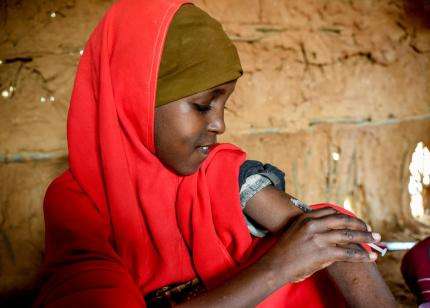

MSF's diabetes patients include children around the world.
However, Novo Nordisk and Eli Lilly are the only producers of these GLP-1s today, and their intellectual property barriers on the drugs and injection devices block any generic manufacturing that could help drive prices down. The corporations have not even announced a price for low- and middle-income countries, nor have they licensed these drugs so generic manufacturers can make them, which would help meet global demand and drive prices down. Even in high-income countries, these corporations are unable to meet the massive demand for the drugs, which can also be used for weight loss. As a result, many people living with diabetes cannot access them.
“These new drugs are an absolute game changer for people living with diabetes but are being kept out of the hands of hundreds of millions of people who need them in low- and middle-income countries,” said Christa Cepuch, pharmacist coordinator at MSF’s Access Campaign. “Eli Lilly and Novo Nordisk can in no way supply the world with the amount of these medicines needed to meet global demand, so they must immediately relinquish their stranglehold and allow them to be produced by more manufacturers around the world.”
FINDING #2
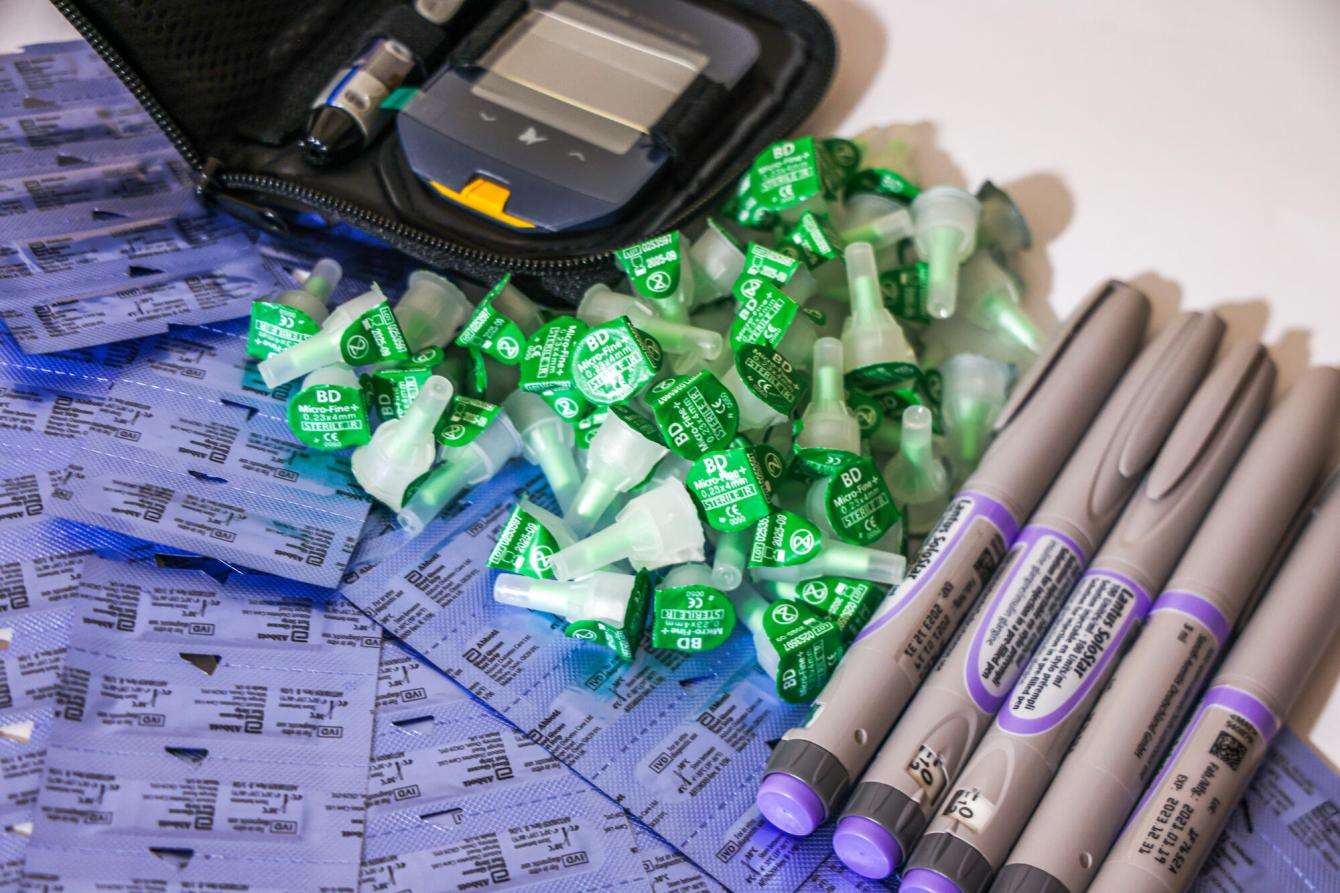
Insulin pens could be sold at just $0.94 per month
The study’s second key finding regards insulin pen injection devices, which people living with diabetes prefer over using multiple syringes each day to inject insulin from vials. They are also safer with increased dosing accuracy, which is particularly important for people living in unstable or crisis contexts like the places where MSF works, where access to glucose monitoring is less assured and health care options are limited for those who develop diabetes complications. However, due to the high prices that corporations charge for insulin pens, they are almost never available to people in low- and middle-income countries and are not often used by humanitarian agencies.
MSF’s study finds that one pre-filled human* insulin pen could be sold at a profit with an estimated generic price of just $0.94, compared to the $1.99 price in South Africa, $5.77 in India, $14 in the Philippines, and $90.69 in the US. A long-acting pre-filled analog insulin pen could be priced at $1.30 each, compared with $3 charged in South Africa, $7.90 in India, $25.20 in the Philippines, and $28.40 in the US—about 2,153 percent higher.
This means that when including the cost of insulin and the devices needed to inject it, insulin pens could actually be the more affordable option compared to the older and less user-friendly vials—if the corporations making them would reduce their prices. Analog insulin administered with a pen device—the standard of care in high-income countries—could cost $111 per patient per year, which is 30 percent less than human insulin in a vial. This double standard of care is unacceptable and, based on this costing study, unnecessary.

Improving quality of life for people with diabetes
A survey MSF conducted in collaboration with T1International of over 400 people on insulin in 38 countries found that 82 percent preferred using insulin pens because it’s easier to give the correct dose, less painful, and less stigmatizing to use in public. MSF’s experience offering insulin pens to people with diabetes in Lebanon has demonstrated an important impact on people’s quality of life and has helped people better adhere to their treatment. Insulin pen devices and long-acting insulin analogs have recently been included in WHO’s list of essential medicines, which countries use to prioritize their own essential medicine lists and procurement plans.
“Our study shows that it could be more affordable to use insulin pens for both human and analog insulins instead of vials of human insulin injected with syringes, even though that has always been thought to be the most affordable option and therefore the only option offered to people in low- and middle-income countries,” said Dr. Helen Bygrave, MSF non-communicable diseases advisor. “If the cost of insulin and the devices needed to inject it are included in the calculation, the myth that insulin pens and newer insulins have to be more expensive is busted. Nobody starting insulin today in my medical practice in the UK would be expected to inject insulin with syringes. We need to see pharmaceutical corporations put people before their astronomical profits and bring their pen prices down dramatically, so we can put an end to this global double standard in diabetes care.”
Diabetes affects 537 million people globally. Cases are rising in low- and middle-income countries, with a projected increase of 134 percent in Africa by 2045. Only half of the people who need insulin in the world have access to it. MSF has significantly increased the number of diabetes consultations in our medical programs: In 2022, MSF performed 205,122 diabetes-related consultations globally.
* Insulin is classified as either human or analog and by its onset and duration of action. Insulin analogs, while similar to human insulins in their basic structures, have been modified to change their onset and duration of action after injection, enabling greater flexibility of use for people living with diabetes.


Story Oct 23, 2024
Healing hands: A Sudanese doctor shares why he continues to provide ca...
Read More