Mr. President, colleagues,
Médecins Sans Frontières stands in this chamber today as witnesses to the stark reality of the ongoing outbreak of Ebola disease caused by Bundibugyo virus (BDBV) in Democratic Republic of Congo (DRC) and Uganda. Unfortunately, what we are witnessing exposes the fundamental and persistent fractures in our global preparedness systems, and their deadly consequences.
Let me be specific. Following the Bundibugyo virus outbreaks of 2007 and 2012, experts clearly identified the need for broader diagnostics for Ebola disease. Yet nearly 15 years later, we still face limited availability of diagnostic tools and a lack of authorized therapeutics and vaccines, not because the science was beyond reach, but because the international community did not sufficiently prioritize the people primarily affected by Ebola in the years since the last outbreaks.
This is not the first time we have faced these challenges. During the 2014 West Africa outbreak, and at the start of the 2018 outbreak in DRC, there were no approved therapeutics or vaccines. In 2018, MSF was a partner in the PALM trials, which led to the development of two effective treatments for Ebola virus disease. And yet, eight years later, reliable and sustained access to these treatments remains highly limited and inequitable. To put this another way, the populations that suffered these outbreaks and contributed the biological materials which allowed for the development of these products still do not have guarantees to benefit from the products during the next outbreak. This falls short of our promises to these populations and does not promote the trust we need from these communities during outbreaks like the one we’re facing now.
We should not have had to wait for another outbreak to address this. The 2023 Declaration committed us to moving from words to action, from voluntary measures to enforceable mechanisms. But as new R&D initiatives mobilize in response to BDBV, as clinical trials are being launched, we risk repeating the patterns that failed us before.
This is where the Pathogen Access and Benefit Sharing (PABS) annex currently under negotiation as part of the World Health Organization (WHO) Pandemic Agreement becomes urgent, not as abstract policy, but as a concrete mechanism determining whether what we learn from this outbreak actually protects affected communities in the future. If we are serious about ensuring that what we learn from this outbreak benefits affected communities, our ambitions cannot stop with PABS.
What MSF calls for, and what the evidence demands, is clear:
First: Put affected countries and communities in the driver's seat. When R&D happens in response to disease outbreaks in low and middle-income countries, those countries and communities must have a real voice and participate in how that research unfolds and what happens with that research. Clinical trials should protect participants’ safety and well-being. No company should be able to shut down a trial and leave patients without access to effective medical tools. Communities who participate in trials should have guaranteed access to the tools developed through such trials afterward. And when a medical tool is approved, it should be registered and made available in the countries where the disease actually occurs immediately, not years later.
Second: Make access conditions real and enforceable. When governments and other donors fund research, that funding should come with real strings attached — not requests, but requirements. Publicly funded research should result in tools that are affordable and available in the countries that need them as a matter of priority. When affected countries share virus samples and data to help develop treatments or other tools, they should have ironclad guarantees of access to what gets developed. And if companies don't hold up their end of the bargain, governments need the power to step in and ensure treatments reach patients.
Third: Let everyone see what's happening. Transparency about prices, about stock and inventory, about where these tools are stockpiled, about timelines for production and supply, and how much it costs to make these products — all of this information should be public. Affected countries and communities need to know what's being promised to them, when they can expect to receive it, and how much it will cost them, if anything at all. Accountability only works when there's transparency.
But I want to be direct about something that goes even deeper than these three asks.
In our humanitarian work across DRC, in South Sudan, in Central African Republic, in Gaza, we have learned something fundamental: The communities where disease outbreaks occur are not problems to be solved from above. They are a central part of the solution.
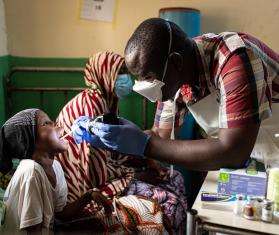
When we work in conflict-affected areas, in fragile health systems, in remote regions, we see communities doing the work that saves lives. They are the ones identifying cases. They are preventing transmission. They are caring for the sick. They understand the terrain, the culture, and the trust networks that matter. Yet when R&D happens, when global health decisions are made, these communities are invited to listen, not to lead.
Rapid spread of Ebola disease outbreak in DR Congo “deeply alarming”
Read moreThe 2023 Declaration committed us to "whole of society approaches" and to meaningful participation. We need to mean that. It is not enough to consult affected communities. They must be at the table making decisions about which tools get developed, how research happens in their countries, what happens with their contributions to research, and how the tools that are developed from such research are delivered to the places where outbreaks occur.
In conflict settings, this is not optional. Today’s Bundibugyo outbreak reminds us that at the heart of any response are the communities experiencing it: the local health workers we rely on to detect the initial cases, the political and cultural leaders who facilitate access to their communities, the families supporting their loved ones. Externally designed interventions not only fail in these contexts, they endanger the response. But interventions co-designed with communities, with frontline health workers, with local leadership, with the people who know the context — these work. Communities have shown again and again that they are essential to successful outbreak response.
And for this to work, respect for international humanitarian law and unhindered humanitarian access must be non-negotiable. Disease does not respect conflict lines, and our ability to respond depends on the ability of humanitarian personnel to reach those in need. Outbreak response should never be politicized or dealt with only as a matter of security. But what this also means is that from MSF’s perspective, the most effective way to prevent, respond to, and stop outbreaks is to respect the rights of affected communities and their needs and concerns at the center of the response.
The people of DRC and Uganda are watching. Can we promise them we will truly commit to fundamentally changing how this works? That they will be treated as true partners in research, not as sources of data, samples, and risk while the benefits go elsewhere?
The international community has adopted the Pandemic Agreement and amended the International Health Regulations. These instruments create the frameworks we need. But translating commitments into tangible outcomes requires one more thing: the political will to genuinely share power with the communities most affected.
DRC and Uganda deserve an answer grounded in that kind of action, not in voluntary pledges.
Thank you.