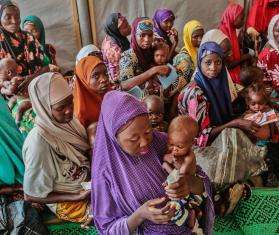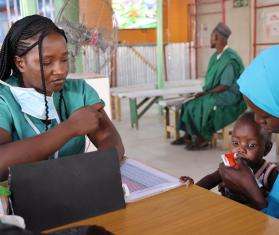

Abuja, Nigeria/New York, July 3, 2023—A malnutrition crisis is escalating in northwest Nigeria, where attacks by armed groups are affecting food supplies, Doctors Without Borders/Médecins Sans Frontières (MSF) said today, warning that the current humanitarian response is insufficient to avert a potential catastrophe in the coming months.
Widespread violence has exacerbated the region’s malnutrition crisis. Armed groups regularly raid towns, loot property and kidnap local people for ransom. More than 500,000 people have fled their homes in the states of Sokoto, Zamfara, Katsina and Kano, according to international estimates. Others have stayed but are unable to access their farms or places of work due to the worsening insecurity.
"People don’t have access to their lands anymore, which means they have less food," said Froukje Pelsma, MSF's former head of mission in Nigeria. "In general, health care workers leave the area because it's too dangerous. We also see that with climate change, there are more droughts, but also more flooding, which has a big impact on the way people can work with the land."
MSF urges all aid organizations working in Nigeria to scale up their humanitarian response, and is calling on the Nigerian government and local health authorities to act now to prevent a catastrophic loss of life in the months ahead.
MSF has increased its response to malnutrition in the region, which was already one of MSF's largest malnutrition responses worldwide. Currently, MSF manages 10 inpatient therapeutic feeding centers and 35 outpatient centers across Kano, Katsina, Kebbi, Sokoto, and Zamfara states. From January to May 2023, MSF teams in northwest Nigeria provided inpatient care to 10,200 severely malnourished children with medical complications and admitted 51,000 children to its outpatient feeding programs. Inpatient admissions were 26 percent higher than in the same period in 2022—numbers that were already higher than ever before.
This year, admissions are expected to continue rising. From May to August is the “lean season,” a period when stocks of food run low, and several MSF treatment centers are already completely full.
“The numbers of malnourished children that we’re receiving in our facilities are a strong indicator that the further we get into the lean season, the more cases we’ll receive,” said Htet Aung Kyi, MSF medical coordinator.
MSF teams say that children who recover from malnutrition and are discharged often need to be readmitted later as their families struggle to find enough food to keep them healthy. This keeps children stuck in a spiral of malnutrition from which it is difficult to escape.
“We eat when we have food, but there are days when we go hungry, and sometimes the children have to beg for food,” said Sadiya, whose child was treated for malnutrition at MSF’s therapeutic feeding center in Katsina.
According to the Nigerian Bureau of Statistics, an estimated 78 percent of people in northwest Nigeria live below the poverty line. Health care is often unaffordable or hard to access, and many children have never been vaccinated against common childhood diseases. A very limited amount of international aid reaches the region. All these factors have contributed to the growing numbers of malnourished children in urgent need of treatment.
Despite the escalating crisis, northwest Nigeria lacks the attention and support required to set up a lifesaving response. This response needs to include preventive measures such as food distributions and improvements to food security, as well as the early detection and timely treatment for malnutrition cases.
MSF has been working in Nigeria since 1996. MSF is also responding to a malnutrition emergency in northeast Nigeria, running a 120-bed intensive therapeutic feeding center and an outpatient therapeutic feeding program in Nilefa Kiji center in Maiduguri, Borno state. In 2022, MSF teams across Nigeria provided inpatient care to 28,000 children with severe malnutrition and enrolled 175,000 children in its outpatient feeding programs.