
One month after the devastating June 24 earthquakes, Venezuela is still grappling with the aftermath. Thousands are mourning the loss of family and friends — and, for many, everything they owned.
To support families who have lost everything, Doctors Without Borders/Médecins Sans Frontières (MSF) is running four mobile clinics across the most affected areas: three in La Guaira (Maiquetía, Catia La Mar, and Tamaguarena) and one in Caracas (Avenida Bolívar). Our teams provide primary health care, emergency mental health support, and health promotion. Over the past month, they have conducted 2,217 medical consultations. They also carry out water, sanitation, and hygiene activities, including providing access to clean water.
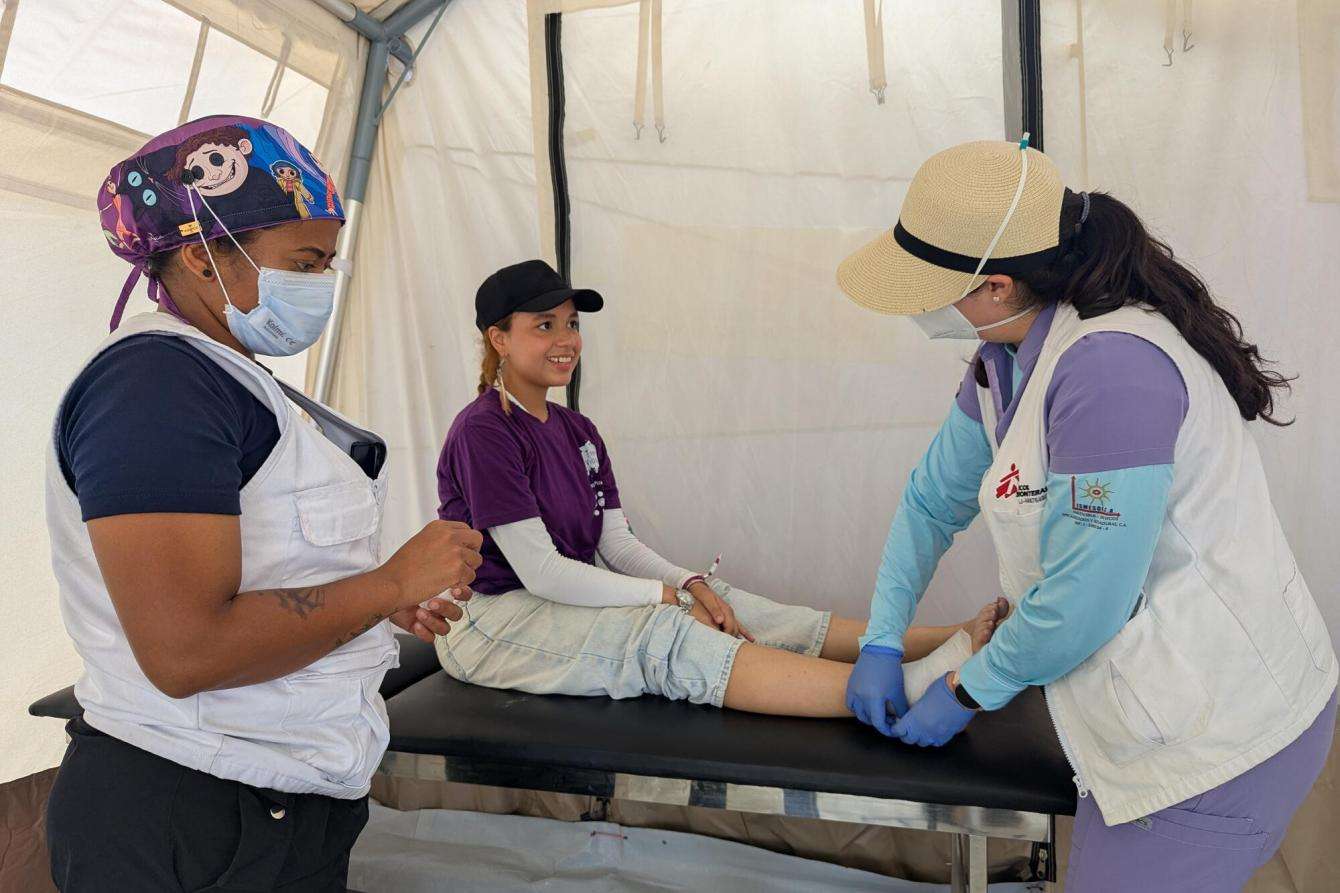
A complex, protracted crisis
What began as a sudden natural disaster — hitting hardest in the coastal state of La Guaira, near the capital, Caracas — has become a complex, protracted crisis marked by mass displacement, widespread damage to infrastructure, and deep psychological trauma. In La Guaira and Caracas, urgent needs include clean water, safe shelter, mental health care, and protection services.
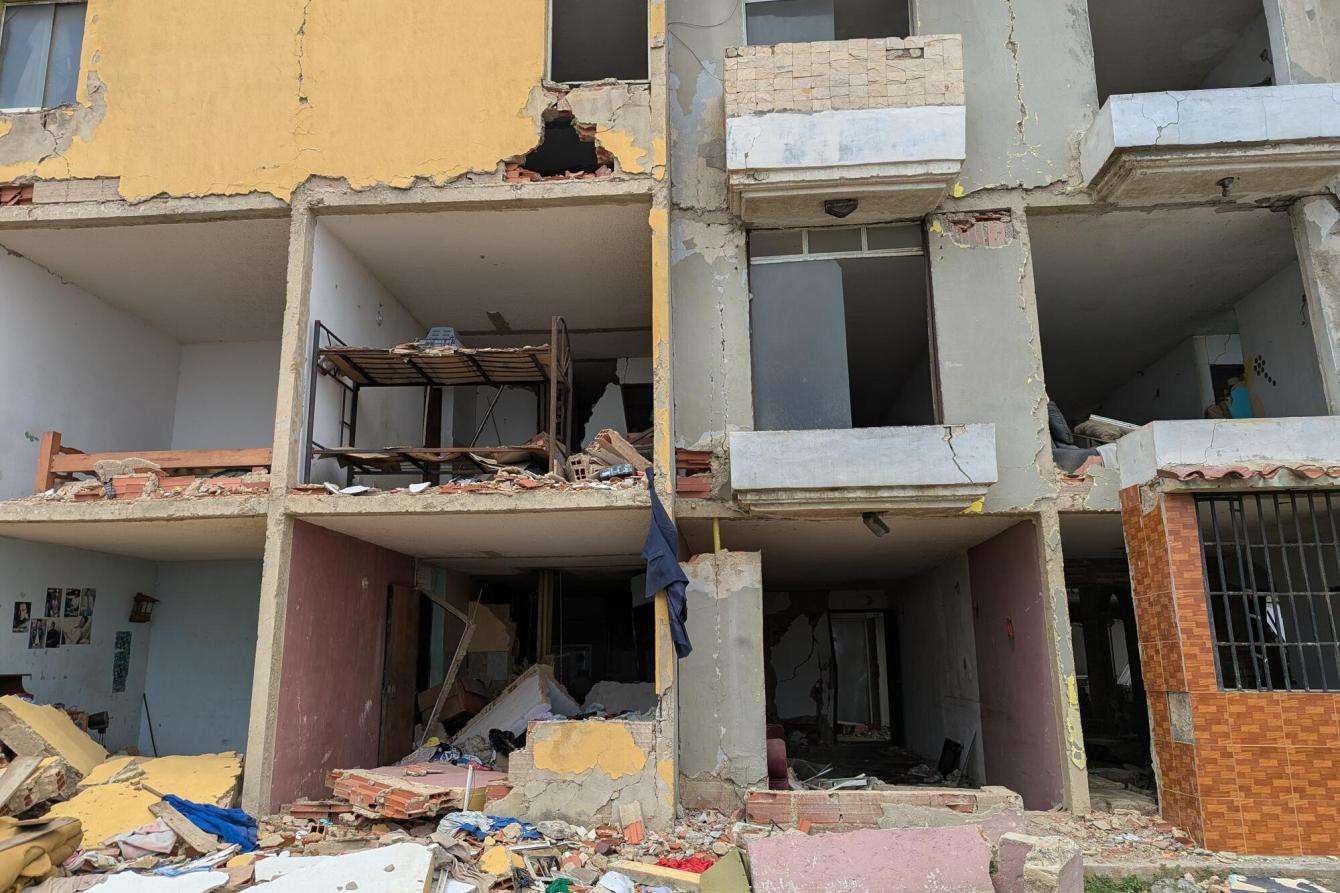
The official death toll of the earthquakes has reached 5,398, with 16,740 people injured, 17,907 displaced, and 6,462 rescued from the rubble. The structural devastation is staggering: 190 buildings have collapsed, while over 895 structures — including schools, vital public infrastructure, and hospitals — have suffered severe damage and are at risk of collapse.
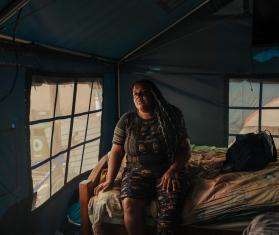
Thousands of people are residing in makeshift displacement sites or sleeping in tents near their damaged homes. In the Maiquetía neighborhood of La Guaira, about 3,000 people are camping in front of 20 severely damaged and unstable buildings. On Avenida Bolívar in Caracas, another 3,000 people are living on the streets, without proper shelter and basic services.
Addressing mental health and water needs
The injuries we are seeing are not just physical. As families continue searching for loved ones beneath the rubble and cope with the shock of sudden homelessness and displacement, mental health needs are rapidly increasing. To respond, our teams have integrated mental health care into the mobile clinic response, providing 113 individual mental health sessions, 323 group therapy sessions, and 1,402 psycho-education sessions.
With local infrastructure severely compromised, MSF teams have also carried out a range of water, sanitation, and hygiene activities, including:
- Installing a 1,320-gallon water bladder in Playa Verde to provide a reliable source of clean water.
- Chlorinating four primary water distribution sites and continuously monitoring water quality.
- Distributing 5,000 bottles of emergency drinking water to families living on the streets.
Over the past month, MSF has donated about 8.5 tons of emergency medical supplies. This large-scale logistical effort has supported immediate, lifesaving operations and helped address the health care needs of an estimated 10,000 patients. Our teams also continue to provide disinfectants and infection prevention and control supplies to both operational hospitals and overwhelmed local morgues, helping to ensure safety, hygiene, and dignity amid unprecedented loss.
Venezuela earthquake crisis: One month later
MSF teams are providing mobile medical care, mental health support, and clean water assistance in some of the hardest-hit communities.