
Since the conflict in Lebanon escalated dramatically on March 2, Israel’s intensified airstrikes across the southern region and on the suburbs of Beirut have caused deaths, injuries, and widespread displacement. More than 1 million people have been forcibly displaced in Lebanon in just over two weeks, according to local authorities.
Last updated June 12, 2026.
This escalation comes after 15 months of a so-called ceasefire that never translated into real safety for civilians. Israeli attacks and incursions have continued throughout this period.
Doctors Without Borders/Médecins Sans Frontières (MSF) has launched a nationwide emergency operation to respond to the humanitarian needs in Lebanon. Our teams are on the ground providing care through mobile clinics, distributing essential relief items, and supporting hospitals, shelters, and primary health care services.

Wide-ranging forced displacement orders, alongside ongoing strikes and incursions, are forcing families to flee repeatedly, often in the dead of night and with nowhere safe to go. Many people are left stranded in the streets or trapped in their towns. Some have returned to areas under threat of Israeli fire due to the lack of safe options for shelter, to check on their homes, or to grab essential items.
In the Chouf district near southern Lebanon, where thousands of families have sought refuge, MSF operates in emergency mobile clinics and is supporting shelters to help address urgent health and basic needs. Many of the families we meet there — especially mothers and children — have been displaced time and time again, carrying exhaustion and fear on top of immediate medical needs.

Our teams are also present in Azarieh, a collective shelter set up inside abandoned office buildings in downtown Beirut. Many people in the area were already struggling financially before the escalation, and displacement has pushed them further into hardship. Shelters are overcrowded and ill-equipped to meet people’s health needs, especially those who need regular treatment, chronic disease medication, or specialized care.
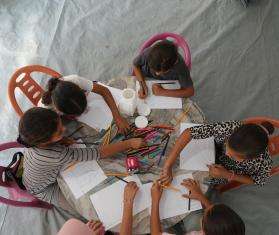
MSF mobile teams in Azarieh provide medical consultations and sexual and reproductive health services alongside mental health support and dedicated activities for children. Our logistics teams have distributed hygiene kits, mattresses, and blankets, and continue to deliver water trucking and drinking water on a near-daily basis.
As needs continue to grow, MSF is providing similar emergency assistance in informal gathering sites, collective shelters, and primary health care centers across the country.
Stories from our team in Lebanon
The escalation is also directly affecting MSF staff, many of whom have been displaced themselves. They continue to provide care and assistance while coping with the same insecurity.
Jamila*, a dialysis nurse at Jabal Amel Hospital who was injured by an Israeli strike on June 1
“The only thing I could do was pray”
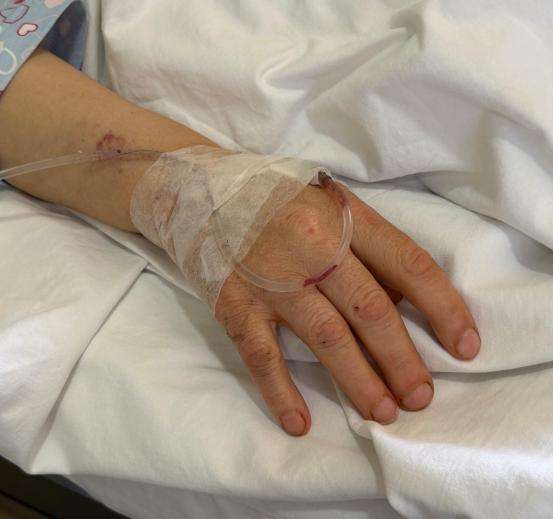
I was working in the dialysis department, monitoring a patient, when I heard something fall. It felt like it dropped right on my head. It didn’t sound like the blasts I had heard before. A few seconds later, I felt a warm liquid running down my face, but I didn’t realize it was blood. When I looked down, I saw my colleague lying on the floor. That’s when I noticed my blood on the ground. I understood it was a bomb and I immediately prayed I wouldn’t lose my sight. I lost consciousness and people carried me out.
Jana Lawand, MSF psychologist and Chouf mobile clinic team member
"Where does this road lead?"
For the past year, I have been a psychologist in our Nabatiyeh project, witnessing and responding firsthand to the mental health toll of more than two years of continued Israeli attacks, incursions, and drone activity.
With the latest escalation in March, just as people were still trying to recover, they were hit with another setback. Forced displacement. Massive bombardment. Nightly airstrikes — often without warning. These are not only things I see through my work; they are realities I live with, too.
The insecurity has forced us to change our routines. We take extra precautions and security measures. The Nabatiyeh project relocated its base, and in moments of quiet, we keep asking each other, “Until when?” and “Where does this road lead?”

Bissane Nesser, MSF health promotion supervisor and Chouf mobile clinic team member
"My pride and joy"
I was recently displaced from my home in the Tyre district in southern Lebanon. Airstrikes were landing all around us, and from where I was, I could see the destruction unfolding.
I keep thinking about my car — my pride and joy, and the first big purchase I ever made for myself. It was damaged during the 2024 escalation, and for months I’ve been repairing it little by little, whenever I could afford it. When this latest escalation began, it was still at the mechanic’s. I had to leave it behind.
And I think of small things too. My candle business, which I built from scratch and was just expanding. My summer clothes, which I regret not grabbing. I worry we might be away from our homes for a long time.

Dr. Hassan Harissi, MSF pediatrician and Chouf mobile clinic team member
"Being both a doctor and a displaced person is not easy"
Like many of my patients, I, too, am displaced. I was forced to leave my home in southern Lebanon in September 2025, and again recently in March, as airstrikes came dangerously close to where my family was staying. My children were terrified, and we had no choice but to move once more.
Every day, I leave my children behind to join my team and support others who are going through the same fear, loss, and uncertainty. In these difficult times, being both a doctor and a displaced person is not easy — but it reminds me why this work matters.

My brief visit home
MSF field communications manager Maryam Srour leaves a shelter to check on her home in the southern suburbs of Beirut.
Fatima Khalil, MSF nurse team supervisor and Chouf mobile clinic team member
"My heart stays with her"
Every day, I leave my 3-year-old daughter behind, carrying both my fear and my sense of duty. As a nursing team supervisor with MSF — working in emergency settings for the second time since joining MSF’s emergency response in October 2024 — I walk toward the sound of airstrikes while my heart stays with her. It is never easy to close the door and go, knowing the risks, but I do it for the patients who need us in their most critical moments.
Between being a mother and a nurse, I live a constant balance of love, worry, and responsibility, holding on to hope and strength with every step I take.

Darine Atwi, MSF midwife supervisor and Chouf mobile clinic team member
"I’m right where I need to be"
I started working with MSF at the beginning of the year as a midwife supervisor. It was motivating to help people, mothers and children, especially since the situation was unstable and there were so many cases in need of care.
But on March 2, in the middle of the night, I suddenly heard airstrikes very close by. I tried to react quickly, but I didn’t know how to leave the house or the area. It was just me with my mother and father, and I didn’t take anything with me. I managed to take my mother and father out, and we left in the middle of the night through heavy traffic. My thoughts were scattered, [with] moments of fear for my family, my work, and the overall situation running through my mind.
But two days later, even though I was displaced myself, we started working to support displaced mothers. We began visiting shelters and health care centers every day to continue providing support and care. I now know I’m right where I need to be.