Palestinians in the West Bank are experiencing serious mental health issues amid an increasingly oppressive Israeli occupation, according to a new report from Doctors Without Borders/Médecins Sans Frontières (MSF).
The report, “The Burden of Occupation,” brings together medical data collected between October 2022 and April of this year alongside testimonies from patients and staff from July. It reveals the profound and cumulative impact of violence, fear, prolonged adversity, and instability on people’s daily lives, which is related to increased Israeli violence and practices such as movement restrictions, settlement expansions, home demolitions, and forced displacement across the West Bank. These tactics are part of Israel’s strategy to ethnically cleanse Palestinians from the occupied Palestinian territories.
“What patients and MSF staff are facing in the West Bank reflects a wider pattern of systematic oppression across Palestine,” said Filipe Ribeiro, MSF head of mission for Palestine. “People in the West Bank have little choice but to live under relentless settler attacks, institutional violence, and permanent threat.”
Israeli settler attacks reach extreme levels
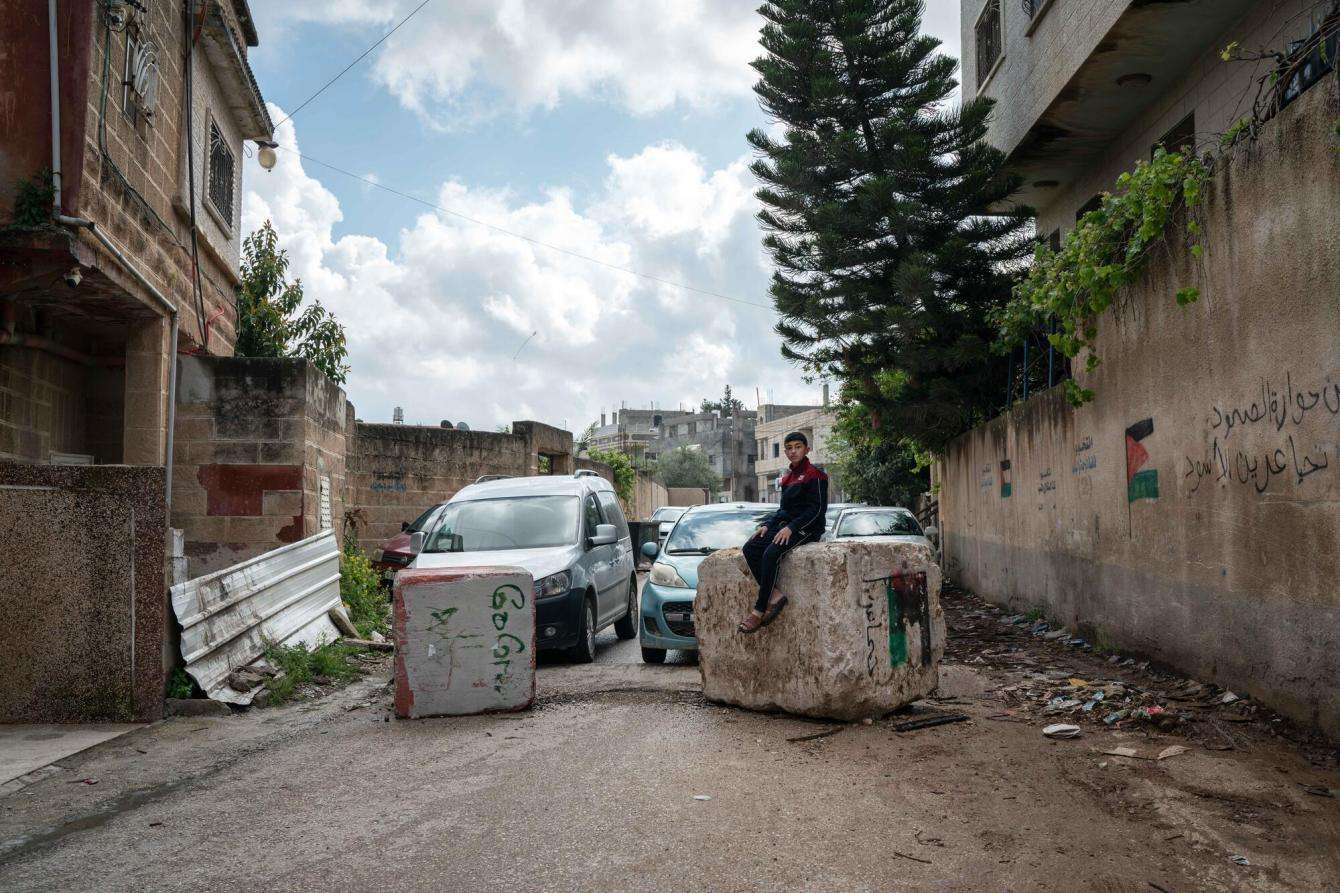
In recent months, Israeli settler attacks across the West Bank have reached extreme levels, with 15 attacks per day between October 1 and 26, according to the UN Office for the Coordination of Humanitarian Affairs (OCHA). These attacks have resulted in casualties and property damage. MSF patients and staff in Hebron and Nablus have been directly affected by the violence and are struggling to access basic services, including medical care, due to movement restrictions and insecurity.
“Settlers have become more aggressive — they come more often, and my brother had his legs broken by settlers with a metal object,” said an MSF patient from Hebron. “We are afraid to go out.”
Violence is the key driver of mental distress observed by MSF, accounting for approximately 70 percent of the mental health cases teams saw in the West Bank between October 2022 and April 2026. Anxiety and depression-related symptoms were the most common mental health signs among MSF patients in the West Bank, representing about two-thirds of reported mental health conditions. However, other symptoms observed by MSF mental health staff include trauma-related and psychosomatic-related issues.

Access to health care is shrinking amid rising needs
As people’s mental health needs are rising, access to care is shrinking. In January, Israeli authorities did not re-register MSF and have since refused to allow our international staff and supplies to enter Palestine. Israeli military coordination offices have also suspended communication with MSF. Without security guarantees, we have been forced to sharply reduce activities. In June, we closed all activities in Jenin and Tulkarem, while in Hebron and Nablus our teams have had to significantly scale back medical services.
Navigating daily life under occupation in the West Bank
Read moreThis surge in mental health needs and violence is not an isolated event. It is part of a long history of systemic oppression by Israel. In July 2024, the International Court of Justice found that Israel’s continued presence in Palestine was unlawful, citing its prolonged occupation, settlement expansion, annexation practices, and discriminatory measures. The Court called for an end to the occupation and settlement.
Israel must immediately end all policies and practices that are driving people’s insecurity, fear, and psychological harm and move toward ending its presence in the occupied Palestinian territory. Additionally, world leaders and Israel's allies, including the United States, must use all political, diplomatic, economic, and legal leverage to encourage Israel’s compliance with international law. Israel has legal obligations to ensure that Palestinians living in occupied territory have access to aid.
The Burden of Occupation
The profound and cumulative impact of violence, fear, prolonged adversity, and instability on Palestinians’ daily lives.