


Activities in 2025
Malnutrition
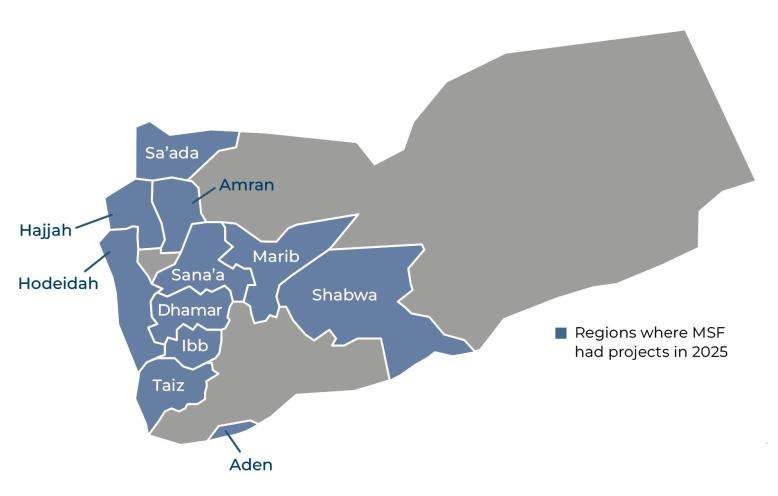
In 2025, as soaring prices and suspensions and reductions in food assistance programs limited the availability of nutritious food for families, health facilities in Yemen were increasingly overwhelmed with high numbers of malnourished children. Facilities where we work, including Abs Hospital in Hajjah governorate, recorded an increase in malnutrition cases, aggravated by gaps in health care and vaccination coverage. At Al-Salam Hospital in Amran governorate, where we also work, rising malnutrition cases coincided with shrinking international funding and inadequate therapeutic food supplies. Despite these constraints, our teams expanded inpatient capacity from 30 to 81 beds and continued treating children with moderate acute malnutrition. Our team also operates a large inpatient therapeutic feeding center in Ad-Dahi, which has a 103-bed capacity.
At Haydan Hospital, Sa’ada governorate, the number of children we treated for severe acute malnutrition in the inpatient therapeutic feeding center increased significantly during the third quarter of the year, reflecting growing needs and the reduced availability of treatment for malnutrition due to aid cuts.
Maternal and child health care
In 2025, we ran comprehensive maternal, neonatal, and pediatric services, comprising inpatient and outpatient care, pre- and postnatal consultations, and assistance with deliveries, including cesarean sections.
At Abs Hospital, Hajjah governorate, and Al-Salam Hospital in Khamir, Amran governorate, we continued to support maternity, neonatal, and pediatric wards. In Taiz governorate, we increased our maternity capacity to 54 beds within the general hospital in Mokha city, and offered comprehensive maternal, obstetric, and neonatal care. We also worked in collaboration with the Ministry of Health in the hospital’s inpatient pediatric department, operating a 72-bed specialized health care facility with an emergency room for children under 12.
In Hodeidah governorate, we ran specialist maternity and neonatal services at Al Qanawis Mother and Child Hospital. We also provided pediatric and neonatal care for rural communities in Ad-Dahi district, and in Dhi As-Sufal, Ibb governorate. At Haydan Hospital in Sa’ada governorate, our teams reported an increase in admissions to the maternity room for deliveries, and high demand for pediatric services.
Emergency health care
From April 2025, Yemen witnessed a worrying spike in acute watery diarrhea cases. Years of protracted conflict, crumbling infrastructure, and a lack of access to clean water and sanitation services — compounded by heavy rains — have consistently fueled the spread of waterborne diseases in the country.
To cope with the surge in cases, MSF opened a 50-bed diarrhea treatment center at Abs Hospital, in collaboration with the Ministry of Health. We later expanded the facility to 75 beds and opened an additional 20-bed center in Al-Qanawis. We also worked with the ministry to open a diarrhea treatment unit in Al-Zuhra district, where most of the patients we treated at Abs Hospital came from, and set up seven oral rehydration points in the community.
In addition, we opened a 30-bed diarrhea treatment center at Al-Salam Hospital to respond to a growing acute watery diarrhea outbreak. As the number of patients increased, we boosted capacity to 80 beds and supported three oral rehydration points across Khamir district. Our teams worked with community health workers to raise awareness of the disease and refer suspected cases to the diarrhea treatment center.
At Mafraq Al-Mocha health care center in Taiz, we constructed a two-bed isolation unit, renovated the emergency room, and continued to support emergency and outpatient services. We also supported a 150-bed diarrhea treatment center in Ibb governorate.
Project handovers
In 2025, we handed over some of our long-running medical activities in Yemen, including projects in Ataq city, Shabwa governorate, and Taiz and Marib cities, to the local health authorities. To support continuity of care after the handovers, we donated six months’ worth of medical supplies and offered temporary assistance, including water, fuel, food, and staff stipends.