Recognizing LGBTQI+ colleagues and patients in honor of Pride Month
Love without borders.
90% of our funding comes from individual donors. Learn how you can support MSF’s lifesaving care with a gift.
Love without borders.
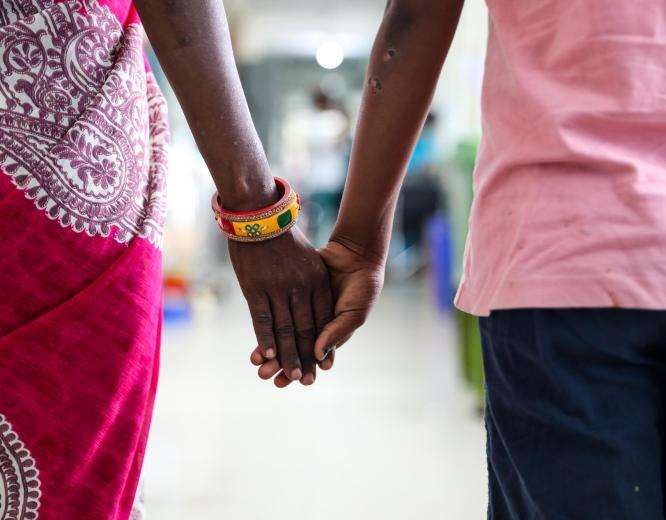
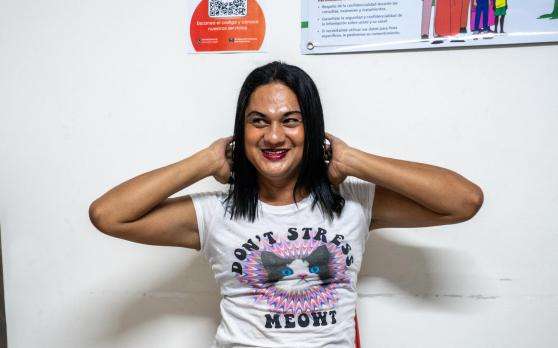
Mexico 2018 © Christopher Rogel Blanquet/MSF
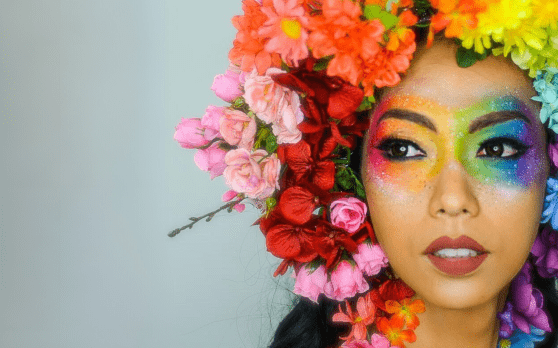
Doctors Without Borders/Médecins Sans Frontières (MSF) stands with our LGBTQI+ colleagues and patients around the world. No one should be denied access to medical and mental health care simply because of who you are or who you love.
In many of the places where we work, LGBTQI+ people are marginalized and often denied access to health care. This can have serious consequences for patients’ health: Many put off going to a doctor until their health has deteriorated — sometimes, by then it’s too late.
MSF is committed to ensuring that every individual, regardless of their gender identity or sexual orientation, has access to the comprehensive care they need. Making care more inclusive isn’t just the right thing to do — it saves lives.
Here are a few examples of our projects serving LGBTQI+ communities around the world:
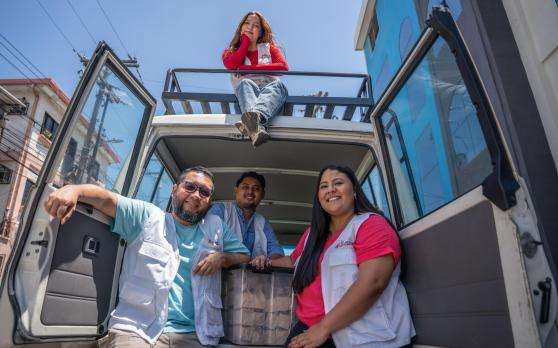
In San Pedro Sula, Honduras, MSF opened a clinic 2021 to improve access to health care for the LGBTQI+ community and other vulnerable groups, such as sex workers and survivors of sexual violence. With the values of inclusivity and respect at its core, the program offers comprehensive medical and mental health care in a space free of stigma and discrimination, where all patients are treated with dignity and respect and get the care they need. The project also includes outreach teams that visit communities to help people overcome any mistrust or misinformation impacting their access to care.
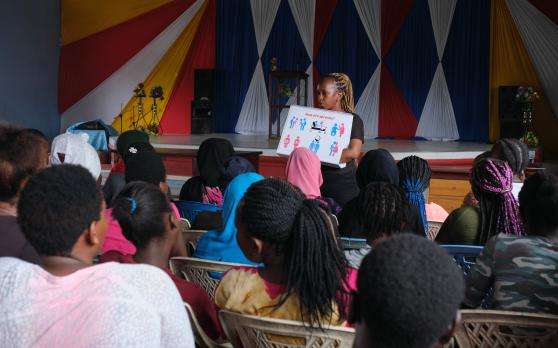
In Mombasa, Kenya, MSF runs a peer-led project helping young people who are marginalized or excluded from health care — called “key populations”* — get the advice and care they need. The MSF team has created safe spaces where they can access care without fear, offering confidential sessions and peer-led health promotion activities that link patients to public health services.
* "Key populations" are defined by the Joint United Nations Program on HIV and AIDS (UNAIDS) as men who have sex with men, transgender people and those with diverse gender identities or expressions, people who use drugs, and sex workers.
MSF patient in Mexico
I had to leave because I saw something that I shouldn't have seen. Someone warned me that I had five minutes to leave my house. I walked through the mountains until I was able to reach a safe point where my brothers picked me up to take me closer to the border. I found out that my house was attacked about 15 or 20 minutes after I left. They destroyed everything there — they left bullet holes in the walls. They were going to kill me.
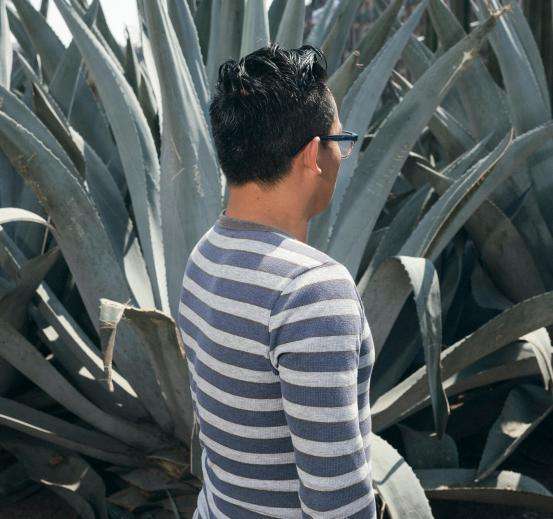
When I came to Guatemala, I was extorted by the border authorities. When I entered Mexico, I was extorted by the police. I slept on the street. I didn't eat. Someone tried to rape me. I went to UNHCR [the United Nations Refugee Agency]. They saw my situation and sent me to a shelter in Tapachula. When I was there, they told me about El CAI.
I have lost my family and the life I made [in El Salvador]. I had a job — I love cooking and that's what I used to do. Now I think that in the end it doesn't matter anymore. The most important thing is that I saved my life. But [it] hurts to know that even though my mom and siblings know I'm alive, I can't be with them.
It is a year since I left home. It has been very difficult for me to adapt. I think it's more difficult for me because I'm from the LGBTQ+ community. I have been discriminated against because I'm gay and because I'm a migrant. I have been working. I know about construction. I would like to start a home-remodeling business, be an event planner, or work in the kitchen again.
*Name has been changed.
MSF patient in Honduras
MSF is very important for the LGBTQI+ community because it has included us in places where we feel safe to come for a general check-up, PrEP treatment, or HIV tests. And when we feel unwell, we can also see a general practitioner.
Before, for us in the trans community, it was really complicated because most of the time, when we needed to get a general checkup for sexually transmitted infections, we had to deal with the fact that most people were sex workers, and sometimes we had to stay up all night to get an appointment at the health center. And now, we can come at any time, even 1 or 2 in the afternoon. Here I am.
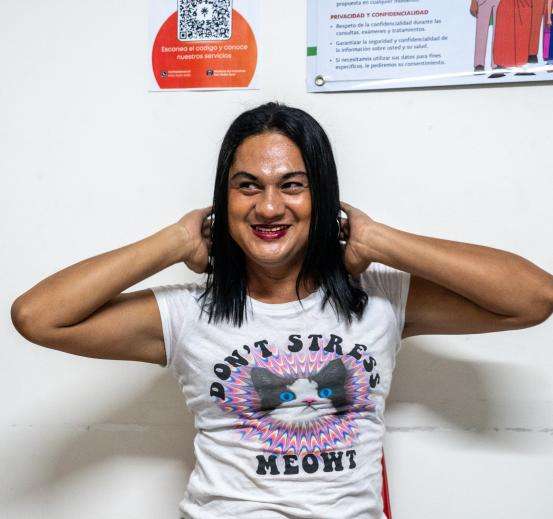
The clinic is important to the LGBTQI+ community because it is inclusive. We come here and feel confident getting tested. We feel at home. We have psychological problems, sometimes health problems, and some people don't know where to seek help, and Doctors Without Borders has this, with psychological and health care.
Photo: Honduras 2025 © Fritz Pinnow/MSF
MSF patient from Ghana
When I turned 19, I realized that I liked both men and women. I decided to tell my family and those I knew, but it was the worst decision I could have made. In Ghana, the country where I was born, it is very frowned upon to have a different sexual orientation: they discriminate against you, they threaten you, they don’t give you a job. I spent two terrible years there [after coming out], and as soon as I turned 21, I decided to leave for the US. That’s why I’m here in Darién region, [Panama].
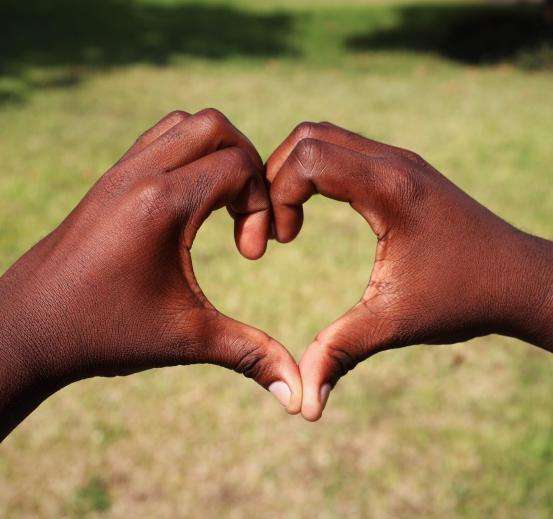
I’m going to the US because I feel I can have rights there. I shouldn’t be forced to change or hide, which is basically what I did in the last year in my country. I went from town to town looking for work, and they discriminated against me. So that’s why I saved up, bought a ticket to Brazil, and then went on to Peru, Ecuador, Colombia, and now Panama—which was the worst part of the journey.
Crossing the Darién Gap, even on the short route as I did, is very difficult and demoralizing. I feel that I put my life on the line, and I wouldn't do it again. I am in good physical [health], I am young, but on the way, I saw old people, babies, even dead people—many drowned. These are images that will be really difficult to get out of my head. When I saw dead people on the riverbank, all I could think about was running for my life.
In the group of migrants I was with, they spoke a lot about robbery and rape—which is also very shocking, especially hearing about it from people who have suffered it. From Peru onwards I wasn’t feeling good because the authorities treated me badly for being “African” and “black”. They left me last in line, they didn’t let me stay in hostels—this has affected me. The authorities in these Latin countries believe I should sleep on the floor because I am black. They have even told me that my stomach should tolerate going without food or that I can eat garbage.
This unease has been aggravated in the jungle by seeing so many people suffering and not eating or sleeping. I had to throw away my backpack to climb a mountain. It was very steep! Any extra weight would stop you. I saw women with children trying to climb, and that was really shocking. There were even men carrying their wives who were injured because it was so difficult. I have to go on to America, but I would never want to go through this again in my life.
MSF patient in Honduras
I'm a gay man. And in my country, there are no places where we can access health services without discrimination and stigma. The MSF clinic is the only place I could access these services here in Honduras. ... When we go to a public hospital or a health center, we're always faced with the looks of doctors who don't have any training in diversity or inclusion. They're always judging, they're always giving us dirty looks. And that makes us not want to go to a health center to receive medical care.
I believe MSF respects my identity. It's a place where I know I can go without stigma and where I can receive medical care without any prejudice. I've never dared to go to a health center or a hospital to receive care.
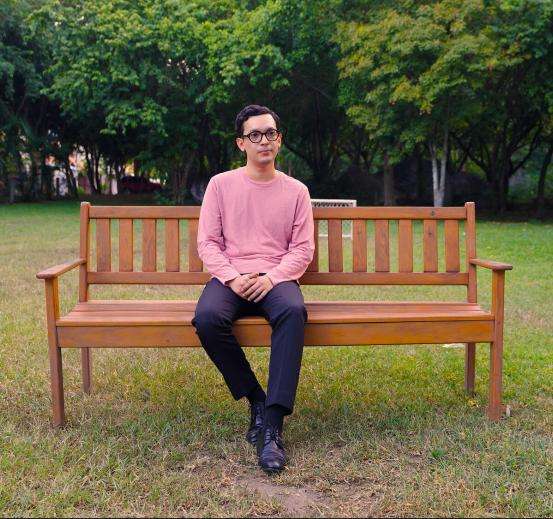
One of the reasons I decided to approach MSF was because at my university, which is the country's public university, there's a space where students can receive psychological care. And we noticed a young gay student who came to seek psychological support. The psychologist told him to seek God and read the Bible, because what he was or what he felt was wrong. So that made us want to approach the MSF clinic, because we knew there was a need.
[Before coming to MSF’s clinic], I didn't know where to turn. I didn't know who to turn to. I was completely ignorant about the whole health issue, about the health I needed to take into account. I didn't get tested, I didn't have access to medication, and I wasn't aware of how important it was to access those services at that time.
I'd never had access to psychological care. The first time I did was at MSF, and I think it marked a turning point in my life. I wasn't aware of how important psychological support was. And thanks to that psychological support, I now consider myself a stronger, more emotionally intelligent person, and I feel I can better cope with the discrimination and rejection I face or may face every day in my environment, in this country, in this society.
MSF is more than a doctor's office or a clinic, it's a safe space where we can go without fear of being rejected or disrespected, and where we can receive quality medical or psychological care, with an inclusive diversity approach, and free of charge — above all, free of charge. In this country, where access to health care is very restricted, the health care system is designed for privileged people.
I think there needs to be a lot of training, especially for staff, so they know how to care for us, the LGBTQI+ community, how to understand our needs, and how they can provide us with more humane care. I think Honduras needs to develop public policies that benefit our community, but that's a long way off, and very difficult.
Photo: Honduras 2025 © Fritz Pinnow/MSF
Creating inclusive health care spaces is vital for the well-being of LGBTQI+ communities impacted by access barriers like discrimination, unequipped providers, and criminalization.
Learn more about our work providing medical care to LGBTQI+ communities and others around the world.
Some humanitarian crises make the headlines—others don’t. Unrestricted support from our donors allows us to mobilize quickly and efficiently to provide lifesaving medical care to the people who need it most, whether those needs are in the spotlight or not. And your donation is 100 percent tax-deductible.
© Médecins Sans Frontières 2026 Federal tax ID#: 13-3433452
Unrestricted donations enable MSF to carry out our programs around the world. If we cannot honor a specific request, we will reallocate your donation to where the needs are greatest.
For Donors
For Supporters
For Media
General Interest
© Médecins Sans Frontières 2026 Federal tax ID#: 13-3433452
Unrestricted donations enable MSF to carry out our programs around the world. If we cannot honor a specific request, we will reallocate your donation to where the needs are greatest.
Your gift helps us provide medical humanitarian aid for hundreds of thousands of people each year.
Learn more85%
Programs
14%
Fundraising
1%
Management & General Admin
We need your support to continue this lifesaving work.