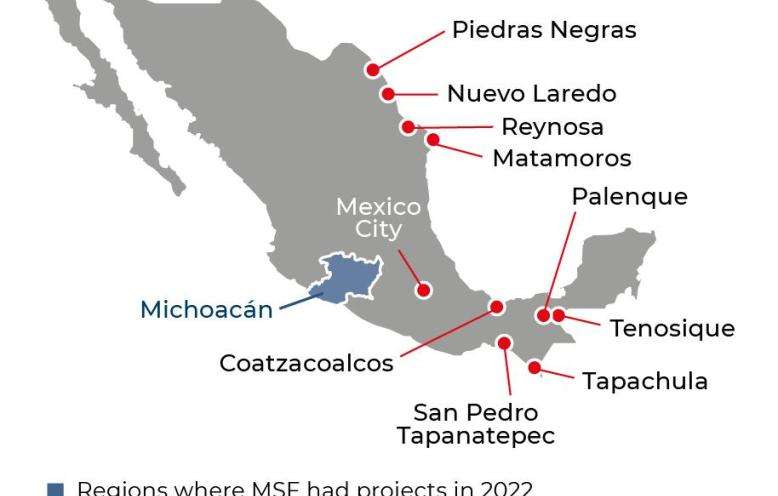



In August, in response to the arrival of thousands of migrants at Mexico’s southern border, the immigration authorities started to issue transit permits in the small town of San Pedro Tapanatepec, Oaxaca. In October, Mexico and the US agreed that Venezuelans entering the US irregularly would be deported to Mexico under Title 42. This decision prompted immediate expulsions at the northern border.
Following this announcement, the authorities in San Pedro Tapanatepec halted the issuance of permits, even though thousands of people of different nationalities, including children, continued to arrive at the border, where they remained stranded without access to shelter, medical services, or adequate water and sanitation facilities. Within a few days, we mobilized an emergency team to provide assistance to over 20,000 people.
Migrants stranded in camps
In Reynosa and Matamoros, more than 5,000 people were stranded in informal camps, with limited access to drinking water, health services, and protection. Our teams adapted activities according to their changing needs, distributing items such as blankets, warm clothing and thermal sleeping mats when the weather turned cold, as well as food.
In our comprehensive care center in Mexico City, we provided a complete package of care for survivors of extreme violence and torture, including medical treatment, mental health, and social support.
MSF teams composed of doctors, psychologists, community educators and social workers also offered support in the Mexican Commission for Refugee Assistance building, as well as in the northern bus terminal and six shelters in the city.