Since the most recent escalation of attacks began in Lebanon in March, civilians continue to be caught in the middle and Israeli forces have directly struck ambulances and medical facilities, including “double tap” attacks killing and injuring paramedics as they try to rescue people in need.
Many civilians injured in the Israeli attacks arrive at medical facilities with catastrophic blast trauma, and those who survive face long and complex recovery needs amid an overwhelmed health system.
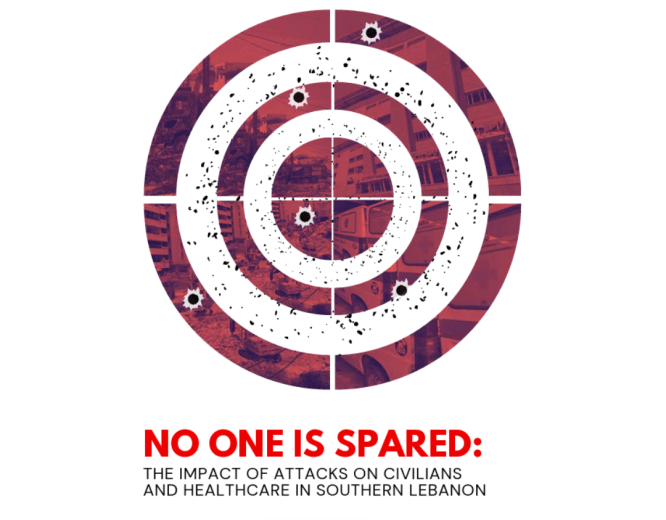
Doctors Without Borders/Médecins Sans Frontières (MSF) has released “No One Is Spared,” a report documenting the detrimental and lasting impact of Israeli attacks on civilians and health care in southern Lebanon. While supporting hospitals and first responders during the most recent escalation, MSF teams have witnessed firsthand the human and medical cost civilians have borne, and the serious damage inflicted on health care.
No One Is Spared
Since the renewed escalation began in March, MSF teams in Lebanon have witnessed severe and sustained harm to civilians, health workers, and medical facilities, particularly in the south of the country.
This evidence-based report is grounded in direct witnessing, operational data, and interviews conducted in southern Lebanon between April 3 to June 30 while MSF was supporting emergency and trauma care at Jabal Amel Hospital in Sour/Tyre and Najdeh Al-Shaabiyeh Hospital in Nabatiyeh. The report captures how Israeli strikes have killed or maimed children, the elderly, and entire families. Medical facilities and ambulances were directly struck or affected by Israeli attacks at a time of heightened medical and humanitarian needs, while under pressure from repeated influxes of mass casualties.
All parties to the conflict must uphold their responsibilities under international humanitarian law. MSF calls on Israel to respect and protect medical staff, ambulances, emergency responders, and civilians, and to refrain from attacking them, including those who remain in or are returning to war-affected areas. States with influence over the parties to the conflict must use their diplomatic and political leverage to ensure these obligations are upheld and that attacks affecting civilians and health care are addressed.
MSF teams are witnessing devastating and life-altering injuries
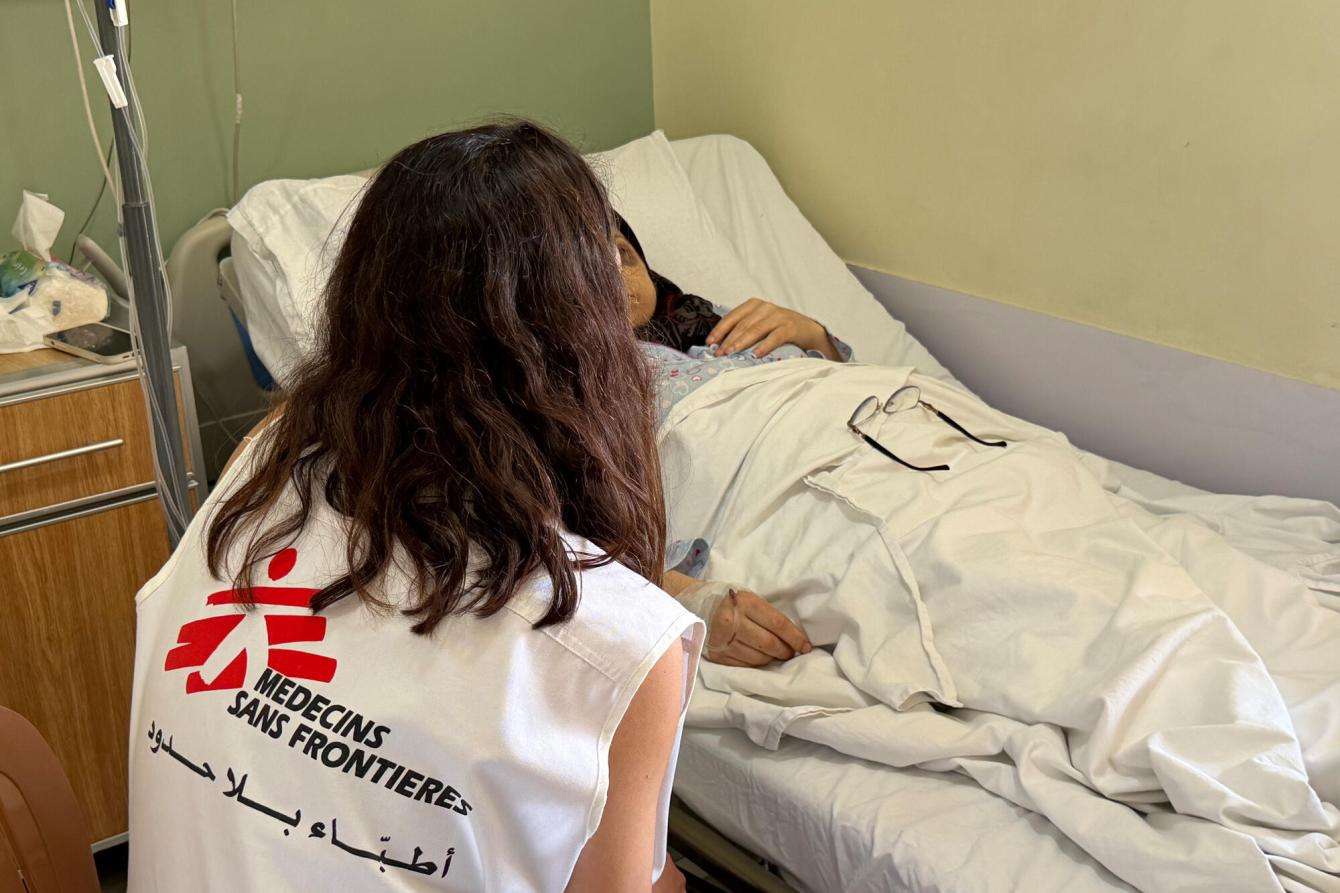
Inside emergency rooms and operating theaters, MSF teams and hospital staff are treating patients with severe blast, fragmentation, and other traumatic injuries. Teams have treated injuries caused by explosive weapons, including internal organ and brain damage caused by extreme pressure waves; fractures, traumatic brain injuries, and penetrating wounds caused by shrapnel; blunt trauma from people being thrown by explosions; as well as severe burns, crush injuries, and smoke inhalation.
"Our teams witnessed people devastated by the full spectrum of blast trauma," says Dr. Luna Hammad, MSF medical coordinator in Lebanon. “Patients arrived with deep internal damage, shattered bones, and dozens of metallic fragments embedded throughout their bodies. Such injuries overwhelm both the human body and the emergency teams fighting to save lives."
Many of these injuries pointed to specific weapons used in the strikes. Lebanese Civil Defense emergency medical services teams reported three types of drone-fired munitions: standard explosives, munitions fitted with blades, and munitions packed with small metallic cubes. MSF medical staff treated wounds consistent with all three — most frequently high-velocity shrapnel from metallic cubes tearing through multiple body parts.
Surviving an attack is only the beginning of an arduous recovery. Many patients require multiple complex surgical operations and prolonged intensive care, and will need further surgeries, physical rehabilitation, prosthetic devices, and ongoing medical follow-up. Yet accessing this care remains acutely difficult for many of them.
The escalation of Israeli attacks in early 2026 strained a health system already grappling with shortages of specialized staff and medical supplies, forcing the reduction or suspension of non-emergency care and complicating referrals to specialized facilities.
Attacks on health care and medical facilities are ongoing
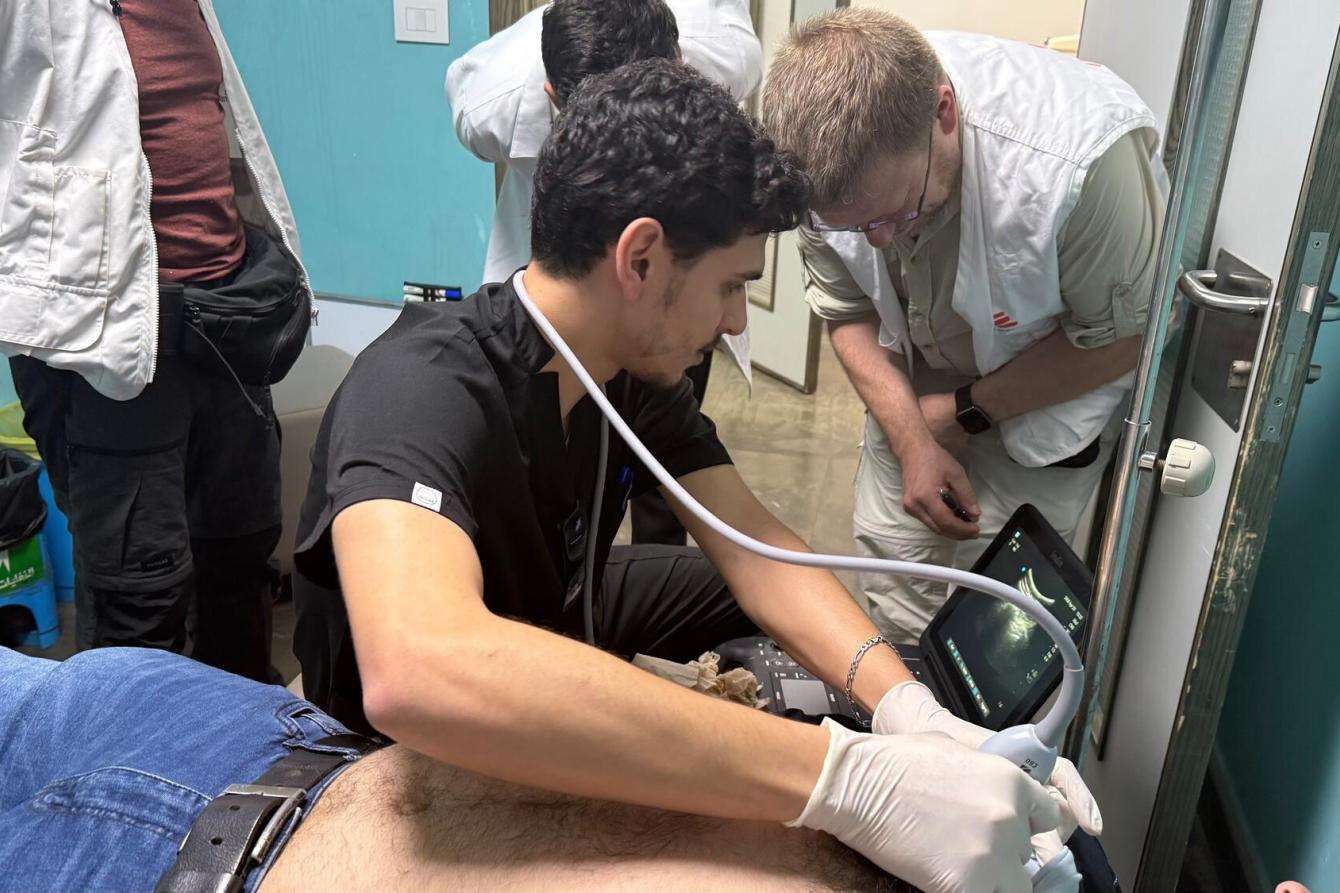
As civilian casualties mount, the health care system itself remains under attack. In its report, MSF documents incidents in which Israeli strikes directly hit or landed dangerously close to medical facilities, ambulances, and rescue teams. A single Israeli strike in the vicinity of Jabal Amel Hospital on June 1 injured 127 people, including 39 health workers, marking the highest number of health workers wounded in a single attack during the escalation.
MSF teams also witnessed the impact on health care workers firsthand, with paramedics and health workers arriving at hospitals injured or killed following attacks. This included incidents in which first responders were reportedly struck while attempting to rescue or recover casualties from previous attacks.
“Irreplaceable people whose knowledge and courage saved lives were killed while providing care where it’s needed most,” says Guilherme Botelho, MSF head of mission in Lebanon. “Their deaths are not an unavoidable tragedy, but the direct, human cost of attacks on health care. They were mothers, fathers, colleagues, and pillars of their communities who remained in war-affected areas at grave personal risk.”
Despite the lack of protection guarantees and severe operational constraints, paramedics and hospital staff in southern Lebanon have continued to deliver care and serve their communities. Because teams have had to wait until it was safe to go and navigate severe risks to rescuers, lifesaving care was repeatedly delayed or restricted. These delays left emergency teams with less time to stabilize patients at the scene, complicated ambulance transport, and prolonged the time victims remained trapped under rubble. Ambulances were at times forced to transport multiple patients at once, while hospitals absorbed sudden waves of mass casualties with limited staff, supplies, and referral options. The fallout extended far beyond emergency departments, diverting scarce resources and disrupting routine care for surrounding communities.
MSF is deeply alarmed by the severe human and medical cost of Israeli attacks in southern Lebanon affecting civilians and health care. International humanitarian law is not optional. Civilians and health care must be protected in conflicts — in southern Lebanon and around the world.
MSF in Lebanon
Following the escalation of Israeli attacks in Lebanon in March 2026, MSF scaled up its nationwide emergency response to support the Lebanese health system and address the needs of war-affected people.
Between March and June 2026, MSF mobile medical teams provided essential primary health care services, including mental health care, to displaced people and other conflict-affected communities across Beirut, Mount Lebanon, Bekaa, Baalbek-Hermel, North, Nabatiyeh, and South governorates. MSF teams also provided referrals when needed, supported community kitchens, distributed essential relief items (including mattresses, blankets, and hygiene kits) and provided water and sanitation services through water trucking, rehabilitating water networks and sanitation facilities, and installing water treatment systems.
Get breaking news from Lebanon and around the world.
News Nov 23, 2026
Clinical trial participants must be able to access resulting medical t...
Read more
News Nov 23, 2026
South Sudan: MSF suspends activities in Yei River County after staff a...
Read more
News Nov 20, 2026
Drug-resistant infections are an increasing threat to people in confli...
Read more