
When Hatungimana Soline speaks, her voice carries the weight of a life shaped by conflict, displacement, motherhood, and resilience. She is a mother of 10, her youngest are 8-year-old triplets, and one of many Burundian refugees rebuilding their lives in Nduta refugee camp in northwest Tanzania — one of the most chronically underfunded camps in the world.
After violence erupted in Burundi in 2015, 400,000 people fled to Tanzania, many finding shelter in Nduta. Initially, Doctors Without Borders/Médecins Sans Frontières (MSF) launched an emergency response in Nduta camp to address the needs of refugees. But as the situation in the camp has changed over the years, so has MSF’s response.
Today, MSF runs a long-term humanitarian operation in Nduta, and is the main health care provider serving the over 50,000 refugees still living there. MSF teams in the camp now provide primary and secondary health care, maternal and newborn care, and mental health support for both refugees and members of nearby host communities.

A difficult search for safety
Soline’s childhood ended early, with her marriage at 17. Like hundreds of thousands of people affected by the 1996 conflict in Burundi, she fled to Tanzania and initially settled in Mtendeli refugee camp, where she gave birth to her first four children. When her husband later left for Democratic Republic of Congo (DRC), Soline returned to Burundi to raise her children in Cankuzo, a province hosting many displaced families from neighboring countries.
Back home, life took another turn. Soline remarried, had three more children, and ran a small business selling goods in the market. But she still had not found safety. Her eldest daughter was being sexually abused by Soline’s husband, and her attempts to protect her child were met with violence. One night, Soline and her children packed up and fled Burundi, this time to Nduta refugee camp.
The journey took three days — three days of fear, uncertainty, and hope that her children would finally be safe.
In Nduta, Soline and her family found safety but not ease. Daily survival meant negotiating scarcity, disease, and trauma. Still, Soline rebuilt her life, remarried, and became pregnant again. She was focused on daily survival, however, and was not attending regular prenatal checkups.
One night, she unexpectedly went into labor. As her pain intensified, she informed the community chairman, who called an ambulance to rush her to the hospital run by MSF inside the camp. There, Soline prematurely delivered triplets — tiny, fragile newborns who were immediately admitted to the neonatal unit.
“I prayed my rosary every day,” she recalls. “They were so small. Every time I went to see them, I didn’t know whether to cry or be strong.” The emotional weight was immense, but the constant reassurance and expert care of MSF staff anchored her hope.

Raising healthy triplets in a refugee camp
MSF medical teams monitored Soline's babies, providing round-the-clock care. After two months, the triplets were strong enough to leave neonatal care, and Soline returned home with all three of them in her arms.
“I was happy,” she says. “I didn’t know if they would make it, but MSF saved them.”
Her triplets — named Nasasagare Save, Riuuzimana Jean Dlare, and Nsengiyunva Davi — are among 5,540 babies treated in MSF’s neonatal unit in Nduta over the past 10 years. Soline is one of more than 12,000 women who have safely delivered with MSF’s assistance, including 1,828 in 2025 alone.
Ndayumvire Antoinette, nurse aide in Nduta refugee camp
From refugee to responder: Antoinette’s story
"I have spent most of my life as a refugee. The first time I ran from Burundi was in 1996. I was just a child then.
We thought the nightmare was over. We were wrong: In 2015, unrest forced us to flee once more, and Tanzania welcomed us again. This time, when I arrived at Nyarugusu camp, the fear was sharper because I knew what it meant to lose everything twice. But it was in that second exile that I found my true mission.
Shortly afterward, I applied to MSF and by June, I was working at a health center in the camp … Today, I am a nurse aide in the busy maternity ward. There is a quiet satisfaction in knowing that the lives you touch are better because you were there.

“Women here are not afraid to give birth anymore,” Soline says. “We are cared for. We do not give birth at home, and we see fewer mothers and babies dying.”
Raising triplets in a refugee camp is challenging. Food is limited, the environment is harsh, and children are exposed to disease. But Soline remained vigilant, attending all appointments at the clinic and following health advice. Today, Soline’s triplets are 8 years old, running, laughing, and playing with the other children in the camp.
“I didn’t know if these boys would survive,” she says. “Now, when I look at them, I feel contented.”
“Working with children is my greatest joy”
Meet nurse aide Antoinette in Tanzania.
Perseverance against the odds
Soline sustains her family through a small vegetable garden, growing vegetables and selling what she can spare. Her vision for the future is to achieve self-reliance; she hopes to own a sewing machine one day so she can make clothes for her family and community. For Soline, independence is about providing stability and creating a foundation her children can build upon.
Soline’s story is an example of the resilience of thousands of Burundian refugees who have called Nduta home for a decade — and the importance of continuous medical and humanitarian support in refugee camps, where families are rebuilding their lives in the face of difficult circumstances, yet continuing to stay hopeful and persevere.
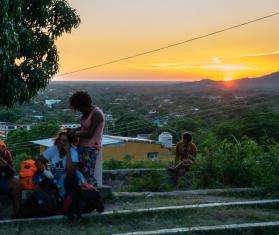
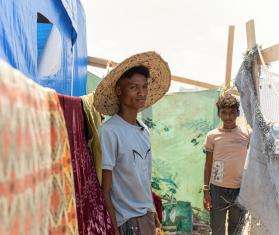
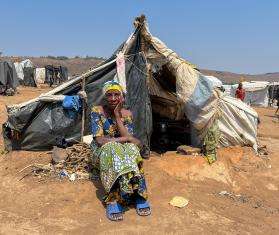
In photos: 10 years in Nduta camp


News update
MSF in Tanzania
MSF has a long history in Tanzania. From the 1990s to 2015, MSF assisted hundreds of thousands of refugees from Burundi, Rwanda, and DRC, providing medical care, nutrition, and sanitation support. As camps closed, MSF scaled down activities, only to return in 2015 to respond to a new wave of 400,000 Burundian refugees, which led to the establishment of Nduta camp in Kibondo district. Over the past 10 years, MSF, in collaboration with the Ministry of Health, has provided primary health care, maternal and child care, mental health and psychosocial services, disease outbreak response, and health promotion programs. Currently, Nduta refugee camp has a population of 56,000 refugees.