Restrictive new policies imposed by the de facto authorities in North Kivu province, eastern Democratic Republic of Congo (DRC), are obstructing access to care for survivors of sexual violence and putting them at greater risk, Doctors Without Borders/Médecins Sans Frontières (MSF) said today.
The measures, enforced by the Front pour la Refondation de la Nation (FRN) — formerly AFC/M23 — include narrowing the definition of sexual violence, forcing survivors to take intrusive and unnecessary medical exams, requiring reporting to police before care, and undermining confidentiality.
MSF acknowledges the commitments FRN leadership made in early October to address these issues, but these corrective measures have not yet been implemented, and the restrictive policies remain in place. We urge the FRN to immediately honor these commitments and guarantee safe, confidential access to care.
“Making the crisis less visible does not make the violence disappear,” said Akke Boere, MSF director of operations. “MSF calls for immediate action from the FRN to ensure that care for survivors of sexual violence is protected, confidential, accessible, and focused on health needs. Official guidance must be issued to health authorities to ensure health care workers are no longer subjected to pressure, and activities must be overseen in a way that preserves confidentiality and does not intimidate or harm survivors or health workers.”

Authorities are forcing dangerous reporting rules
Since the beginning of 2026, the authorities overseeing health services in North Kivu have introduced or proposed measures affecting health care workers, health facilities, and humanitarian organizations that seriously undermine medical confidentiality, medical ethics, victim and survivor protection, and access to health care.
These measures include:
- pressuring health workers to reduce victim and survivor numbers by narrowing the definition of sexual violence — for example, by only recognizing those who present with visible signs of injury as survivors;
- requiring medically unnecessary and intrusive physical examinations to “prove” assault;
- requiring victims and survivors to report to the police before seeking care; and
- limiting eligibility for care to those who present within 72 hours of the assault.
The de facto authorities have also instructed organizations and health providers, including MSF, to use documentation that requires intrusive, stigmatizing, and non-essential questioning that is irrelevant to treatment — including the patient’s name, address, and details of the alleged perpetrators. This undermines patient confidentiality, puts victims and survivors at further risk, and goes against international medical ethical standards. Patients — particularly women — report being questioned or threatened to deter them from seeking care at humanitarian-supported clinics.
Health care workers and health partners have told MSF they have been threatened with suspension or even imprisonment if they do not comply with the new measures. These threats are already deterring some health care workers from providing essential care to victims and survivors of sexual violence, and, in some cases, causing them to stop their work altogether out of fear. This further reduces access to care that is already limited.
Policies are already deterring victims
Communities report a growing fear of accessing services. Since the measures were introduced at the beginning of this year, consultations for victims and survivors of sexual violence at MSF-supported clinics in North Kivu have fallen sharply. According to data from some of these facilities, 41 percent fewer people sought care for sexual violence in August 2026 compared to January 2026, before the measures were introduced. Some facilities saw even greater declines, from providing care to around 80 victims and survivors per month in 2025 to as few as nine per month in 2026.
“A drop in reported cases does not mean sexual violence is decreasing,” said Boere. “It simply means survivors face barriers to safe and confidential care. The priority must be to remove barriers to care, strengthen protection and access to justice, and address the conditions that allow sexual violence to persist. The current restrictive measures are not the way to achieve this — they only further harm survivors.”
MSF has maintained regular dialogue with the de facto authorities and their leadership. While these exchanges have resulted in commitments to address the issue, the harmful and restrictive measures remain in place.
Access to health care should never depend on reporting to the authorities or pursuing legal action. While accountability for perpetrators is essential, conditioning care on reporting risks deterring victims and survivors from seeking urgent medical treatment and potentially exposes them to further harm.
MSF's response to sexual violence in eastern DR Congo
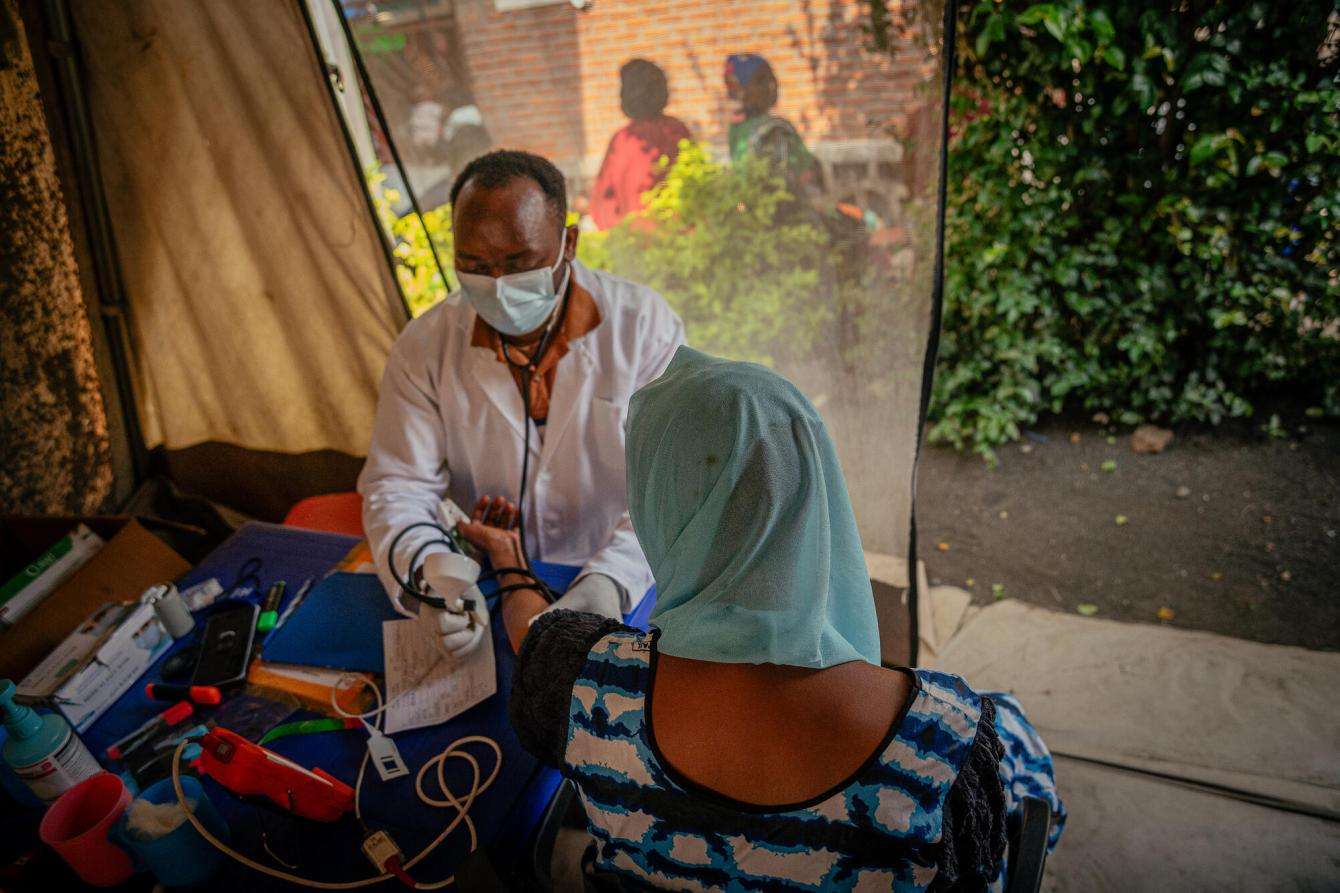
Sexual violence in eastern DRC is a severe and persistent crisis, driven by decades of armed conflict, abuses by all parties to the conflict, weak justice and protection systems, the social normalization of violence, and harmful gender norms. MSF currently provides medical care, including for survivors of sexual violence, at 16 facilities across North Kivu, South Kivu, and Ituri provinces. In many areas, we are one of the few organizations providing immediate care to victims and survivors of sexual violence.
In the first half of 2026, MSF teams treated over 19,400 people for sexual violence in North Kivu province. In 2025, 53,000 victims and survivors received care at MSF-supported facilities across the country (most in North Kivu), up from 45,000 in 2024.