
Doctors Without Borders/Médecins Sans Frontières (MSF) health promotion activity manager Sabrina Rubli leads a team responsible for reaching out to the community in Goma, Democratic Republic of Congo (DRC). The team seeks to better understand what are the humanitarian needs in the region and to provide relevant health information and education. Here, Rubli reflects on how her work has changed with the arrival of the global coronavirus pandemic in DRC.
“Coronavirus is just another way for the government to kill us, since Ebola didn’t work.”
“All white people are infected with coronavirus.”
“This is just another way for nongovernmental organizations and the government to make money.”
“We can’t wash our hands. We have no water. We have no soap. How can we protect ourselves?”
“Can I catch coronavirus from riding a motorbike?”
“The virus doesn’t affect Africans, only Europeans.”
I write down all of the questions and thoughts in my notebook, and try to answer peoples’ concerns and questions as best I can. Any questions I can’t answer, I promise to find an answer and come back to them soon.
I am working in Goma as MSF’s health promotion activity manager, and my team and I are holding an information session for a group of volunteer community health workers. We are sitting in an empty classroom, perched on wooden benches—distancing ourselves as much as possible. It is the middle of March and COVID-19 has now arrived in DRC. People are filled with questions and concerns, and as the health promotion team, it is our job to engage with the community, provide them with accurate information, and, most importantly, to listen to them [and] hear their concerns.
The arrival of COVID-19 in DRC came just as the Ebola epidemic, which has killed 2,200 people since 2018, was on the verge of being declared over. This was before more cases emerged in the country on April 10. Many Congolese people, particularly those in the Ebola-affected areas, tell us the timing is suspicious—is COVID-19 just another disease created to kill them? Is this a political tactic? Is this just another way for nongovernmental organizations [NGOs] and the government to make money?
It’s understandable why people are sensitive to the rumors or distrustful. The term “Ebola business” has become commonplace now after people saw huge amounts of money and resources flowing into their region purely for the Ebola response. Yet Ebola was only one of many emergencies, with the country also dealing with the world’s worst measles outbreak, malaria, ongoing conflict, and displacement. This led to a perception amongst many people that Ebola was a business to make money while the actual urgent needs of the population were ignored.
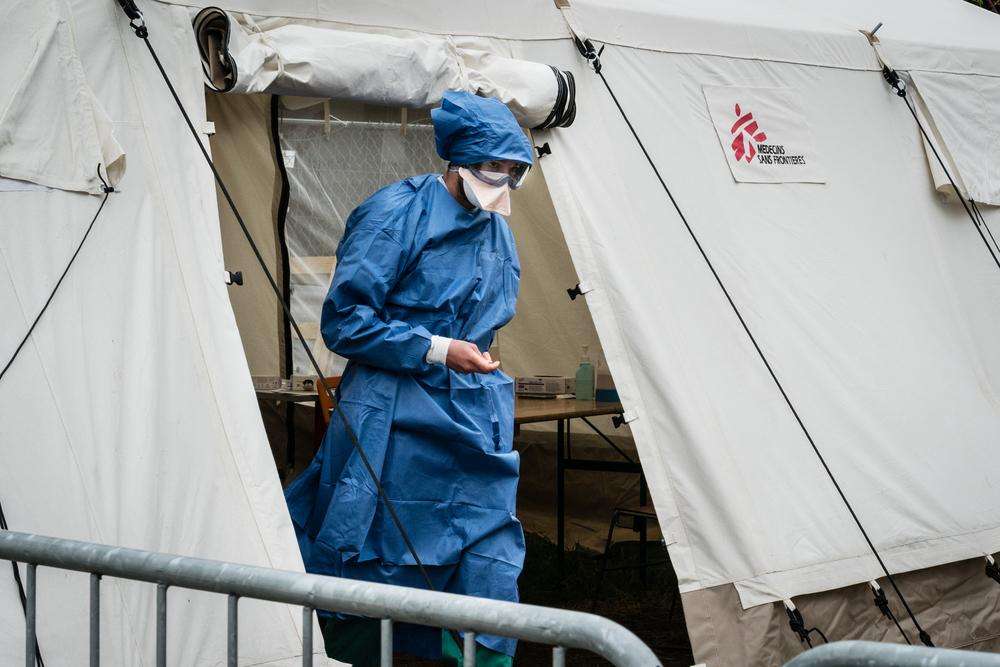
Managing these rumors and suspicions has become a major part of my job. The spread of false information in the form of rumors is dangerous for Congolese people and NGOs alike. Downplaying the severity and reality of COVID-19 by believing it to be a manmade political tactic will result in people not following the prevention measures laid out by the authorities, leading to higher mortality and potential backlash and violence.
Addressing these rumors is a careful balance of listening to their views, respecting their beliefs, and gently correcting inaccuracies.
Through these sessions with the community we have learned that the main concerns have less to do with contracting the actual virus and more to do with the threat of a government-imposed lockdown and the inability of the current health system to care for them.
“So many people are dying in Italy, where they have good hospitals. How will we manage here when there are no hospitals?”
“We cannot stay in our houses, we will starve.”
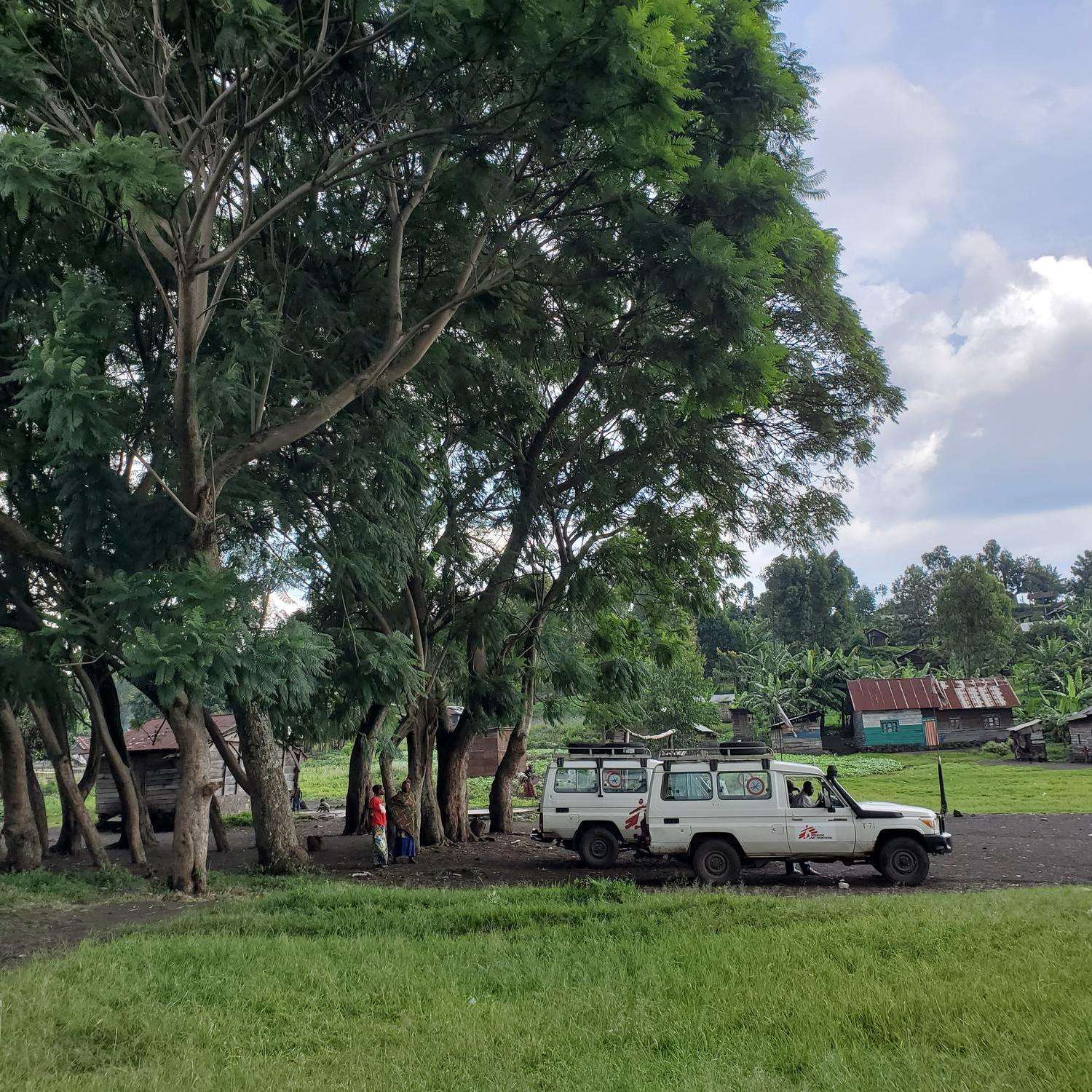
Their fears are valid—the reality the Congolese people are facing is severe and there are potentially deadly consequences that go beyond the virus.
Our discussions with community members have also made us aware of a growing fear of health centers. People are avoiding them for fear of catching COVID-19, and health care workers are scared of treating incoming patients.
“Can I still go to the hospital if I have malaria?”
“Won’t I get infected with coronavirus if I go to the hospital where there is a confirmed case?”
“Is it safe to touch the bodies of people who have died from coronavirus?”
When we understand what the population is scared of, and what rumors they believe, we can develop an outreach strategy that addresses the nuances and realities of each area where MSF is working. It is why discussions and information sessions are so important, especially during the COVID-19 pandemic.
Responding to COVID-19 is complicated around the world, but in countries like DRC the challenges are exacerbated by persistent extreme poverty, instability, conflict, and a health care system that is barely functioning. It is a country where rumors spread easily, with simmering armed conflict and with populations that are constantly on the move to escape the latest waves of violence perpetrated by armed groups.
“How can we protect ourselves when there are new internally displaced people arriving? How do we know where they come from?”
“I can’t afford to buy enough food for my family anymore since the price has gone up.”
At the end of the day, many people in Goma are scared. People everywhere are scared. Nobody knows what the coming months may bring. This is why proactive health promotion is so important: People need answers to their questions from a source that they trust. People need to have access to accurate information. During times as uncertain as these, health promotion becomes a critical activity. It is how we connect and engage with people, how we learn about their fears and beliefs and needs. Community engagement informs the type of response that is needed in the community and helps MSF develop effective and appropriate interventions to support the population.
And so our health promotion teams will continue traveling into the community, as long as the situation allows, to listen, to ask questions, and to give the community a voice and make sure that the population we serve are at the center of MSF’s response.


News Jul 26, 2024
ViiV must urgently help get more people on lifesaving HIV prevention m...
Read More