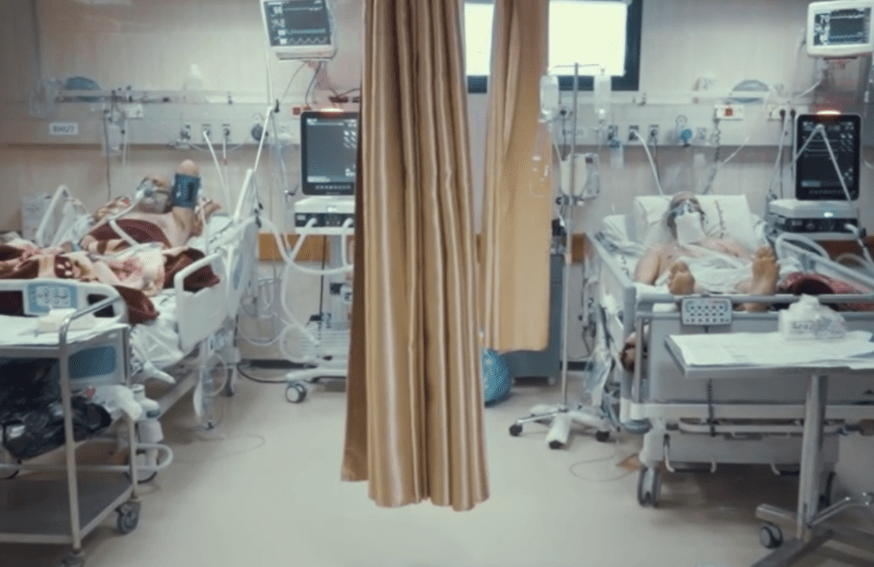
The recent airstrikes on Gaza follow days of violence in Jerusalem. During the night of Monday, May 10, MSF teams supported the Palestinian Red Crescent Society (PRCS) in the assessment and stabilization of hundreds of patients injured by the Israeli police, most of whom had sustained rubber bullet, stun grenade, and blunt trauma injuries.
“Our teams were confronted with serious injuries caused by the Israeli police to men, women, and children,” said Ottens-Patterson. “They treated children as young as 12 who had been injured by rubber bullets. The violence was the worst that MSF teams had witnessed in Jerusalem in years.”
This is not the first time that MSF has witnessed the devastating consequences of violence in Gaza. Previous military confrontations between Israel and Gaza have resulted in the injury and death of many thousands of Palestinian civilians, many of them children.
“After each war, each ‘escalation’, each wave of protests, we treat people who have been injured by the Israeli armed forces in our clinics and hospitals,” said MSF’s medical coordinator, Dr. Natalie Thurtle. “We see on a daily basis the long-term disabilities and pain that this violence causes. And we know that the longer this current round of violence goes on, the more people will be injured, and the more that they will suffer even long after the bombs have stopped.”
“The 14-year Israeli blockade on Gaza means that the health system here lacks many of the things it needs to treat people even during normal times," said Thurtle. "Yet every few years it is called on to deal with a huge influx of wounded: 11,000 injured during the 2014 war; more than 7,000 shot during protests in 2018 and 2019; and now already hundreds injured in bombings and dozens dead since Monday.”
MSF has been present in the Gaza Strip for over twenty years and stands ready to support the local health authorities to provide vital medical care to those who need it. “The level of violence and injury sustained over the last few days is unbearable and unacceptable. We are deeply concerned for the safety of the civilian population,” said Ottens-Patterson.