Holding the line
As front lines kept shifting across Sudan, waves of displaced people arrived in Omdurman, many of whom were returning to the neighborhoods they had initially fled. This led to more people seeking care at Al Nao, so it was essential to bring in more supplies.
MSF’s logistics teams worked tirelessly to ensure the hospital was stocked and operational.
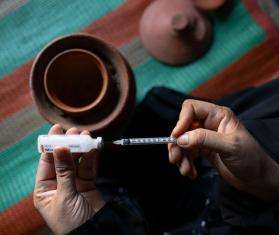
“We had to transport supplies in buses instead of trucks to avoid becoming a target,” said Omar Mhmed Elnour, MSF’s supply chain manager. “And the buses had to take the longest routes to avoid active battle zones. We even managed to send four fridges full of insulin in buses to address the shortage in the city to help save lives of diabetic patients.”
Despite these challenges, Al Nao maintained operations. MSF support allowed the Ministry of Health to redirect its limited resources to other facilities, strengthening the health care system in Omdurman.
“Al-Nao kept health care alive in western Khartoum despite enormous difficulties and harsh conditions,” said Dr. Jamal Mohamed, the General Director of Al Nao Hospital.
The hospital’s ability to manage mass casualty events without compromising other health care services became a model of crisis resilience. “Al Nao sets a powerful example on how trust and solidarity can sustain health care, even in the darkest hours,” said Tuna Turkmen, MSF head of mission in Sudan.