How malnutrition affects mental health

A surge of pediatric malnutrition cases in Nigeria has meant enormous psychological strain for patients as well as their caregivers.

A mother and baby play with a stacking toy in Nigeria.

Aisha Ayuba plays with her her 14-month-old daughter, Murjanatu, during a playroom session at the inpatient therapeutic feeding center in Kafin Madaki General Hospital, Bauchi. | Nigeria 2025 © Abdulkareem Yakubu/MSF

Every year, millions of children around the world suffer from malnutrition. But what is often less visible, yet just as devastating, are the psychological wounds that malnutrition inflicts on both children and their caregivers.

Over the years, an upward surge in children admitted for the treatment of malnutrition in nutrition programs supported by Doctors Without Borders/Médecins Sans Frontières (MSF) has been an alarming trend. In the 12 inpatient therapeutic feeding centers and over 30 outpatient therapeutic feeding centers supported MSF across seven northern Nigerian states, our teams are often overwhelmed.

Malnutrition is one disease that doesn’t just affect the child physically. It has psychological, emotional, and behavioral implications.

Kauna Hope Bako, MSF mental health supervisor in Bauchi

In 2024 alone, over 300,000 malnourished children were treated in Zamfara, Kano, Katsina, Kebbi, Bauchi, Borno, and Sokoto states—a 25 percent increase from 2023. This health condition comes with psychological wounds that affect both the children and their caregivers, who experience a cycle of emotions from the day of admission to the time of discharge.

“Malnutrition is one disease that doesn’t just affect the child physically,” explains Kauna Hope Bako, MSF’s mental health supervisor in Bauchi. “It has psychological, emotional, and behavioral implications.” 

Bako and her team—like those in other projects across Nigeria—are working to break this cycle. Their approach recognizes that malnutrition is not just a medical emergency, but a psychological one as well.

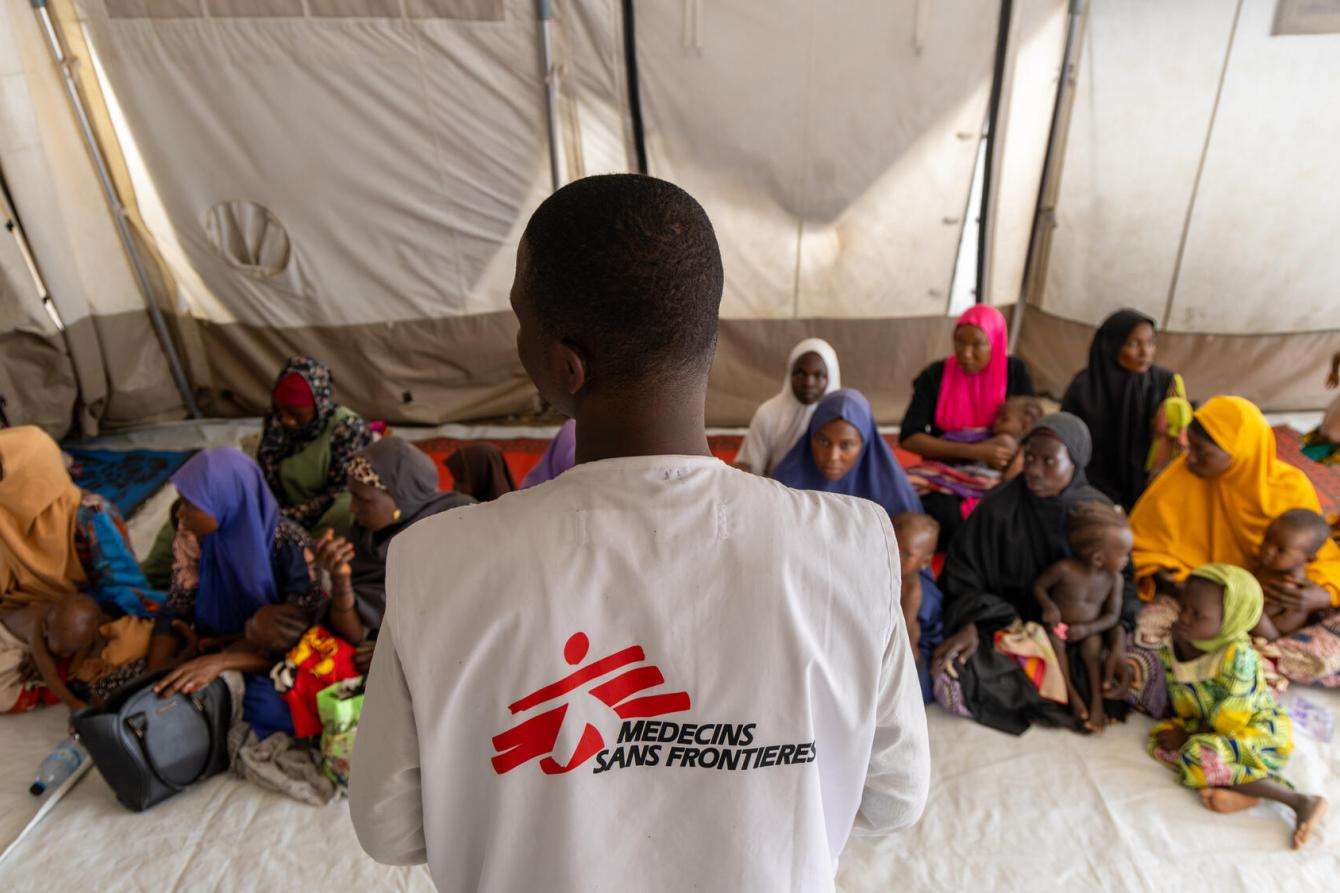
MSF health staff lead an information session in Nigeria.
An MSF counselor advises caregivers whose children are being discharged from the Kafin Madaki General Hospital in Bauchi, after receiving treatment for malnutrition. | Nigeria 2025 © Abdulkareem Yakubu/MSF

The hidden mental toll of malnutrition

Children suffering from malnutrition often become irritable, withdrawn, and unresponsive. They may miss key developmental milestones, struggling to walk, talk, or interact with their environment like other children.

“The child is feeling detached, sad that they cannot play like other children, and trying to understand what is going on,” Bako says. “They’re going through a lot of pain and stress—not just from malnutrition, but from other diseases that often come with it.”

The relationship between mental health and malnutrition is deeply intertwined. Malnutrition can lead to emotional and cognitive problems in children, while traumatic factors can lead to psychological suffering and contribute to malnutrition. “They’re two sides of the same coin,” Bako notes. “Malnutrition can lead to mental health problems and mental health problems can lead to malnutrition.”

Experience from Niger and Nigeria over past few years has shown that integrating mental health activities contributes to faster weight gain, shorter lengths of stay in inpatient feeding centers, and improved caregiver well-being.

Children play in a group session in Nigeria.
MSF staff and caregivers encourage children to walk in a playroom at the Kafin Madaki General Hospital in Bauchi. | Nigeria 2025 © Abdulkareem Yakubu/MSF

Caregivers bear a heavy burden

The impact of malnutrition extends beyond the child. Caregivers, who are often the child’s primary source of support, face immense stress and emotional strain. 

“At triage, the emotions you’ll find most prominent are anxiety, stress, and fear,” Bako says. “The caregiver is not really comfortable. She’s worried.” 

Additionally, many feel helpless, frustrated, or even ashamed, sometimes blaming themselves for their child’s condition.

“It’s important that we give care not just for the child but also to the caregiver,” Bako says. “If the mother is not able to manage her own stress, it may unconsciously spill over to the child.”

An MSF staff members speaks with a mother of a patient in Nigeria.
Counselor Musa Zakkariya, speaks with a caregiver during a psychoeducation session at the Kafin Madaki General Hospital in Bauchi State. | Nigeria 2025 © Abdulkareem Yakubu/MSF

Breaking the vicious cycle

MSF’s mental health team uses a holistic approach to support both children and caregivers. All MSF-supported hospitals in Nigeria have a playroom where caregivers and their children meet every day for mental health sessions. Their daily activities include:

  • Psycho-stimulation sessions: Using play, colors, sounds, and gentle massages, these sessions help children regain lost developmental skills and foster emotional bonds with their caregivers.
  • Psycho-education: Caregivers learn about the psychological impact of malnutrition, how to manage stress, and how their own wellbeing affects their child’s recovery.
  • Support groups: Caregivers share experiences, coping strategies, and emotional support, building a sense of community and resilience.
  • Recreational activities: These sessions offer caregivers and their children a chance to relax and distract themselves from the stress of hospital life.
  • Individual counseling: For those experiencing acute distress, one-on-one support is available.

Recognizing the role of fathers, the team also organizes men’s sessions to educate and encourage them to support mothers emotionally and make informed decisions about their children’s care.

MSF’s approach extends beyond patients and caregivers. The mental health team trains all staff—doctors, nurses, and support workers—on psychological first aid and communication skills. 

“When the mother feels listened to, when the child feels safe with the doctor or nurse, that already is treatment,” Bako says. 

A mother plays with her son, holding him to stand, in Nigeria.
MSF Counselor Ladi Musa, plays with a child during a recreational psychostimulation session in the playroom at Kafin Madaki General Hospital in Bauchi. | Nigeria 2025 © Abdulkareem Yakubu/MSF

Treating mental health restores hope for recovery

By addressing both the physical and psychological needs of malnourished children and their caregivers, MSF is helping to break the cycle of suffering. 

“It’s not just about treating the disease,” Bako says. “It’s about restoring hope, dignity, and the bonds that help children and families heal.”

This World Mental Health Day, MSF is reaffirming our commitment to holistic care—because every child deserves not just to survive, but to thrive—body and mind.

An MSF staffer leads an education session in Katsina, Nigeria.
Families wait for treatment at the MSF-supported clinic in Maiduguri. | Nigeria 2023 © MSF/Ehab Zawati

MSF in Nigeria 

Since 2022, MSF has been raising the alarm over the worsening malnutrition situation in northern Nigeria, where  large numbers of children are suffering from severe acute malnutrition. 

Between January and June 2025, MSF teams in northern Nigeria admitted 32,940 severely malnourished children to inpatient therapeutic feeding centers and 136,255 children to outpatient therapeutic feeding centers. To help families cope with the psychological toll of the crisis, MSF also conducted 30,880 mental health sessions during the same period. In Bauchi, our teams have provided mental health support to 113,191 malnourished children and their caregivers since 2024.