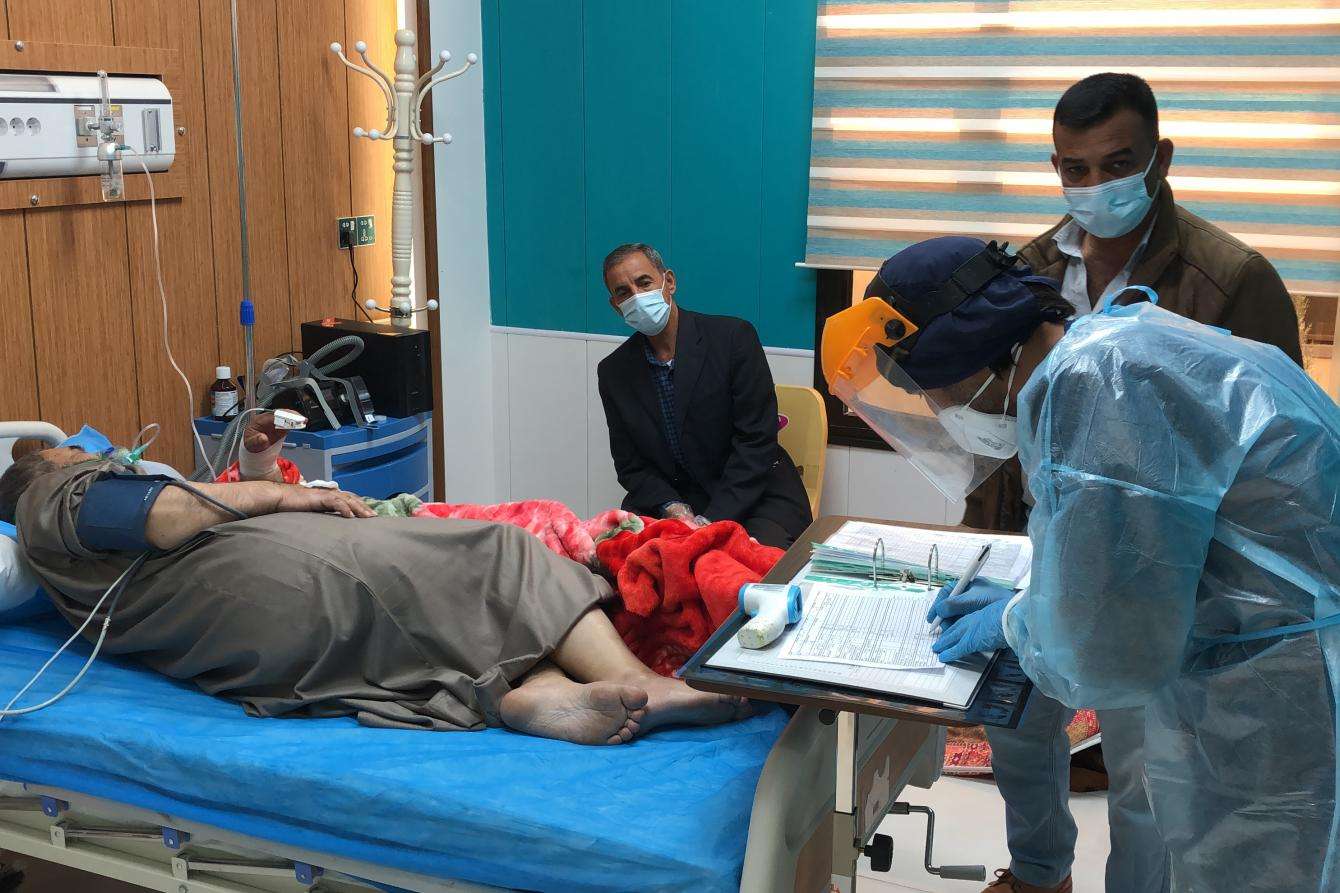
In late July 2020, doctors and nurses in Baghdad began to notice something strange: While the intensive care units dedicated to patients suffering from COVID-19 were fuller than ever, wards for less severe cases were emptying out. “The hospitals had been over-capacity in Baghdad and people were scared, so they were resorting to home care,” said Omar Obeid, a Doctors Without Borders/Médecins Sans Frontières (MSF) project coordinator in Baghdad. “People stopped going to hospitals. They came only when it was so late that they were almost sure to die.”
Many years of war, beginning with the 2003 US invasion of Iraq, have prepared Baghdad’s hospitals for large influxes of wounded patients. But as COVID-19 began to spread through the city last summer, weaknesses in the overstretched health care system quickly became apparent. Even people with COVID-19 delayed coming in for treatment.
Hiba’s mother, Neamat, fell sick in November. “We tried to get her a test but we couldn’t,” she said. “We did a CT scan and saw that her lungs were all white, very damaged by the corona [virus]. As I’m a pharmacist, I thought that we could manage it at home. The hospital was the very last thing I thought of doing.” Eventually, however, Naemat’s condition deteriorated badly and Hiba was forced to bring her mother to a public hospital. “There was a different doctor every day and each doctor was writing a different prescription. There were only two or three nurses for about 20 patients. It was impossible for them.”