Many forms of violence along the route
The violence migrants face ranges from torture to sexual violence, kidnappings, robbery, threats, deprivation of water and food, burns and extortion. These have serious consequences for the physical and mental health of migrants—sometimes irreversible. Many people are already carrying a heavy backpack after fleeing their own countries due to conflict, violence, and exclusion, and then suffer these new attacks at points along the Latin American migration corridor, such as the dangerous Darién jungle in Panama.
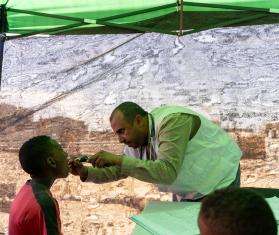
A recent increase in migrant caravans in southern Mexico has led MSF to redouble mobile assistance. Between the end of September and the beginning of December, we have responded to 12 caravans—made up of some 10,000 people—in the states of Chiapas, Oaxaca, and Veracruz, providing more than 1,900 medical consultations.
Among the people treated, there were patients with acute respiratory diseases, musculoskeletal diseases, and skin and gastrointestinal conditions, which are caused by the conditions they face, including the consumption of unsafe water, long walks, and high temperatures. We also saw cases of chronic diseases such as high blood pressure, asthma, and diabetes. Despite the fragility with which migrants complete their journeys, sometimes security forces close off access to suitable rest areas. This happened in November in La Venta, where hundreds of people were forced to stop on the side of a peripheral road, exposed to potential car accidents.