
In May 2022, the United Nations Refugee Agency announced that the number of forcibly displaced people worldwide had surpassed 100 million for the first time in recorded history. This number has doubled over the last decade as conflict, human rights violations, climate change, and economic crises resulting from the COVID-19 pandemic have uprooted millions of people from their homes—including nearly seven million refugees who fled the war in Ukraine.
But not all of these displaced people are treated equally. While the European Union (EU) swiftly activated its Temporary Protective Directive (TPD) for the first time, granting Ukrainians arriving there the right to live, work, attend school, and travel freely within its borders, Doctors Without Borders/Médecins Sans Frontières (MSF) teams continue to witness people fleeing crisis in other countries being left to drown at sea, intercepted and pushed back at borders, denied humanitarian assistance, and criminalized for seeking safety.
It’s not just the EU. This inhumane “double standard” is mirrored in the migration policies of governments from Europe to the United States, with dire health consequences.
Double standards at Poland and Lithuania’s borders
In 2021, the Polish government sent 15,000 military personnel to its border in response to the arrival of thousands of refugees primarily from Iraq, Democratic Republic of Congo (DRC), Syria, Cameroon, and Afghanistan who were attempting to cross from Belarus into Poland and Lithuania. MSF heard firsthand reports of violence, theft, destruction of people's belongings, and physical assault at the hands of border guards. In a dramatic shift from this approach, Poland has now allowed three million people to cross its borders from Ukraine and agreed to settle one million Ukrainian refugees.
Next door, Lithuania has also received more than 52,000 Ukrainian refugees, while in May this year, at least 2,500 asylum seekers and migrants from other countries who crossed from Belarus in mid-2021 remain detained in inhumane conditions in two detention centers where MSF provides mental health and medical care. “People do not have access to a fair asylum process and there is no specialized support for psychiatric disorders or survivors of torture and sexual violence,” said Georgina Brown, MSF’s country representative in Lithuania. “EU migration policies aimed at restricting migration and expanding detention have a detrimental impact on people’s mental health and well-being.”
Drowning at Europe’s doorstep
At its southern borders, the EU continues to turn its back on refugees and migrants fleeing Libya. In early April, MSF’s team on the search and rescue ship Geo Barents reported that more than 100 people had drowned in the central Mediterranean Sea within one week while trying to reach the safety of Europe’s shores.
At least 24,000 people have drowned or gone missing in the Mediterranean Sea since 2014.
“The withdrawal of the EU and its member states from search and rescue operations in the Mediterranean Sea and their support to the Libyan coastguard are at the root of the deaths and violations of human rights occurring in the Central Mediterranean,” said Caroline Willemen, MSF project coordinator on board the Geo Barents in May. After one year at sea, the Geo Barents has rescued 3,138 people from distress. But thousands more have been intercepted by the Libyan Coast guard— funded by the EU—and forcibly returned to Libya where MSF has witnessed people subjected to indefinite detention, abuse, and mistreatment.
Prison-like camps
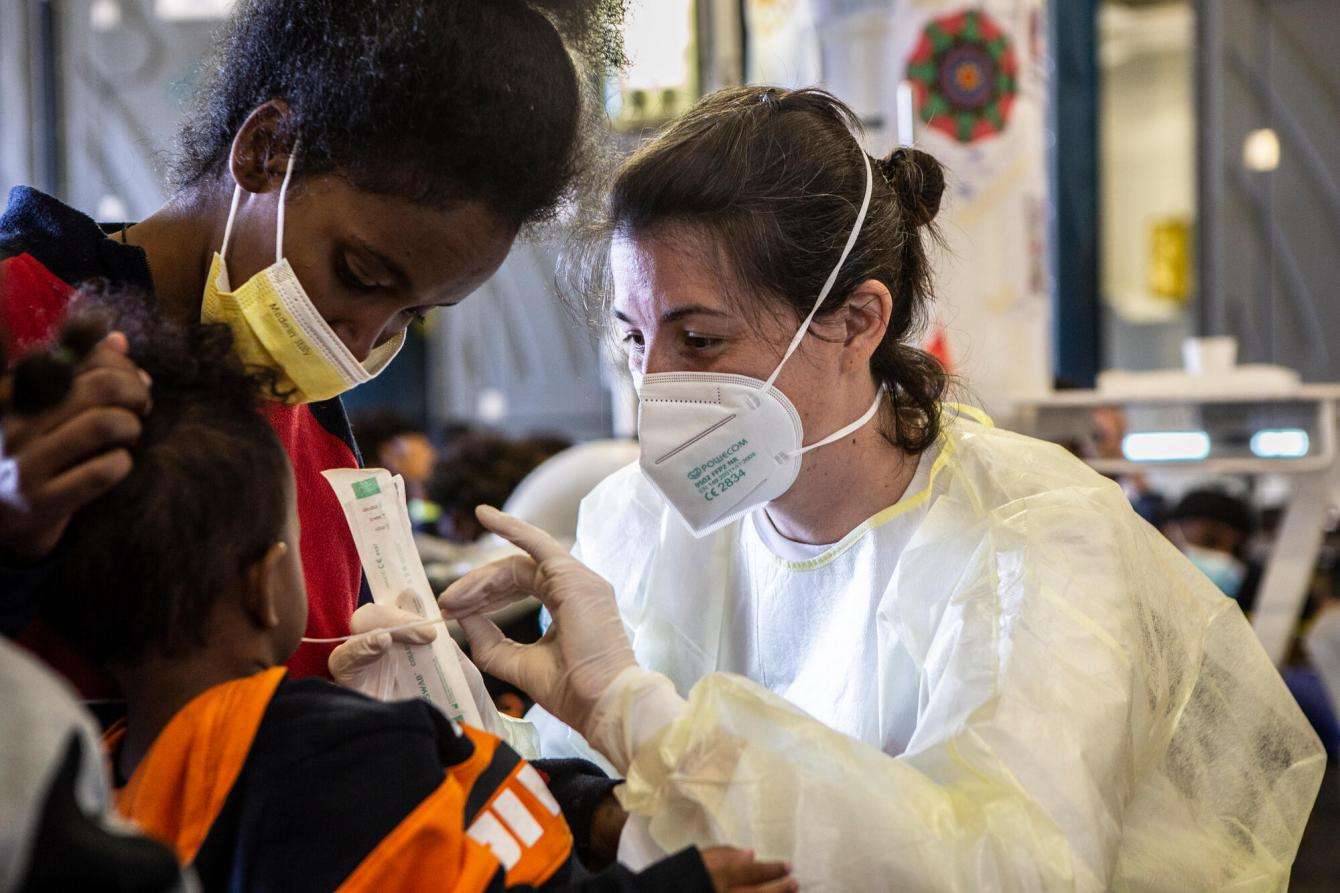
MSF has repeatedly spoken out about the humanitarian crisis our teams continue to witness on the Greek islands. Asylum seekers who have arrived in Greece in recent years often wind up stranded in squalid, prison-like camps without access to basic needs, education, or safe shelter. While conditions have somewhat improved in the last year, our teams in Greece continue to treat people, including children, for serious medical and mental health problems related to poor living conditions, isolation from the community, fear of deportation, and arbitrary asylum processes. The Greek government has proven it has the capacity to treat refugees arriving in Greece with dignity. Almost 20,000 Ukrainians have sought refuge in Greece in recent months. They’re eligible for temporary protection cards containing a residence permit, a social security number, and a tax number, which gives card holders automatic access to the national health care system and the right to work.
Meanwhile, almost 4,000 people remain waiting in limbo in inhumane conditions on the Greek Islands for their asylum claims to be processed.
Exemptions at the Southern US border
The US was also accused of adopting a “double standard” in response to Ukrainian refugees arriving at its southern border. More than 20,000 Ukrainians were allowed to enter the US from Mexico between March and the end of April after being granted exemption from Title 42, a public health order that has been misused during the COVID-19 pandemic to effectively close the US southern border to asylum seekers, including people fleeing violence and conflict in Haiti, Colombia, and Honduras.

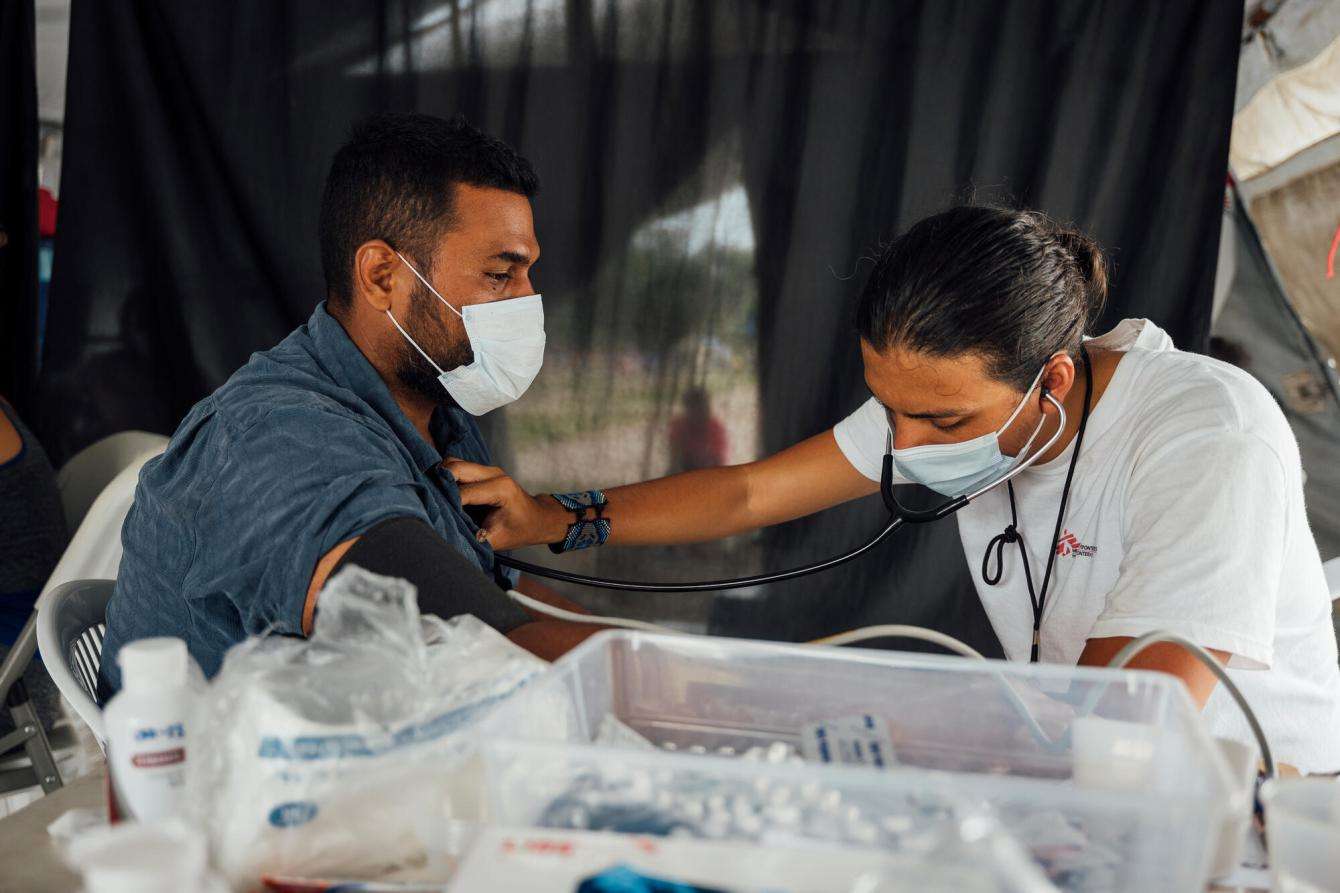
MSF teams providing medical and mental health care along the migration route in Mexico have directly witnessed the consequences of this harsh migration policy that continues to expose highly vulnerable people to more violence and danger.
“Exemptions to Title 42 for Ukrainians show that the US government is perfectly capable of processing people efficiently and with dignity when it dedicates the resources and when there is political will to do so,” said Avril Benoît, executive director of MSF-USA. “People should be allowed to seek asylum based on their need for protection and not based on their nationality, origin, race, or ethnicity—in accordance with US domestic and international law. The Biden administration must find a way to lift Title 42.”
Long-term solutions and universal solidarity
While long-term solutions to the global refugee crisis remain inadequate, the positive response to Ukrainian refugees shows the EU and the US have always had the tools to provide safe passage and humane reception for people seeking safety—the only thing they lacked was political will.
“Everyone seeking asylum should receive assistance and protection and have their asylum claims fairly and efficiently assessed,” said Benoît. “Everyone should be treated with dignity. It’s time governments like the EU and US fix their broken migration model.”
Alert Summer 2022: Life on the move
Read more

News Jul 26, 2024
ViiV must urgently help get more people on lifesaving HIV prevention m...
Read More