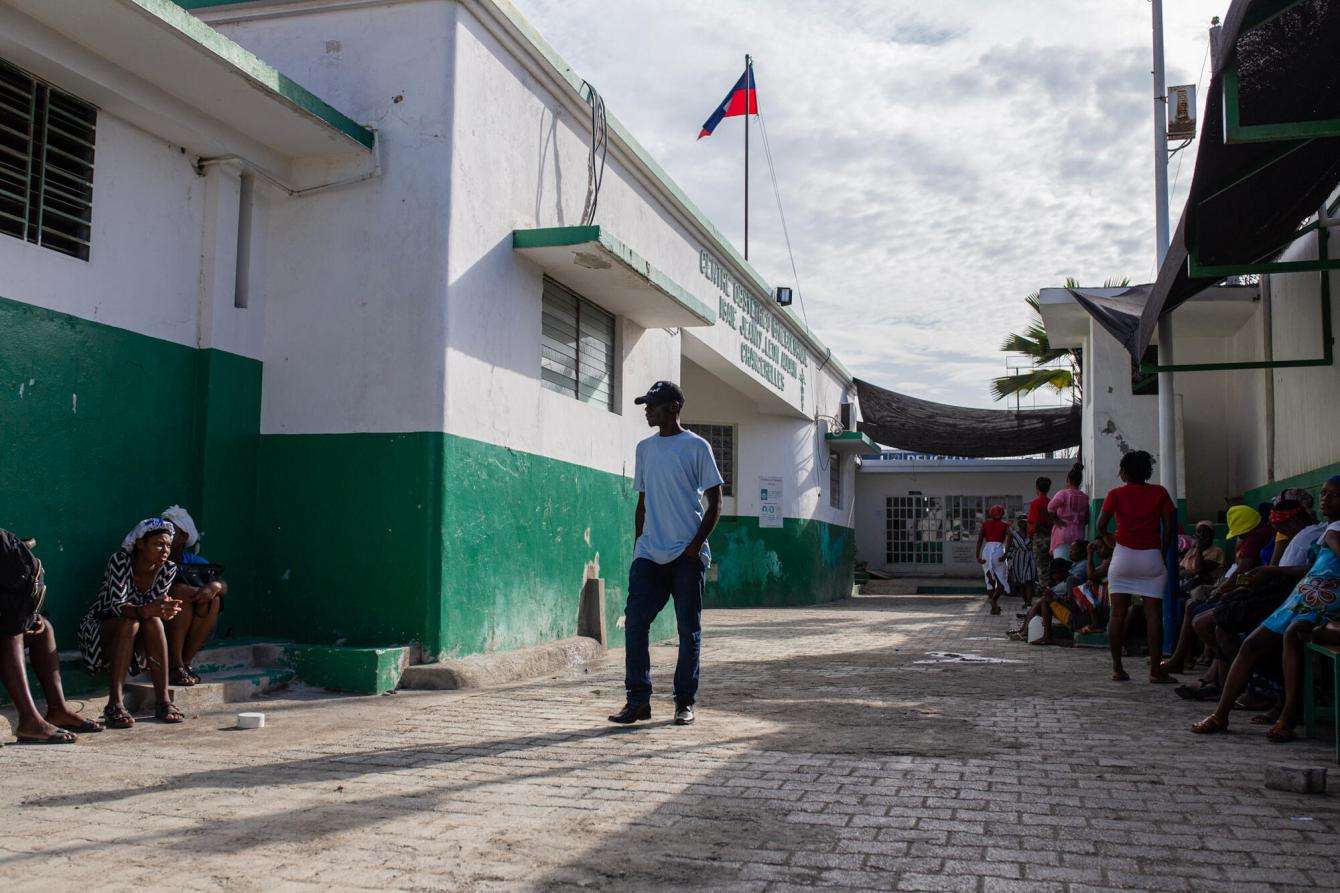
After a three-week suspension due to violent clashes between armed groups, Doctors Without Borders/Médecins Sans Frontières (MSF) has gradually resumed activities at Isaïe Jeanty Maternity Hospital in Cité Soleil, Haiti, working alongside the Ministry of Public Health and Population.
Since July 14, the facility has been operating 24 hours a day, seven days a week. This resumption of services means women can once again access care in a context where access to health services remains extremely difficult.
A hospital caught in the crossfire
The facility was forced to suspend its activities on June 19, following five days of intense fighting between armed groups in Cité Soleil, a neighborhood of Haiti’s capital, Port-au-Prince. During those five days, bullets struck the maternity unit. Initially, MSF teams remained on site with reduced staff to maintain a minimum level of care. But as the violence escalated, they were forced to leave the facility.
“It was a particularly difficult decision, as we know how significant the sexual and reproductive health needs are in Cité Soleil,” said Diana Manilla Arroyo, MSF head of mission in Haiti. “But continuing under these conditions would have put more lives at risk."
The fighting has also severely affected residents of Cité Soleil, forcing many of them to flee their homes.
“Armed men came [to my house], so I grabbed my children and left,” said Jeanne*, a patient who received care at an MSF mobile clinic near the hospital. “My neighbors helped me escape. My brother is a motorcycle driver; he wanted to come back to help me, but he came across some armed men who held him and locked him in our house before setting it on fire. He was killed.”
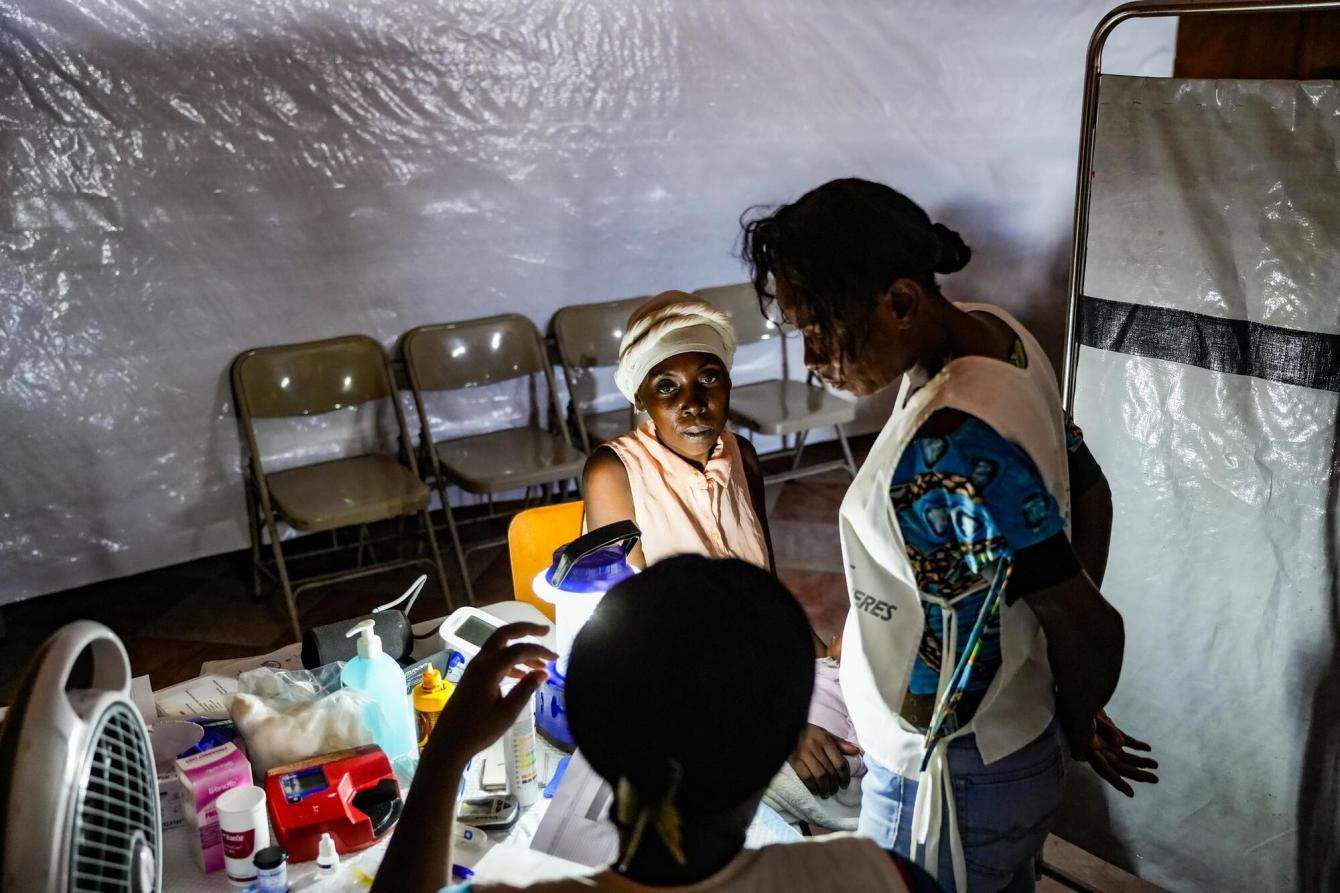
MSF resumes services, but access to care remains difficult
A relative lull in the fighting has since enabled the MSF teams to gradually return to the maternity unit and resume services there, alongside the Ministry of Public Health and Population. These services include regular and emergency obstetric care and care for survivors of sexual violence. In the first half of 2026, the maternity ward supported 995 deliveries and provided care to 122 survivors of sexual violence.
In Port-au-Prince, armed clashes continue to disrupt access to health care for thousands of people. “I gave birth to nine of my children at home,” added Jeanne. “It is difficult to access health care because of the armed groups, and when you do not have money.”
Health care facilities, patients, and medical staff must be protected at all times to ensure continued access to care.
MSF also provides free care at Cité Soleil Hospital, Orezon Health Center in the Brooklyn neighborhood, and Tabarre Hospital and Pran Men’m Clinic in Delmas 33.
*Name changed for privacy
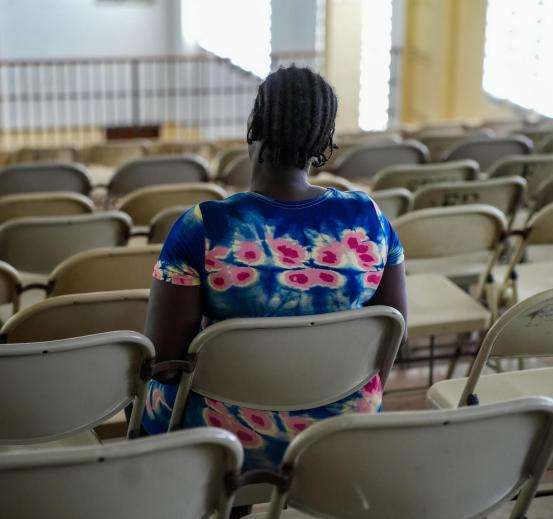
Jeanne*, displaced in Delmas
“Here in the camp, I cannot find food. We have to do what we can to meet our needs. I feel completely overwhelmed by the situation.
My stomach hurts a lot. I sleep on a mat directly on the floor. I have pain in my legs, I have trouble walking … I think my stomach pain is due to the quality of the water I drink.
I lived in the Blanchard neighborhood for seven years. It is the first time they have burned my house. There is almost no one left in the neighborhood.
I am one step away from going mad.”