
Nigeria already has the highest number of deaths from malaria worldwide—accounting for nearly a quarter of the global total. This year threatens to be even worse, as medical teams from Doctors Without Borders/Médecins Sans Frontières (MSF) working in northeast Nigeria’s Borno state have witnessed a spike in malaria cases extending even into the dry season.
Usually, peak malaria season takes place during the rainy season from August to mid-October, when mosquitoes breed. During this year’s rainy season, MSF teams conducted or supported four rounds of seasonal malaria chemoprophylaxis, which prevents malaria, in different locations across Borno state, including in camps for displaced people. MSF teams have also been supporting the Ministry of Health by carrying out seasonal malaria chemoprophylaxis in Gwange district and in informal camps for displaced people in Maiduguri.
The campaign was aimed at children between three months and five years of age. MSF delivered more than 350,000 doses in the first three rounds, while the Nigerian Ministry of Health had planned to reach around two million children in total. The fourth round of the campaign was planned for the rainy season in mid-October, but shortages of medical supplies delayed activities until mid-November.

Despite the preventive campaign, a number of young children in hospitals died from the disease. The crisis was exacerbated by COVID-19 restrictions, which have disrupted or delayed the delivery of antimalarial medications to Nigeria.
The seasonal malaria chemoprophylaxis campaign in Borno state was challenging to implement, given the unstable context and the COVID-19 pandemic, but it likely saved many children’s lives. To save even more lives in a country, MSF is calling for the distribution of seasonal malaria chemoprophylaxis to all children from three months to ten years of age.
“We’ve noticed the positive effects of the campaign,” says Dr. Emmanuel Berbain, MSF medical team leader in Gwange hospital. “Children under five mostly weren’t affected by malaria during the peak season. However, there were deaths among children over five. Because of the death rates, I think we should lobby for next year’s malaria prevention campaign to cover children up to the age of 10. It’s certainly possible, but it will require coordination, resources, and preparation.”
In response to the high number of people with malaria and the shortage of antimalarials, MSF has provided the Ministry of Health and other organizations with 120,000 antimalarial tablets.
MSF teams have also distributed mosquito nets to people across Borno state, including in Banki camp for displaced people. In Banki, MSF teams are carrying out rapid malaria tests and providing treatment to people who test positive, as well as conducting malnutrition screening for children.
"We’re a family of eight and we have only two mosquito nets—they’re not enough for us,” says Bintu, a resident of Banki camp, whose son Ali died of malaria some years ago, when he was just two years old. “All my [other] children recently had seasonal malaria chemoprophylaxis and they are all doing fine."
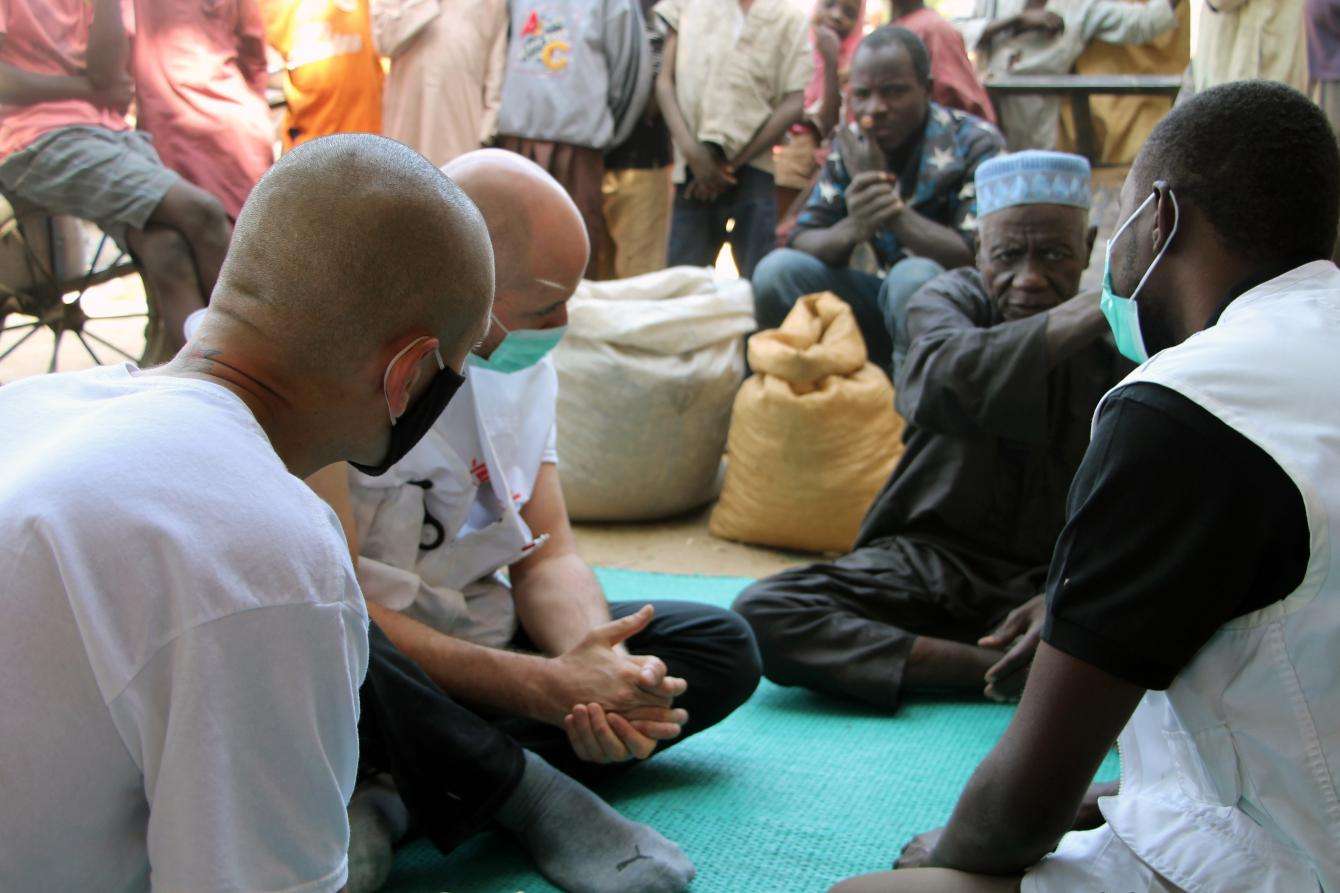
Nearly half of all 2020 malaria cases occurred in October 2020
From January to October 2020, there were almost 29,000 people infected with malaria in MSF facilities across Borno state. Of these, 12,000 patients were registered in October alone. In the same period, MSF teams in Gwange treated around 8,000 patients, while MSF teams in Fori pediatric hospital treated 1,800 children affected by both malaria and malnutrition. MSF teams in Ngala and Rann treated more than 2,000 people for malaria, while teams in Pulka and Gwoza treated nearly 17,000 patients.
In response to the high number of malaria patients arriving at Gwange hospital from the Bolori neighborhood, on the outskirts of Maiduguri, MSF has extended its activities to Bolori, as well as to the neighborhoods of Dusman, Musari, Zambarmari, and Ahmed Ghemra. In Bolori, MSF teams tested children for malaria and treated all those who tested positive. During the first half of November, they provided treatment to 323 children.
Bashir, two years old, was one of those children. He received treatment after his mother, Hafsat, brought him to see the MSF mobile team. “We could only give him paracetamol syrup when he started having this fever and a runny nose,” she says. “Me, my husband, and our seven children all had malaria last month.”
Five-year-old Hussaini is being treated for malaria in Gwange hospital and cared for by his grandmother, Hajja. “He has been having this sickness for about a month, though he has sickle cell anemia as well,” says Hajja. “If it weren’t for MSF, I wouldn’t have been able to afford his treatment, because Hussaini lost his parents and I too have been alone since my husband died."
Hussaini arrived at the hospital just in time for his treatment to be successful, but many children are not brought in until it is too late to save them.
MSF teams are spreading the message in communities that children should be brought to a hospital as soon as they fall sick with malaria. “Parents, community leaders, and the public should bring sick children to a hospital as soon as any of the malaria symptoms are noticed, as it is essential to treat malaria at an early stage to save lives," says MSF medical coordinator Jacob Maikere.
MSF is an independent international humanitarian organization that delivers emergency medical aid to people affected by armed conflict, epidemics, natural and human-caused disasters, and exclusion from health care in more than 70 countries around the world. MSF is working in seven states across Nigeria: Borno, Jigawa, Zamfara, Sokoto, Benue, Ebonyi, and Rivers. MSF has been working in Nigeria since 1996 and in Borno state since 2014. In Borno, our medical teams provide emergency treatment, surgery, malnutrition treatment, maternity and antenatal services, vaccinations, and the prevention and treatment of malaria and other diseases.


Story Jul 23, 2024
MSF calls on Gilead to make groundbreaking HIV prevention drug afforda...
Read More