
On October 10, the first phase of a ceasefire agreement went into effect, bringing some welcome relief for Palestinians exhausted by relentless violence. As this issue went to press, however, conditions on the ground remained volatile. Gaza still faces a long road to recovery and reconstruction.
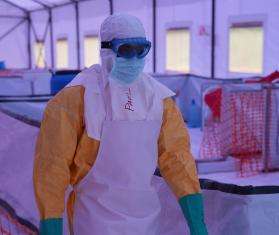
A surge of medical aid is crucial to heal the physical and psychological injuries affecting Palestinians. Of the more than 1,000 Doctors Without Borders/Médecins Sans Frontières (MSF) team members in Gaza, the vast majority are locally hired staff—as is common across our international medical projects. Our Palestinian colleagues have been working under extreme pressure while facing the consequences of war on a personal level: hunger, repeated displacement, the destruction of homes, and lives lost or changed forever in an instant.
For more stories, follow @HumansofNY and @doctorswithoutborders on Instagram.
Weam Atallah, MSF pharmaceutical supervisor, August 13, 2025
Peace, love, and harmony
My name is Weam. It's a beautiful name for me, because my mother gave it to me. She died of cancer when I was 8 years old. So I love my name, because my mom loved it. It’s also perfect for me because it means” peace, love, and harmony.” And everyone who meets me says that I’m positive energy shining everywhere. I’m a team leader for 23 pharmacists. “The pharma army,” we call it. Ask anyone: We are the happiest team in the hospital.
After we start our morning meeting, I’ll put on a bit of music for everyone. If they want to dance, they can dance. If they want to sing, they can sing. We are working 24 hours, seven days a week, without stopping. They are under so much stress all the time. There are always mass casualty incidents. And everyone in Gaza is living their own nightmare with the bombings, the displacements, the hunger.

Dr. Sohaib Safi, MSF deputy medical coordinator, August 28, 2025
How do we resist? By existing.
[My daughter’s] name is Rita. It comes from a poem by a well-known poet of Palestine. It’s a song that I used to sing, and my wife loves it too. So Rita is a product of love between me and my wife.
I haven’t seen either of them in a year and a half. When the border opened last year, I sent them both out of the country. I hold a master’s degree in burns, plastic, and reconstructive surgery—and these skills are deeply needed in Gaza. So I chose to stay behind.

Dr. Ahmed Seyam, MSF surgeon, August 25, 2025
We used to be a beautiful family
When I brought [my children] to the hospital, I refused to let my colleagues deal with their injuries. I dealt with them alone. I did the dressing. I removed the sutures. I wanted them to feel: “Our dad is taking care of us, maybe he can still protect us. Maybe he’s still our hero.”
I’m trying to keep myself together, so they can still see me as their hero. But no, I am not strong now. I’m weak.
We had a chance to leave Gaza, one year ago. But I refused. Because I love my people. I love my patients, so I chose to stay. But I regret all of it. My children had the right to live their life. Not this life I chose for them.
I’m not OK. I didn’t do well with my children. I didn’t save them or protect them. We used to be a beautiful family. But now, I don’t know.

Kholoud Al-Sedawi, MSF coordinator, August 15, 2025
Another person lives inside you
My whole life people have said to me: “You are too kind; too sensitive.” When I interviewed for a schoolteacher position, the principal told me: “You will never be able to control the students.” Because of this I built in my mind that I’m not a very strong person.
In December we spent 15 days on the street because there were too many bombs. Nobody could sleep safely inside. I ate nothing during this time, zero. I just drank some water every two days.
We were sheltering in a small corridor inside a school yard. My husband left us to look for food, and that’s when the bomb fell. When it falls close to you, you don’t hear anything. You just see the body parts flying through the air: the hand of someone, the leg of someone, the head of someone.

Ahmed Iqtifan, MSF water and sanitation coordinator, August 18, 2025
Someone to tell me that everything’s going to be OK
Before the war I never thought of getting married—maybe after 30 or something. But when the war started my mind changed.
Every night I am awakened by airstrikes. I live near the sea, and the helicopters are coming from the sea. Whenever I hear them, I am thinking: “What if this one is for me?” For the first time in my life I’ve started to feel like I need someone—someone to tell me that everything’s going to be OK.
Four months ago I became engaged. Her name is Lama. She’s the sister of my best friend Kareem, who was killed in a bombing last year.

Nour Alsaqqa, MSF communications officer, September 2, 2025
Gaza feels like the only real place left on earth
Everyone has disassociated from our reality. We have nothing to eat, but we have these phones. We get to watch our international friends going about their days normally. Who are we even talking to? You cannot rely on the conscience and moral compass of those in power.
We’ve tried for so long. It doesn’t work. You have to put pressure on them. You have to disrupt their systems. You have to move and mobilize and obstruct and protest and cost them things. It’s the only thing they listen to.
Life in Gaza does teach you. For the longest time I wanted to leave, but now I don’t feel like I could bear living anywhere else in this world. Gaza feels like the only real place left on earth.


More from this issue of Alert
November 25 07:23 AM
Bearing witness with communities in Sudan and Chad
Award-winning photographer Moises Saman documented the experiences of people displaced by conflict in Sudan.
Read more
November 25 07:46 AM
Shockwaves
How devastating aid cuts are putting global health at risk.
Read more