
For people in Tabontebike, a village in the remote Pacific island nation of Kiribati, access to water shapes everyday life.
With no public water system, the community relies on shallow groundwater wells or rainwater collection for their daily needs — but climate change is weakening these already-fragile sources. This has raised the risk of waterborne diseases, skin infections, and other climate-linked health concerns, with children, the elderly, and pregnant women especially vulnerable.
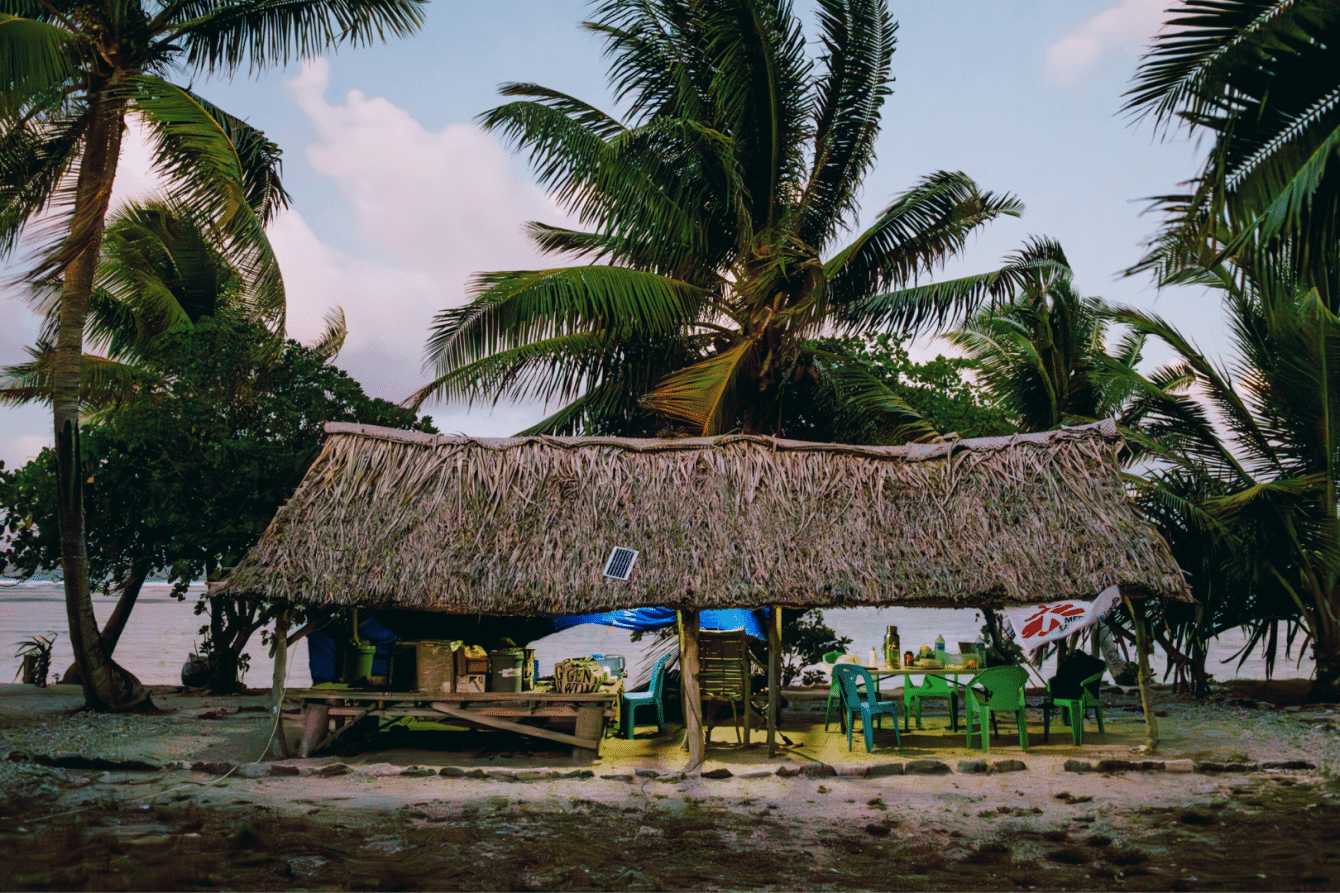
Doctors Without Borders/Médecins Sans Frontières (MSF) is working closely with local health workers and the Ministry of Health and Medical Services to strengthen climate-resilient health systems and address key health challenges in the community. Our water, sanitation, and hygiene team in Tabontebike is reinforcing water infrastructure in places like schools and clinics, protecting groundwater, improving rainwater harvesting and storage, and upgrading sanitation facilities.
Life on the front lines of climate change
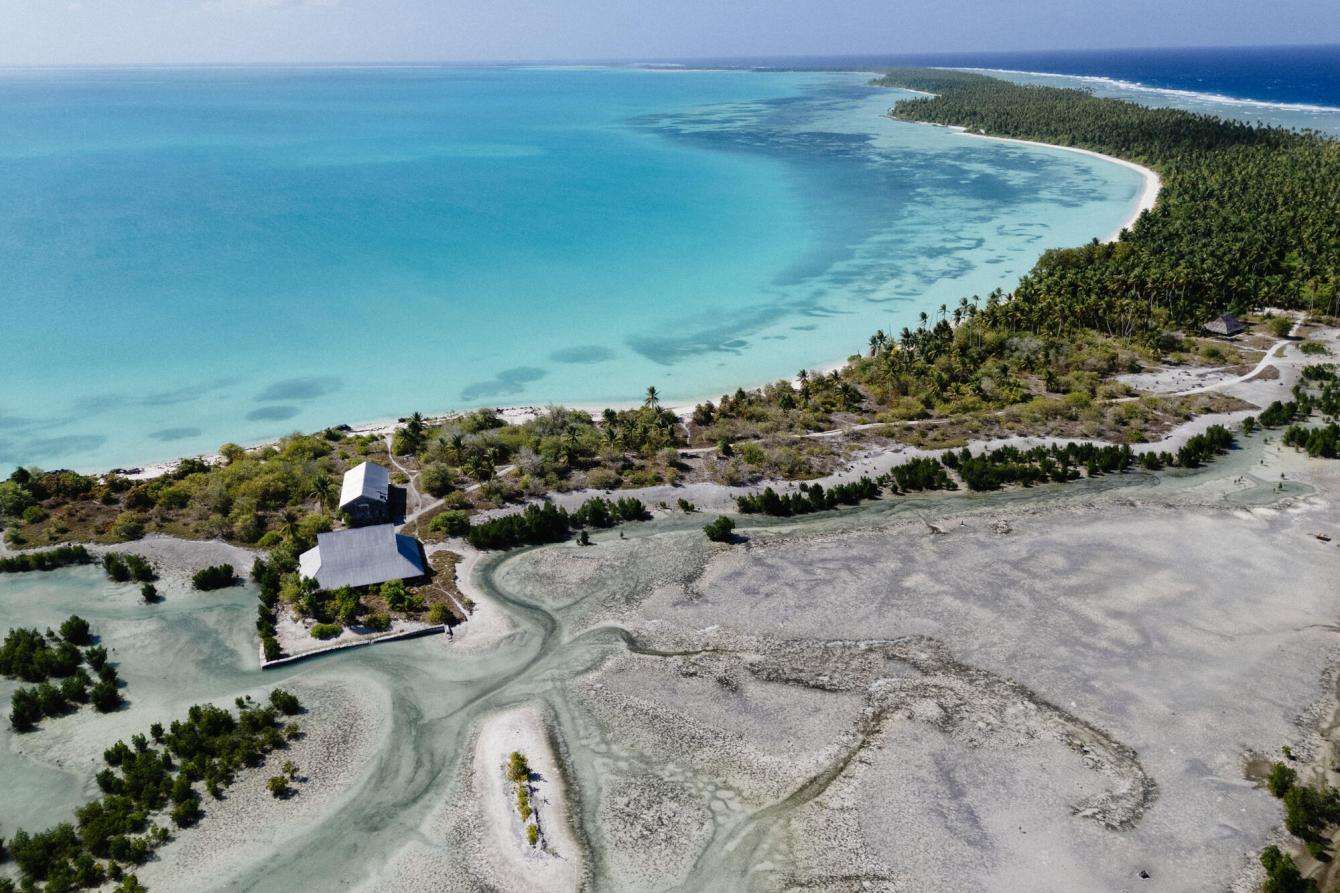
Kiribati is one of the most climate-vulnerable countries in the world. Spanning 33 low-lying atolls, its 138,000 residents live on narrow strips of land just feet above sea level and depend on fragile natural systems for fresh water and food.
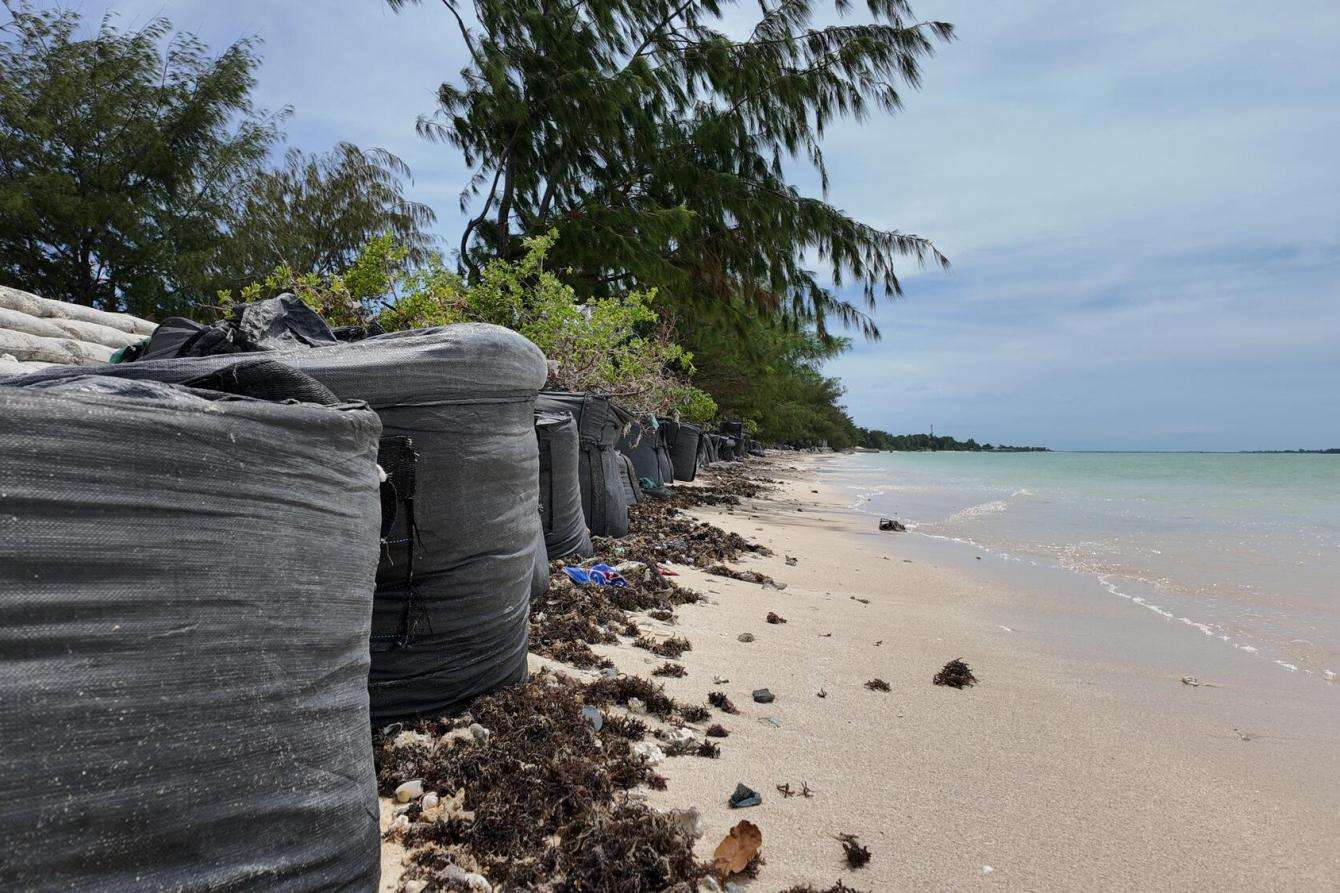
Tabontebike is located on Abaiang, a coral atoll where the groundwater is becoming too salty due to rising sea levels. It also faces seasonal droughts that often cause rainwater tanks to run dry, as well as flooding from unpredictable, intense rainfall (especially during this year’s El Niño) that can overwhelm simple sanitation systems and contaminate shallow wells. As a result, people in the community face growing uncertainty about whether the water they rely on each day — drawn from wells or rainwater — will be too salty to drink, contaminated, or simply too short in supply.
For the I-Kiribati people, this is not a new challenge. They have faced the impacts of climate change and advocated for action over many decades.
“From a young age, I was taught that climate change is one of the natural enemies of Kiribati — not only because it affects our daily life, but because we lack the resources to fight it,” says Mila Tirikai, an I-Kiribati MSF water and sanitation supervisor. Born in Tarawa, the country’s capital, with family roots in Abaiang and Beru, Tirikai knows firsthand how the climate impacts life in these remote island communities.
“The sea level has risen, flooding homes and washing away our coastline. Our wells have turned salty, and traditional crops like bwabwai [giant swamp taro] are dying. The weather has become unpredictable, with stronger winds, longer droughts, and sudden, heavy rains.”
The links between climate and health
The reliability and safety of drinking water directly impacts people’s health. When water sources are unsafe for drinking, communities face higher rates of diarrheal disease, skin infections, and other waterborne illnesses, which are particularly dangerous for children, pregnant women, and older people. In Kiribati, rising sea levels, high temperatures, drought, land degradation, food insecurity, and extreme remoteness compound an already fragile public health landscape.
“When schools and health facilities cannot depend on clean, sufficient water,” Tirikai adds, “infection prevention and control, maternal and child health, and treatment of diarrheal and skin diseases all become more precarious.”
MSF works closely with Abaiang’s communities as part of a broader climate-sensitive disease approach that addresses non-communicable diseases, particularly in women and children, as well as a unique health care waste management project.
Climate Week spotlight: Water access in Kiribati
It’s Climate Week! While New York City builds flood barriers to hold back rising sea levels and storm surges, the island nation of Kiribati is already living the climate crisis.
Building a climate-resilient health system in Abaiang
Understanding how water flows underground is crucial to inform what type of water system can realistically be sustained in such a remote setting. MSF takes a multidimensional approach to water systems, connecting groundwater availability and quality with contamination risks, climate pressures, population changes, infrastructure limits, and the ways people access and use water. But solutions that work elsewhere may not be sustainable in Abaiang. A climate-resilient response there should integrate protected groundwater use, carefully managed collection and treatment, rainwater harvesting, and community-led water management within systems that can be sustained over time.
Assessing the hydrogeology of Abaiang
A recent hydrogeological assessment used electrical resistivity tomography to investigate the subsurface and characterize the freshwater lens and underlying geological layers. A hydrogeologist mapped the underground layers by placing a line of electrodes into the ground and sending a small electrical current through the soil to measure how it travels, since electricity moves differently through water, soil, and rock. Then, the team produced detailed images of where freshwater is stored and tested how quickly the ground absorbs water, known as hydraulic conductivity. This provided crucial information about how fast water can soak down into the lens, helping to inform decisions about how to sustainably extract groundwater.
The results showed that shallow, hand-dug wells, which are widely used across the island, are highly vulnerable to contamination and often unreliable. These findings support MSF’s ongoing water quality analysis that measures how environmental changes affect well water quality. By testing for salinity and coliform bacteria, the team identifies which areas are at highest risk of contamination and maps the results using GIS technology. Several freshwater wells were found to be contaminated, indicating how susceptible groundwater is when it’s not protected or replenished through natural cycles.
Putting findings into practice
Using this evidence, MSF and community members work together to rehabilitate wells located near schools and clinics, employing simple adaptions like covering open water sources, improving drainage, installing and maintaining rainwater harvesting systems, and establishing hygiene committees to protect these vital resources.
Tirikai emphasizes the importance of community support and knowledge-building. “Residents' long-term observations — such as changes in taste, water levels, or historical avoidance of certain sources — helped validate the technical findings. In some cases, [these observations] identified issues before they were formally confirmed through mapping.”
Climate action is more urgent than ever
Kiribati is a small country, but its experience carries global significance. What we learn there can inform climate and health responses across the Pacific and beyond.
With COP31 approaching, the need to acknowledge and strengthen the link between climate change and health is growing more urgent. Taking strong climate action — such as reducing emissions and adapting health systems — means better health outcomes for all.
Water and resilience: Lessons from Kiribati
Read moreInvestment in resilient, climate-ready water systems is a global imperative, not a local choice. The decisions made at COP31 can shape whether small island nations like Kiribati have the resources to prepare for climate challenges. But to make that happen, decision-makers must make health an integral part of climate action.