The 26th International AIDS Conference (AIDS 2026) concluded in Rio de Janeiro, Brazil, last week without any meaningful commitment from US-based pharmaceutical corporation Gilead Sciences to expand access to its groundbreaking HIV prevention medicine in the region.
This is despite Brazil and other countries in the region hosting the clinical trials that helped bring the drug, lenacapavir, to market.
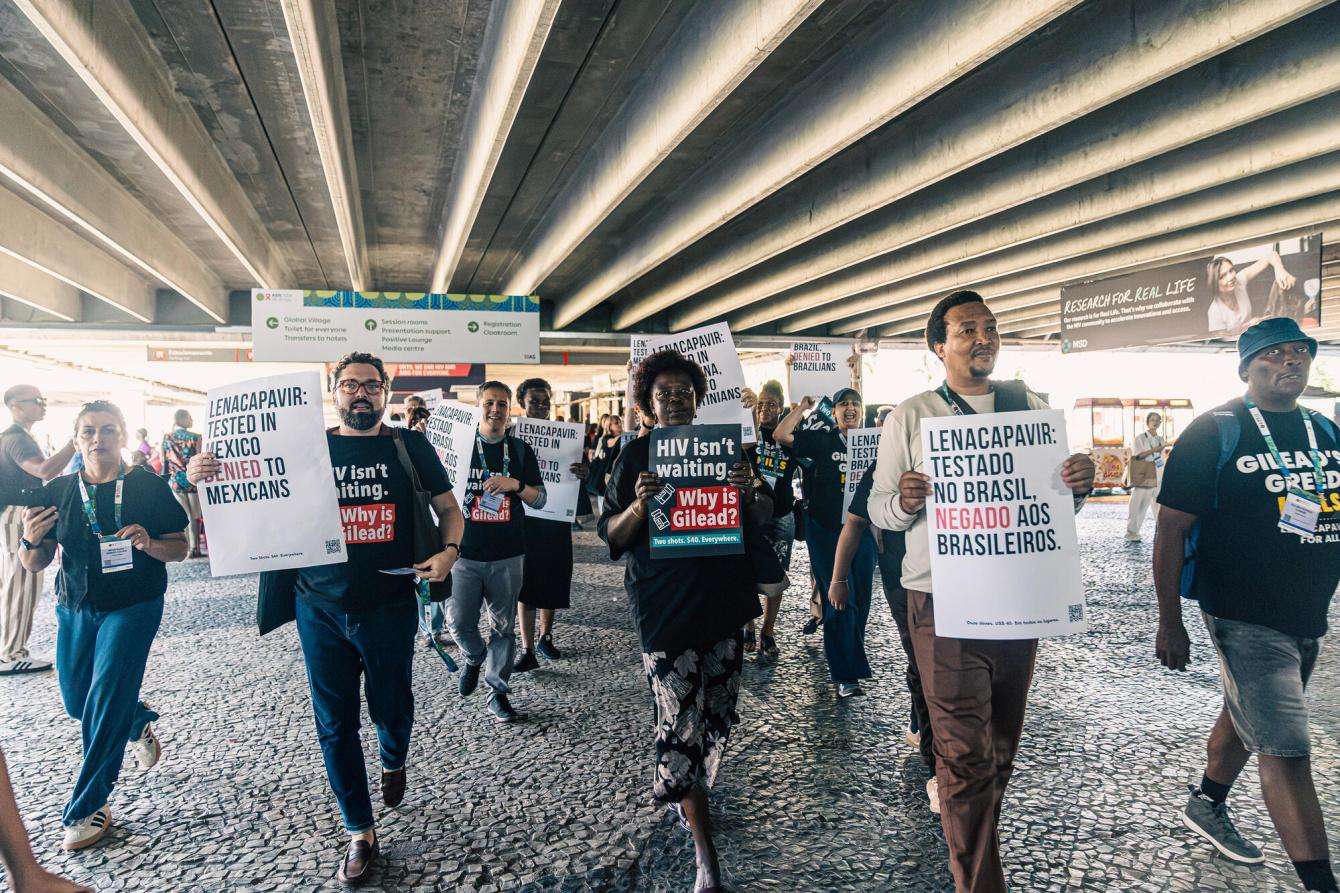
Throughout the conference, Doctors Without Borders/Médecins Sans Frontières (MSF) staff, activists, and civil society groups repeatedly highlighted the contradiction between Latin America's role in the development of lenacapavir and the continued lack of access for people who could benefit from it. Demonstrators carried signs reading, "Lenacapavir: Tested in Brazil, Denied to Brazilians," calling attention to the exclusion of Brazil from Gilead's plans for broader generic access.
Lenacapavir is one of the most important HIV prevention advances in decades
Lenacapavir is a long-acting injectable form of HIV pre-exposure prophylaxis (PrEP) that is administered only twice a year and has demonstrated near-complete effectiveness in preventing HIV acquisition. Public health experts have described it as one of the most important advances in HIV prevention in decades.
Ahead of AIDS 2026, MSF called on Gilead to make lenacapavir available for no more than $40 per person per year in all low- and middle-income countries and to stop restricting access through licensing arrangements that exclude many countries, including Brazil. Yet by the close of the conference, Gilead had announced no measures that would allow timely, affordable access to lenacapavir in Brazil or other excluded middle-income countries.
"Scientific breakthroughs only save lives when people can access them," said Dr. Tom Ellman, head of MSF’s Southern Africa Medical Unit. "AIDS 2026 should have been remembered as the moment we reached a commitment to making lenacapavir available to everyone who needs it. Instead, Gilead has fumbled the moment, and left communities in Latin America excluded from access to a key HIV prevention tool."
"The message from AIDS 2026 could not have been clearer," said Ellman. "Governments, civil society organizations, health care providers, and communities want equitable access to lenacapavir. Instead, Gilead continues to maintain barriers that prevent countries such as Brazil from benefiting from a medicine whose development they helped support."

Gilead is excluding people in countries that helped bring lenacapavir to market
Brazil is one of several Latin American countries — including Peru, Mexico, and Argentina — that hosted clinical trials that contributed to lenacapavir's approval, yet remain excluded from the territories covered by Gilead's voluntary licensing agreements for generic production. As a result, affordable generic versions that are expected to become available in some countries in early 2027 will remain out of reach for many people in Brazil and other middle-income countries. This is despite the fact that new HIV infections are rising in the region.
"Brazilians, Peruvians, Mexicans, and Argentinians helped make this medical breakthrough possible," said Ellman. "Yet, even though this conference was hosted in Brazil, Gilead offered no concrete plan to ensure people there can access lenacapavir. That is unacceptable. Medical research is not an extractive industry. Communities that participated in the research that enabled this innovation should not be left at the back of the queue."
Gilead must remove access restrictions and ensure that affordable versions of lenacapavir can be made available in all low- and middle-income countries. If the company fails to act, MSF calls for governments to use all available legal and policy measures to protect public health and accelerate access to this potentially transformative HIV prevention tool.
We speak out. Get updates.

News Oct 28, 2026
Civilians and medical facilities must be spared amid surging violence ...
Read more