
Attacks, displacement, and food insecurity have become a part of daily life for communities in Cameroon’s Far North region that have been living with the consequences of a prolonged conflict for more than a decade.
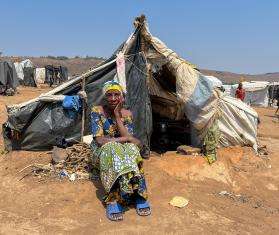
“I fled my village in 2019 after repeated attacks,” says Hawa Marie, an internally displaced woman now living in Mora. “We were afraid because of the gunfire. With my six children, we had to leave everything behind. Life here is difficult — we don’t always have enough to eat.”
Hawa Marie is among thousands of people forced to flee their homes due to ongoing violence along the border between Cameroon and Nigeria, known as the Lake Chad Basin crisis. The crisis began in Nigeria in 2009 and has spread across the region, affecting parts of Cameroon, western Chad, and southeastern Niger. According to the UN Office for the Coordination of Humanitarian Affairs, an estimated 2.9 million people have been displaced, including over 476,000 in Cameroon. Displaced families face precarious living conditions, limited access to health care, and chronic food insecurity.
In response to health needs, Doctors Without Borders/Médecins Sans Frontières (MSF) supports primary and secondary health care, mental health care, reproductive health services, and emergency surgical care. At Mora District Hospital, where MSF has been present since 2015, teams have performed over 4,500 surgical procedures since 2021.

Responding to an active crisis
Although displacement slightly decreased last year, the violence did not. In 2025 alone, more than 1,500 security incidents were recorded, and in September, MSF teams at Mora District Hospital treated multiple victims from an attack along the Nigerian border — a reminder that the conflict remains active and unpredictable.
The consequences are particularly devastating in a region already facing extreme poverty, recurrent droughts, and limited access to essential services. The Far North is the poorest region in Cameroon, with 18 percent of the national population but only 8 percent of its doctors.
At the MSF-supported Kourgui Health Center in Mora district, communities and MSF staff continue to support one another, showing resilience despite the unrelenting pressures of this cross-border conflict.
“The situation in 2016 and 2017 was extremely difficult,” says Danzabe Elias, logistics supervisor at Mora District Hospital. “We were receiving gunshot-wounded patients at all hours, coming from everywhere. We often had to go out at any time to provide care, which made the work particularly exhausting. It is even harder when the wounded we receive are sometimes our relatives, people we live alongside.”

How the Lake Chad Basin crisis has exacerbated needs
Both local communities and humanitarian workers bear the weight of chronic stress and psychological scars left by this prolonged conflict, which has influenced how people move, work, access health care, and even envision their future.
Insecurity also affects livelihoods. Fear of attacks and kidnappings prevent many people from farming or transporting their harvests, which worsens poverty and food shortages. “People are afraid to go farming,” explains Wasa Hassan, a community health worker in Kourgui. “Kidnappings for ransom have become common, and fear dominates daily life.”
"Harvests are no longer sufficient"
"Everything has gone backwards, downhill. Harvests, trade, all incomes have changed and we can no longer manage as we did before. With overpopulation, the little we harvest is no longer enough to make ends meet. To get through the year, we have to resort to lean periods. From March to August, the harvests are no longer sufficient to meet the needs of the community."
— His Majesty Oumate Abba, chief of Kourgui canton

“In 2015, during the attacks, I found myself alone in Kourgui after being separated from my parents,“ says Jérémie Seuda, another community health worker. “MSF’s mental health teams took care of me. It was not easy, but they supported me every step of the way. The attacks continued — my 20-year-old neighbor was killed, and staying at home became impossible. I had to move again.”

Challenges remain
MSF works with 81 skilled community health workers to provide care closer to communities, including treatment for malaria, diarrhea, and severe acute malnutrition cases without complications. In 2025 alone, MSF-supported teams treated more than 16,000 cases of uncomplicated malaria and nearly 1,900 malnourished children.
“Access to health care remains a major challenge,” says Dr. Michel Madika, MSF medical coordinator in Cameroon. “Poverty, under-equipped health facilities, staff shortages, recurrent epidemics, and food insecurity continue to affect people’s health.”
MSF’s work in Cameroon
MSF has been present in Cameroon’s Far North region since 2015, responding in Minawao refugee camp and the Mokolo health district, and supporting the surgical unit at Maroua Regional Hospital. Currently, MSF is supporting the health districts of Mora and Kolofata. In 2025, our teams carried out more than 45,000 outpatient consultations, performed over 1,600 emergency surgeries, treated 2,250 malnourished children, and supported over 1,000 pregnant women.